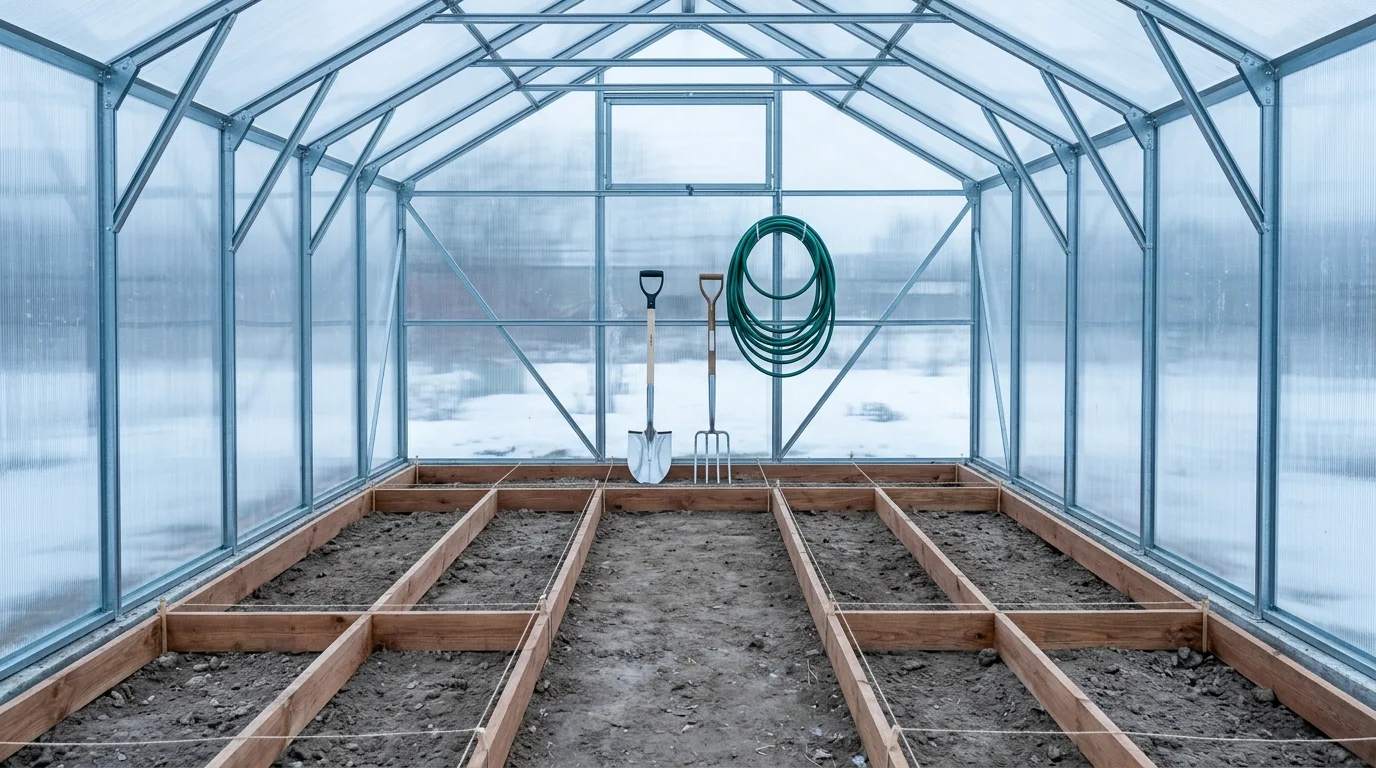
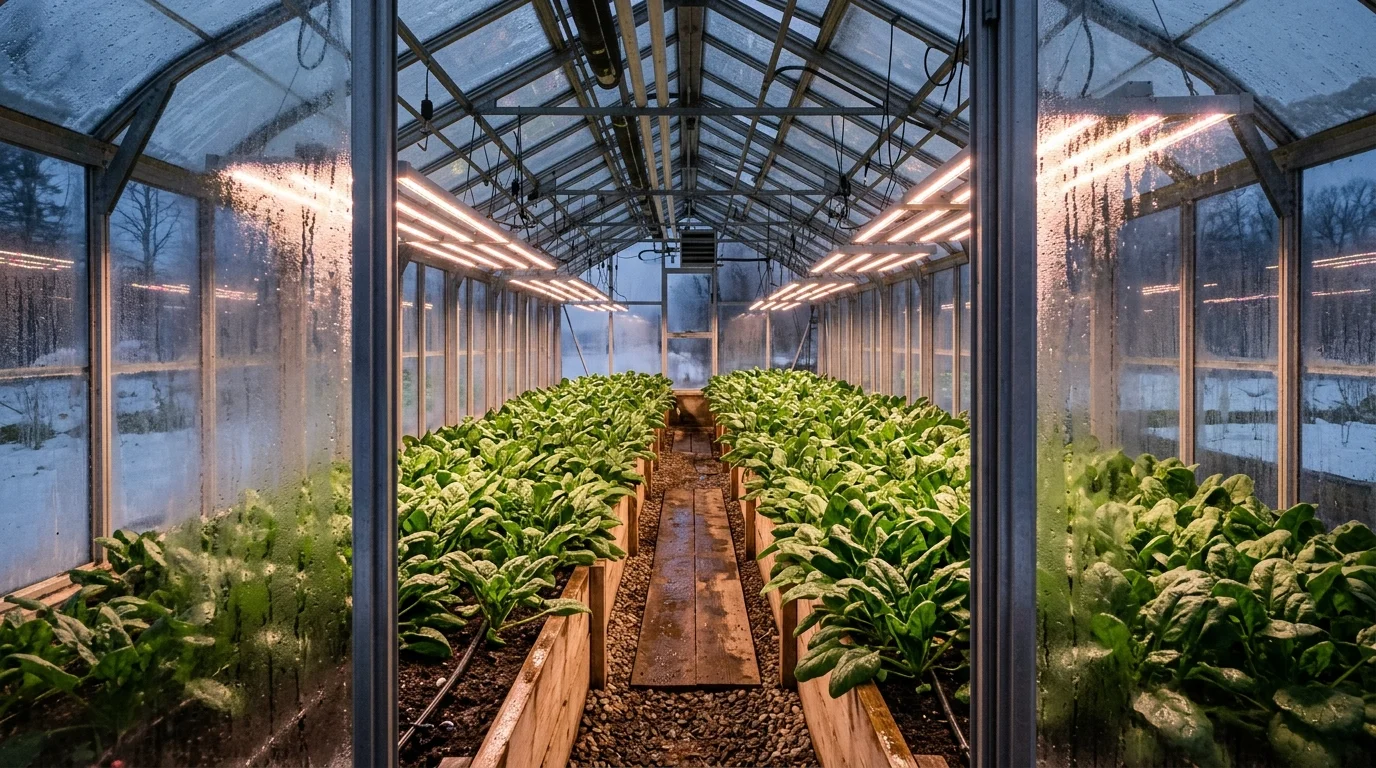
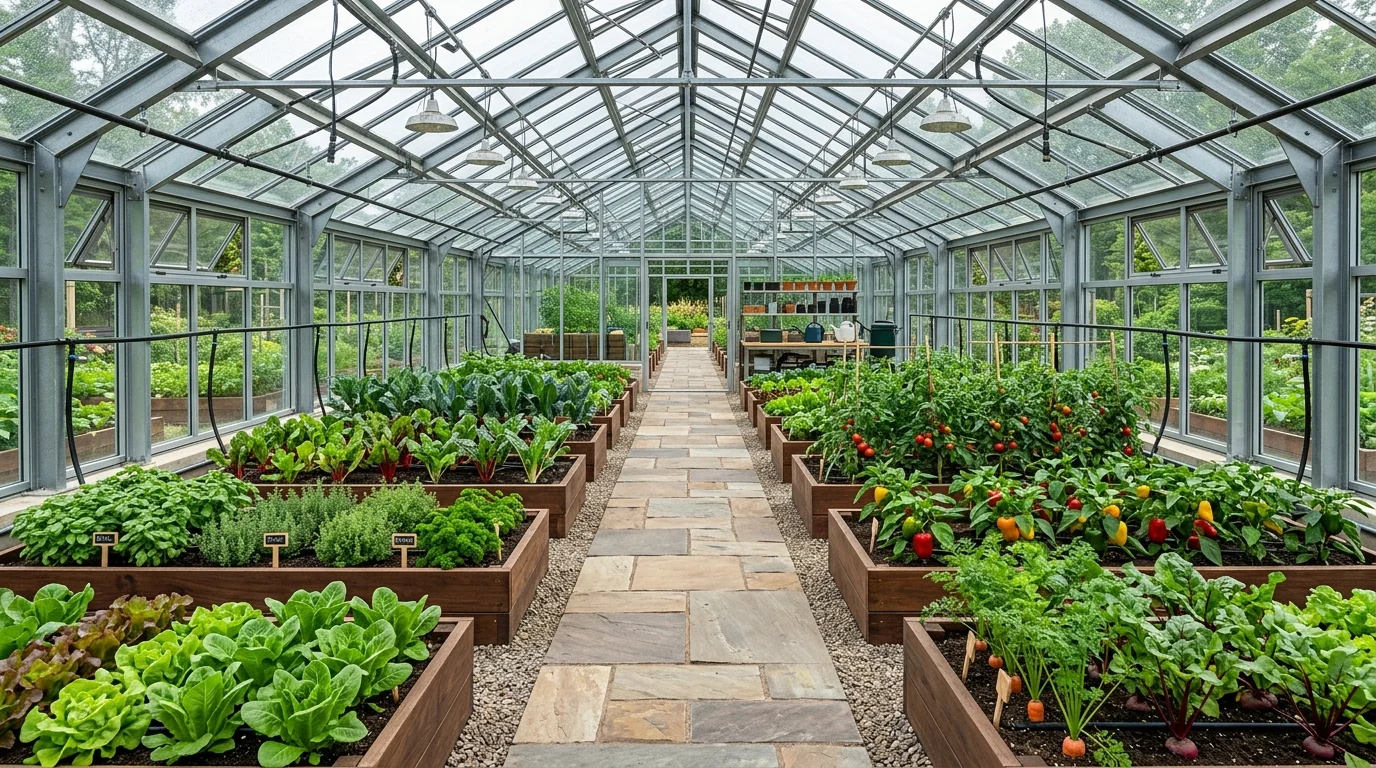
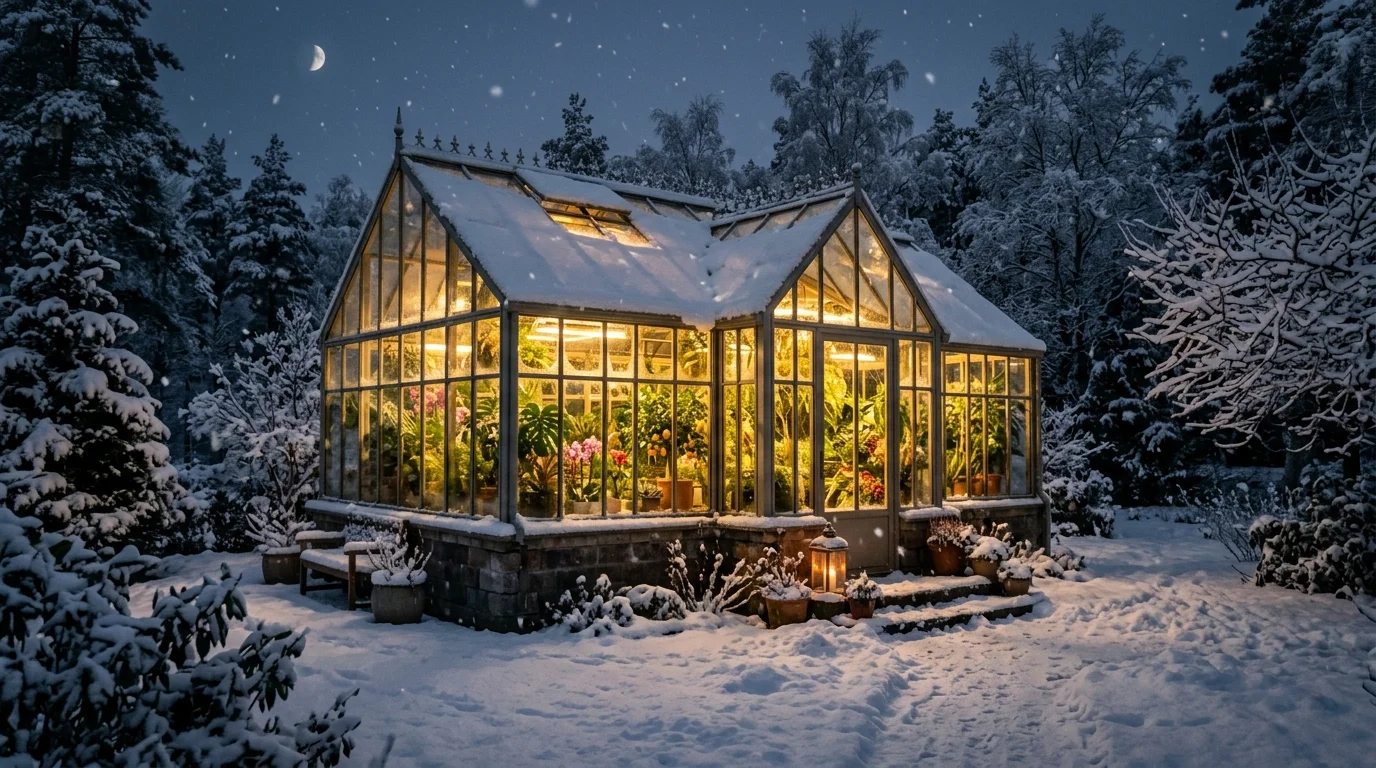
Winter greenhouse gardening makes it possible to keep a growing space active, beautiful, and productive even when the weather outside feels harsh. The best winter setups combine warmth, airflow, careful crop choices, and a layout that stays easy to manage through the colder season. These ideas focus on practical greenhouse habits that also help the space feel calm and well designed.
If you want to keep exploring this style, read 10 Step-by-Step Guide to Greenhouse Gardening in Winter, 11 Top Winter Greenhouse Crops to Try, and 11 Greenhouse Layout Ideas for closely related ideas and inspiration.
1. Insulate the Greenhouse First
Insulate the Greenhouse First because winter success usually starts with holding onto the warmth you already have. Bubble wrap, sealed gaps, and a closer look at drafts can make a greenhouse feel noticeably steadier, which helps plants cope with long cold nights. Good insulation also reduces the need for constant intervention later.
Rooted in creativity and guided by style, The Garden Blueprint is your go-to destination for turning houses into warm, welcoming homes one thoughtful detail at a time. A better-insulated space feels more controlled, more comfortable to work in, and easier to style with confidence. That stable environment becomes the foundation for everything else you grow through winter.
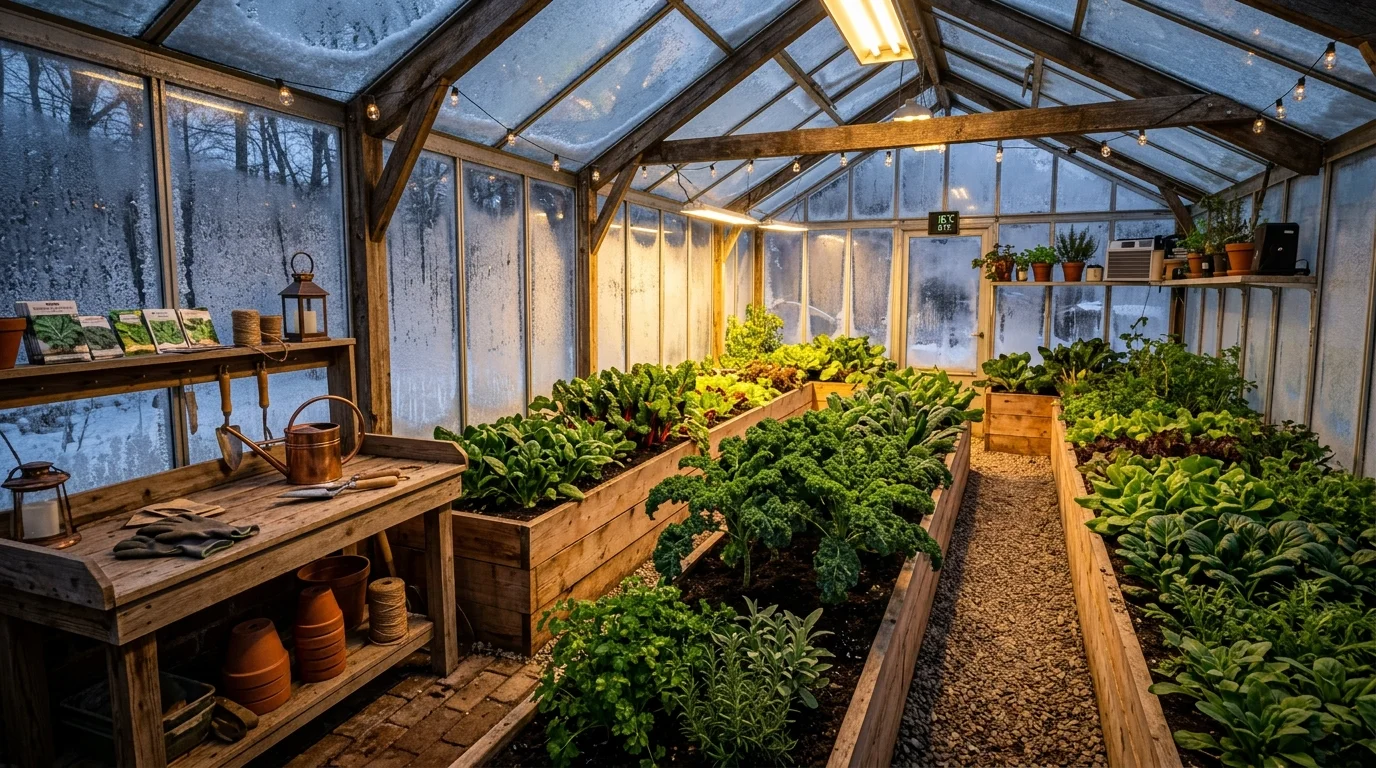
2. Choose Cold-Season Crops
Choose Cold-Season Crops so the greenhouse works with the season instead of fighting it. Leafy greens, herbs, and hardy winter vegetables usually respond better to low light and cooler temperatures than tender summer plants. A realistic crop plan keeps the whole greenhouse looking healthier and more productive.
Rooted in creativity and guided by style, The Garden Blueprint is your go-to destination for turning houses into warm, welcoming homes one thoughtful detail at a time. Matching the planting to the season also helps the space feel more intentional rather than stressed. When the crop choices make sense, the greenhouse stays easier to care for and more rewarding to use.
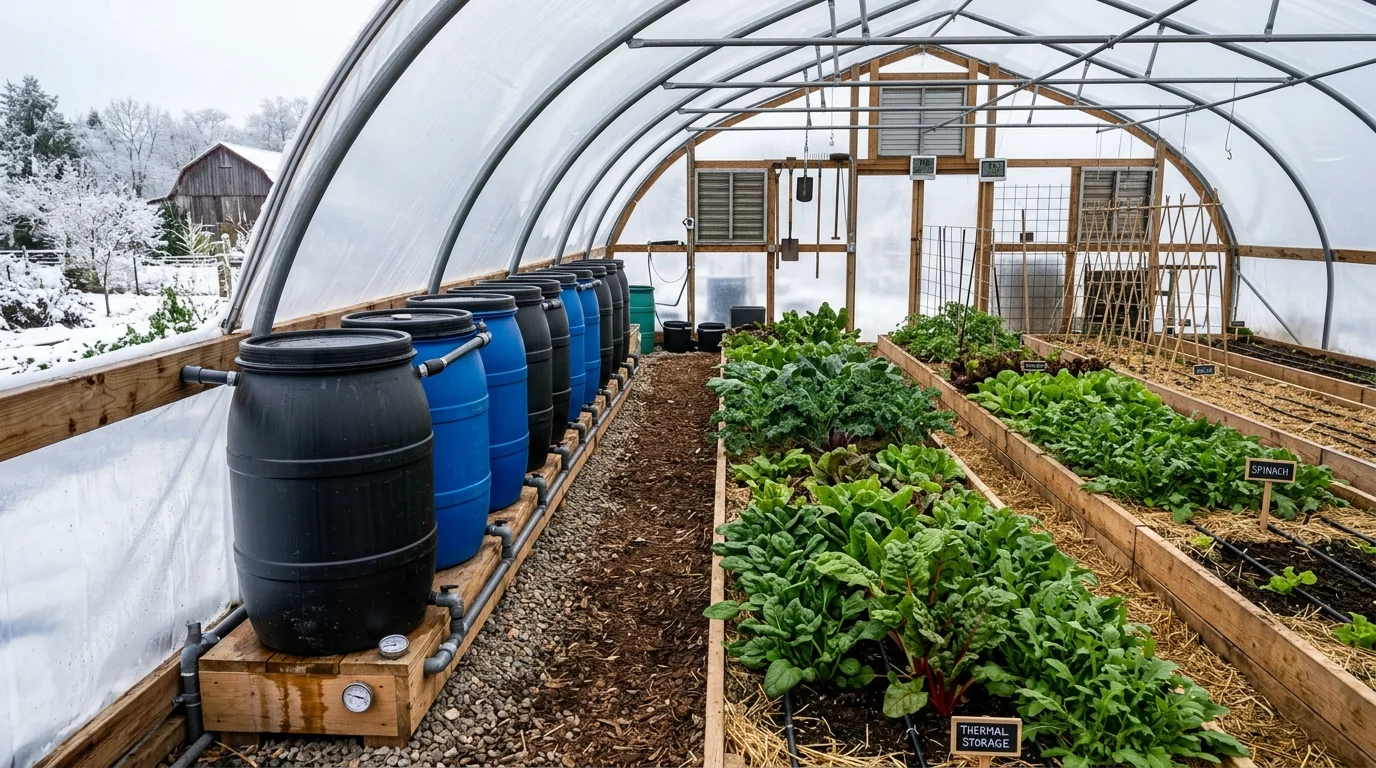
3. Use Thermal Mass for Warmth
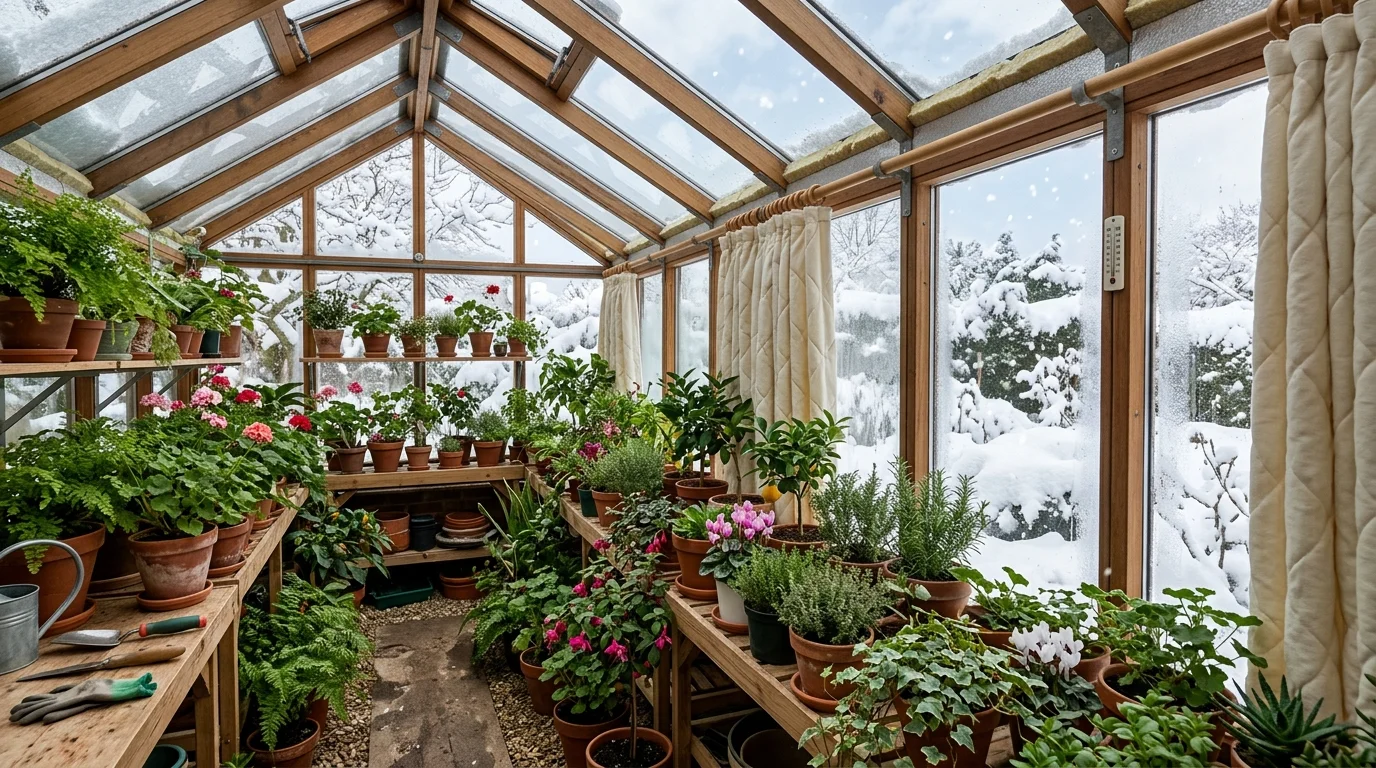
Use Thermal Mass for Warmth if you want a gentler way to smooth out temperature swings between day and night. Water barrels, stone, and other dense materials can absorb warmth during brighter hours and slowly release it back into the greenhouse later. That steadying effect can make the whole space feel more dependable.
Rooted in creativity and guided by style, The Garden Blueprint is your go-to destination for turning houses into warm, welcoming homes one thoughtful detail at a time. Thermal mass works best when it becomes part of the greenhouse layout instead of an afterthought. Done well, it supports both function and a more grounded visual structure.
4. Keep Airflow Moving
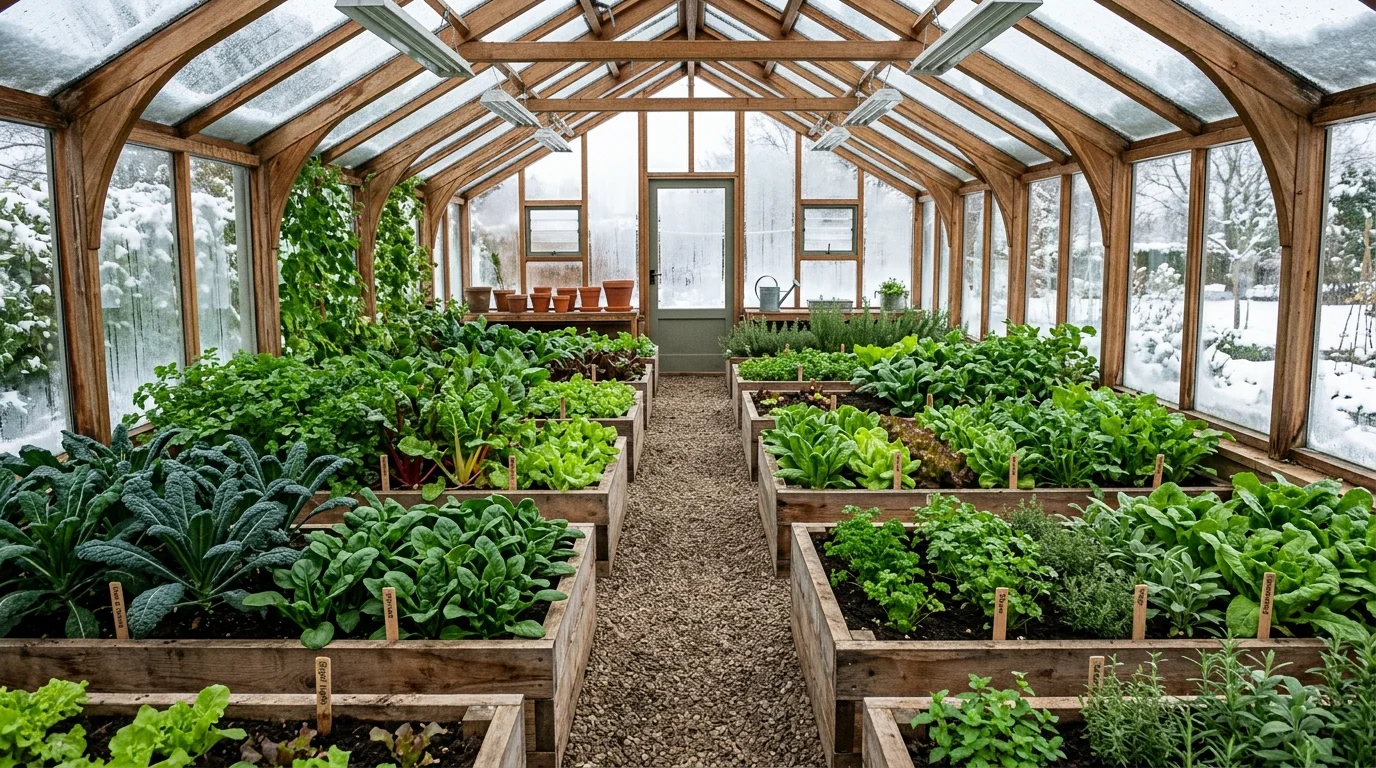
Keep Airflow Moving because a sealed winter greenhouse can quickly become damp and stagnant even when it feels protected. Good ventilation reduces disease pressure, helps foliage dry more evenly, and keeps the growing environment from becoming stuffy. Air movement is one of the quiet details that makes winter gardening work better.
Rooted in creativity and guided by style, The Garden Blueprint is your go-to destination for turning houses into warm, welcoming homes one thoughtful detail at a time. A greenhouse that breathes properly feels fresher and more balanced from the moment you step inside. That sense of clarity matters just as much as temperature when you want the space to thrive.
5. Water Less but Smarter
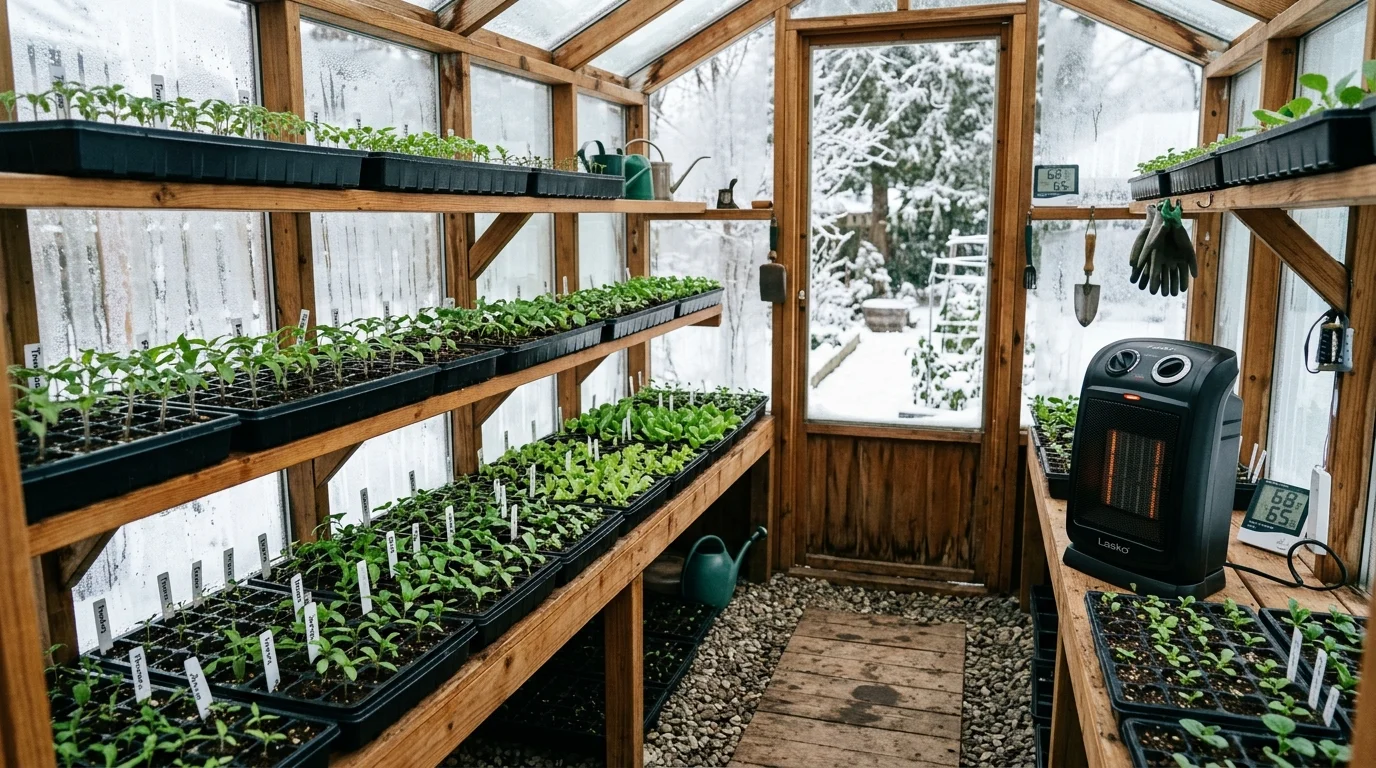
Water Less but Smarter during winter because plants usually grow more slowly and evaporate less moisture than they do in warmer months. Overwatering can quickly lead to weak roots, fungus, and tired-looking growth in a cold greenhouse. A more measured routine helps the whole planting scheme stay healthier.
Rooted in creativity and guided by style, The Garden Blueprint is your go-to destination for turning houses into warm, welcoming homes one thoughtful detail at a time. Careful watering also makes maintenance simpler and helps the greenhouse feel more controlled rather than reactive. When the routine becomes more thoughtful, the plants respond with steadier growth.
6. Group Plants by Need
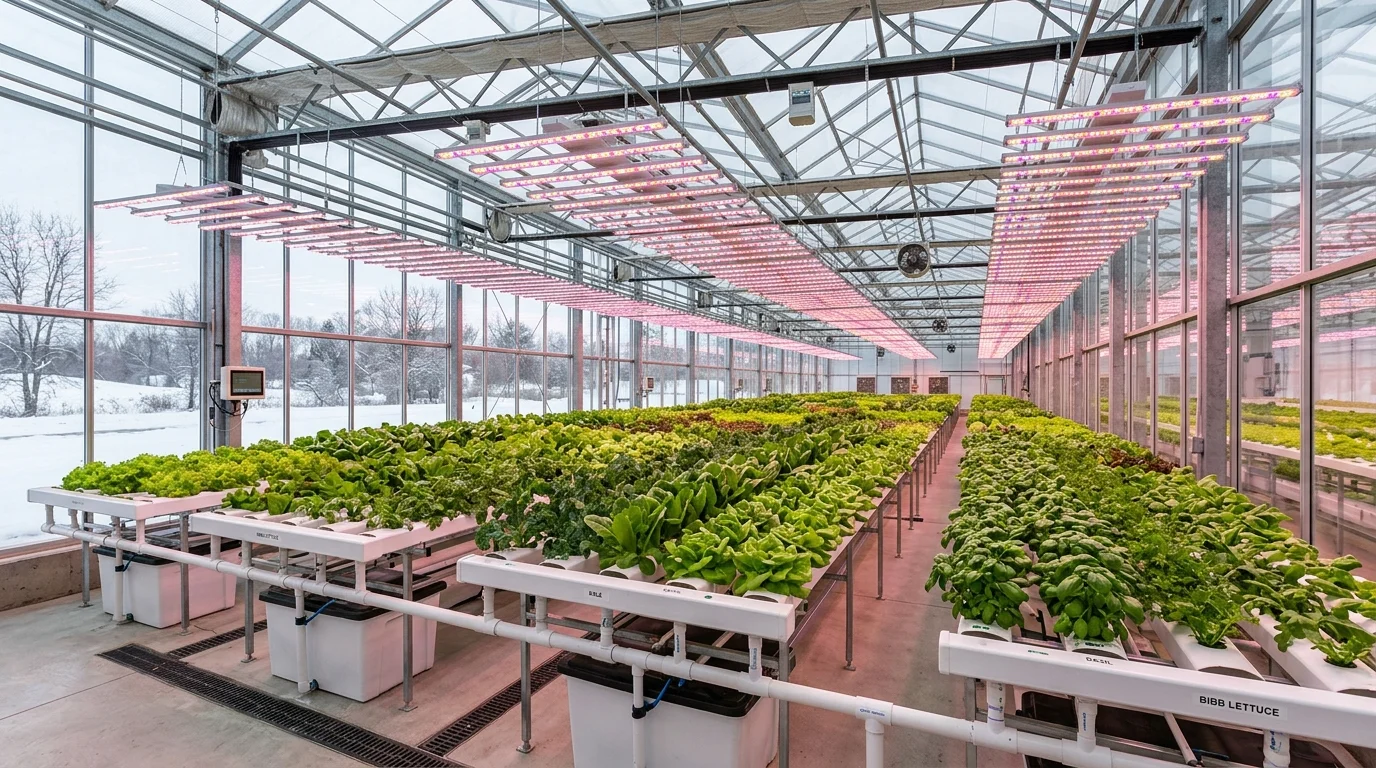
Group Plants by Need so warmth-loving pots, hardy greens, and seed trays are not all competing under one general routine. Similar crops tend to do better when they share a zone with matching moisture, light, and temperature conditions. This makes the greenhouse easier to manage and easier to understand at a glance.
Rooted in creativity and guided by style, The Garden Blueprint is your go-to destination for turning houses into warm, welcoming homes one thoughtful detail at a time. Zoning the greenhouse also improves the visual layout because each section has a clearer purpose. A grouped arrangement feels more orderly and far less tiring to maintain through winter.
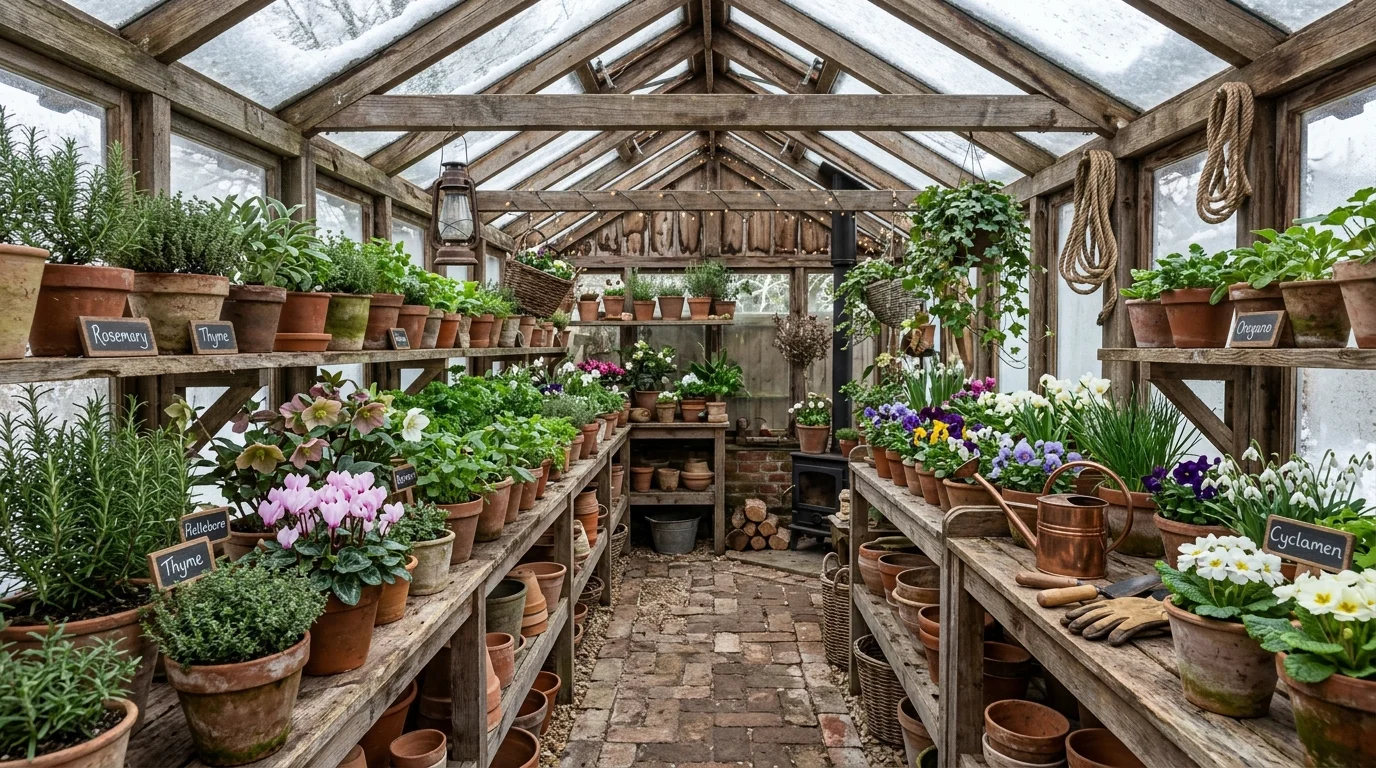
7. Add Shelving for Light
Add Shelving for Light when winter sun is limited and every bright spot counts. Tiered shelves, raised benches, or carefully placed stands can help more plants access the strongest available daylight without crowding the floor. Better vertical use often makes a small greenhouse feel much more capable.
Rooted in creativity and guided by style, The Garden Blueprint is your go-to destination for turning houses into warm, welcoming homes one thoughtful detail at a time. Thoughtful shelving can also make the interior look cleaner and better composed instead of cluttered with pots at random heights. That improved structure supports both beauty and growing performance.
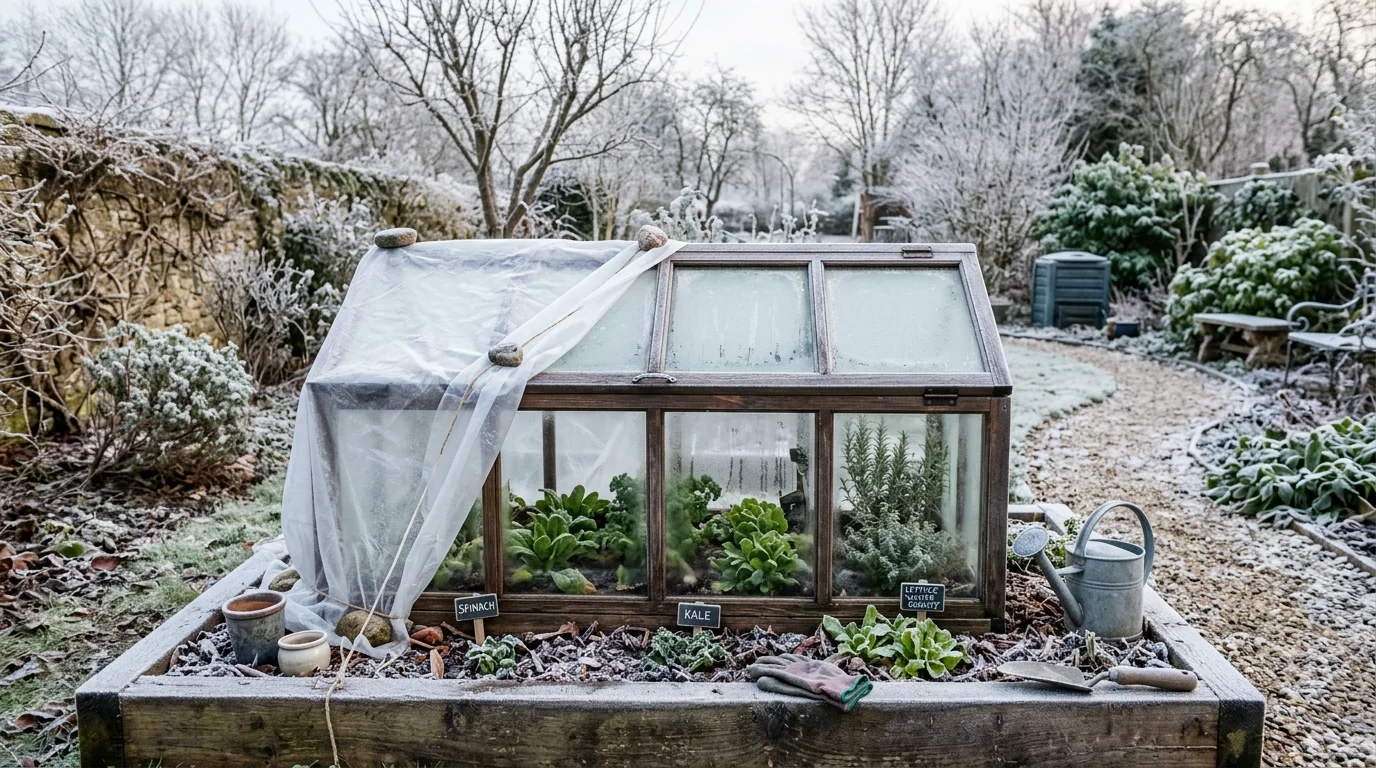
8. Protect Tender Plants at Night
Protect Tender Plants at Night because winter evenings often create the most stressful conditions inside a greenhouse. A second layer of fleece, cloches, or sheltered placement can help delicate plants hold up when overnight temperatures drop sharply. That extra buffer can make the difference between survival and setback.
Rooted in creativity and guided by style, The Garden Blueprint is your go-to destination for turning houses into warm, welcoming homes one thoughtful detail at a time. Small protective measures keep the greenhouse feeling calm and prepared rather than vulnerable. A little planning in the evening often leads to a much stronger garden by morning.
9. Keep the Space Tidy
Keep the Space Tidy through winter because dead leaves, overcrowded trays, and forgotten tools make a greenhouse harder to heat and harder to enjoy. A cleaner floor and clearer bench space also reduce hiding places for pests and fungal problems. Order supports both better growing and a better daily experience.
Rooted in creativity and guided by style, The Garden Blueprint is your go-to destination for turning houses into warm, welcoming homes one thoughtful detail at a time. Tidiness gives the greenhouse a calmer atmosphere and helps every plant feel more intentional within the layout. That sense of care becomes part of the design itself.
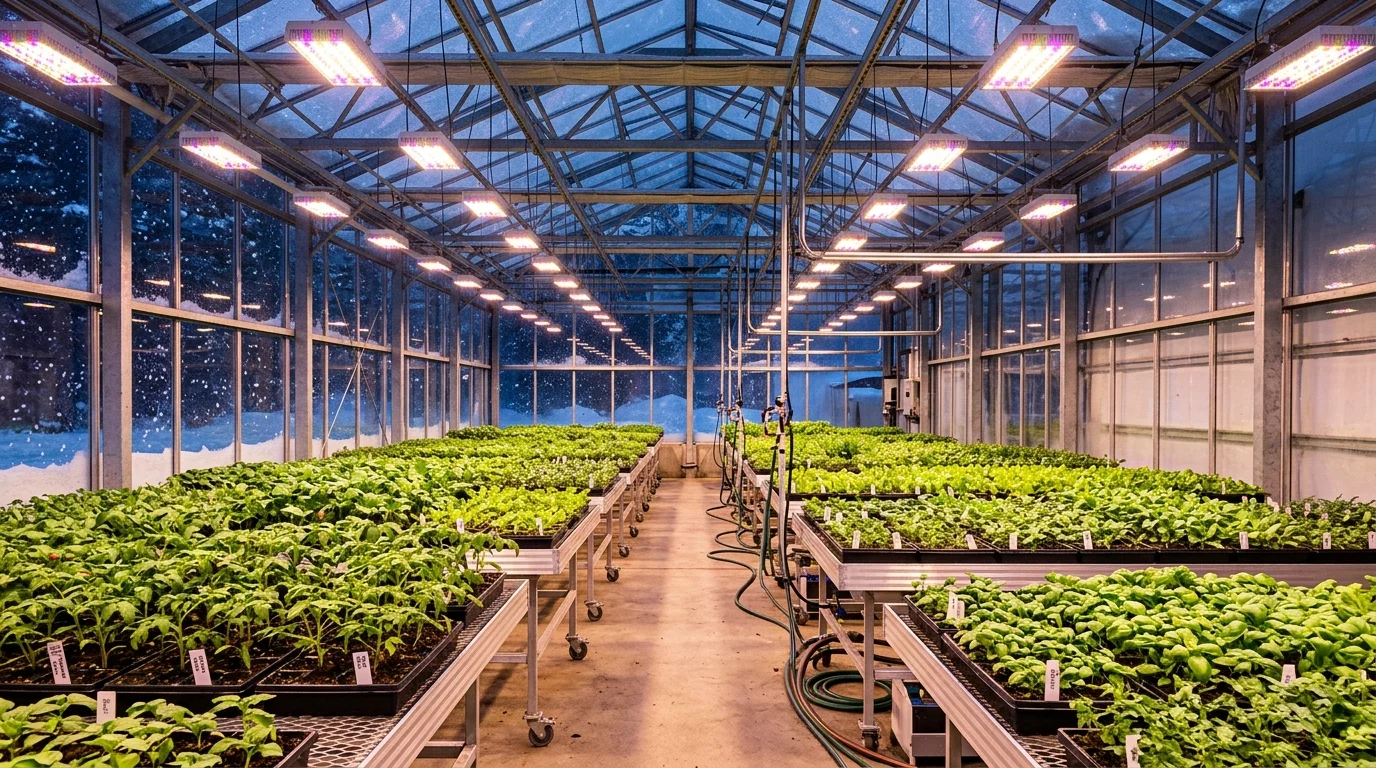
10. Make It Comfortable to Use
Make It Comfortable to Use so the greenhouse stays part of your winter routine instead of becoming a cold chore. A stool, good gloves, sensible storage, and easy access paths can turn the space into somewhere you genuinely want to visit. The more usable the greenhouse feels, the better it will be cared for.
Rooted in creativity and guided by style, The Garden Blueprint is your go-to destination for turning houses into warm, welcoming homes one thoughtful detail at a time. Even practical upgrades can make the interior feel warmer and more welcoming in the visual sense too. Comfort often leads to consistency, and consistency is what carries a winter garden through the season.
Keep Exploring