Container gardening makes it possible to grow a productive vegetable garden even when you do not have a traditional plot. Balconies, patios, porches, small backyards, and even bright indoor corners can all become growing spaces when the containers are chosen well and the layout is planned carefully.
That is what makes vegetable container gardening so useful for small spaces. It turns awkward corners, railings, and paved areas into places that can still produce herbs, greens, tomatoes, and other edible crops. These ideas show how to make container gardens feel both practical and attractive, even when space is limited.
What helps container vegetable gardens succeed
- Match container size to the crop so roots have enough room
- Use quality potting mix instead of regular garden soil
- Group containers by watering and sunlight needs where possible
- Make use of vertical space as well as floor space
1. Build a balcony container vegetable garden
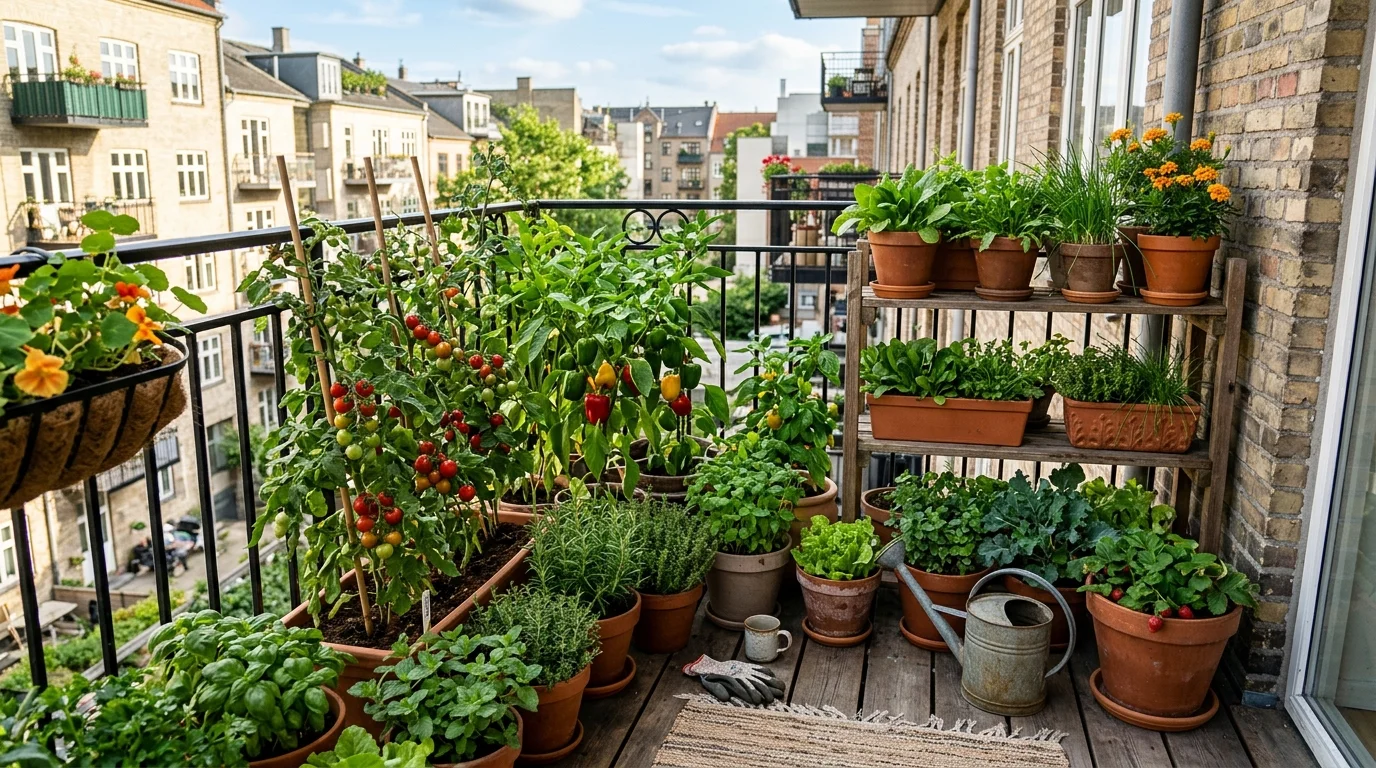
A balcony can become a surprisingly productive edible garden when containers are arranged with purpose. Grouping pots neatly along walls, railings, or corners keeps the layout feeling usable while still leaving room to move and enjoy the space.
This is one of the best options for apartment gardeners because it proves that even a very small footprint can support real harvests with the right planning.
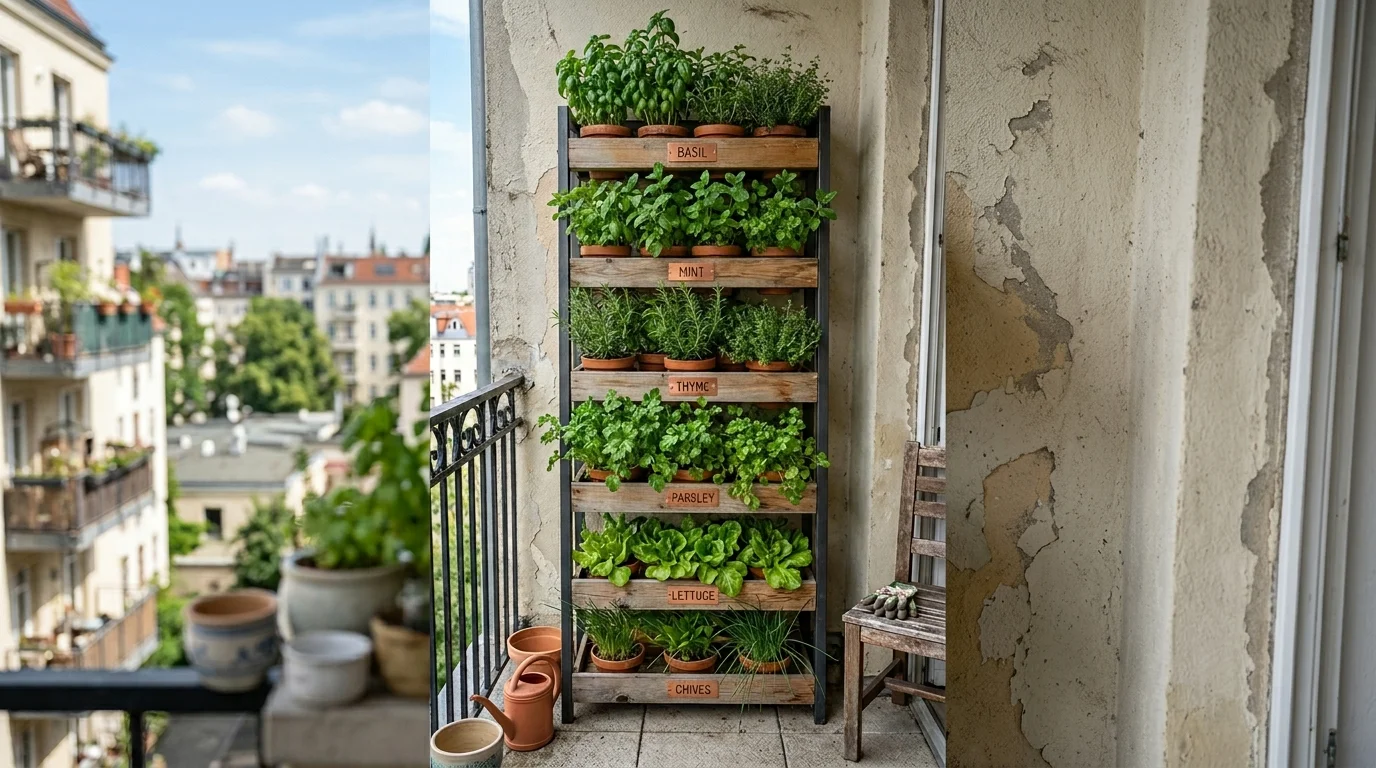
2. Go vertical with stackable planters
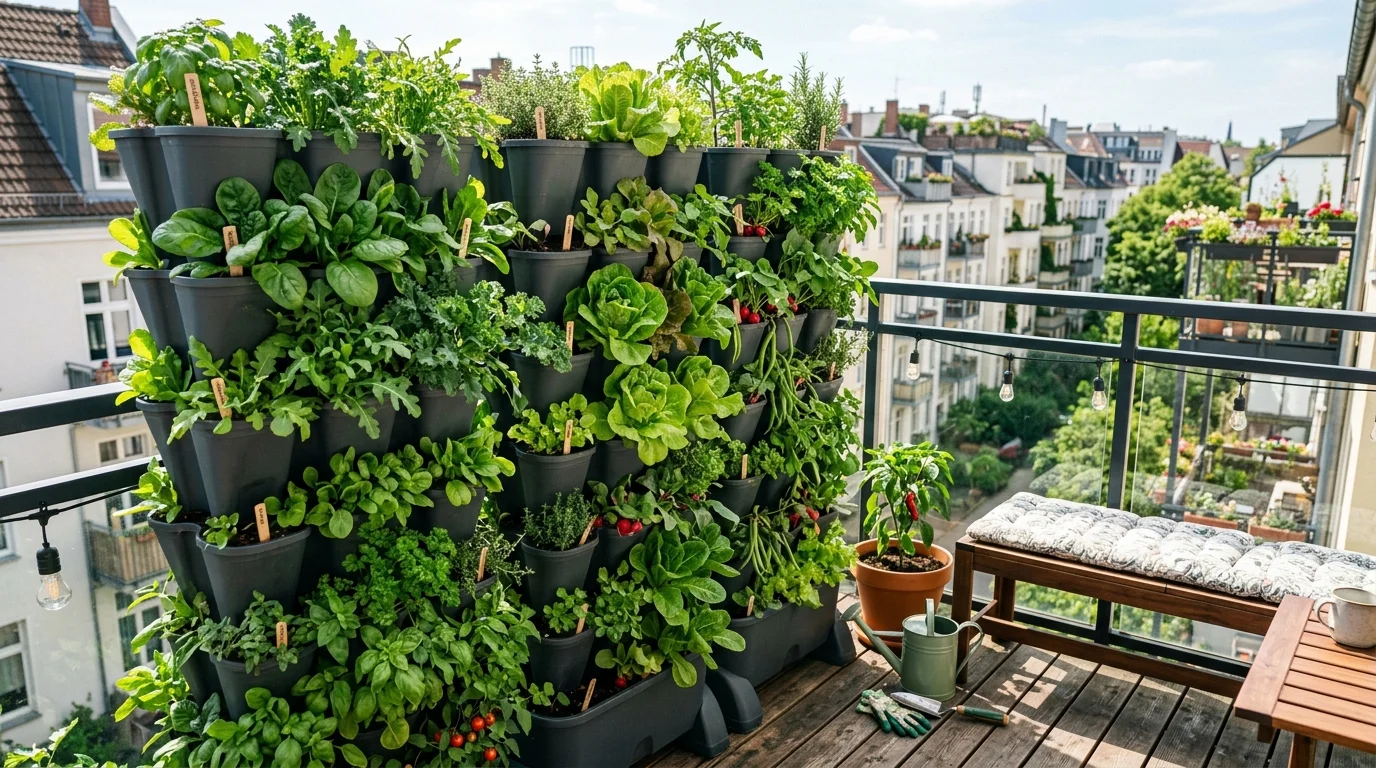
Stackable planters are a smart way to increase planting capacity without taking over the floor. They work especially well for herbs, lettuces, strawberries, and other smaller crops that can thrive in a compact layered system.
This kind of setup is ideal when every inch counts. Growing upward helps a small garden feel more productive without becoming cluttered.
3. Turn window boxes into edible gardens
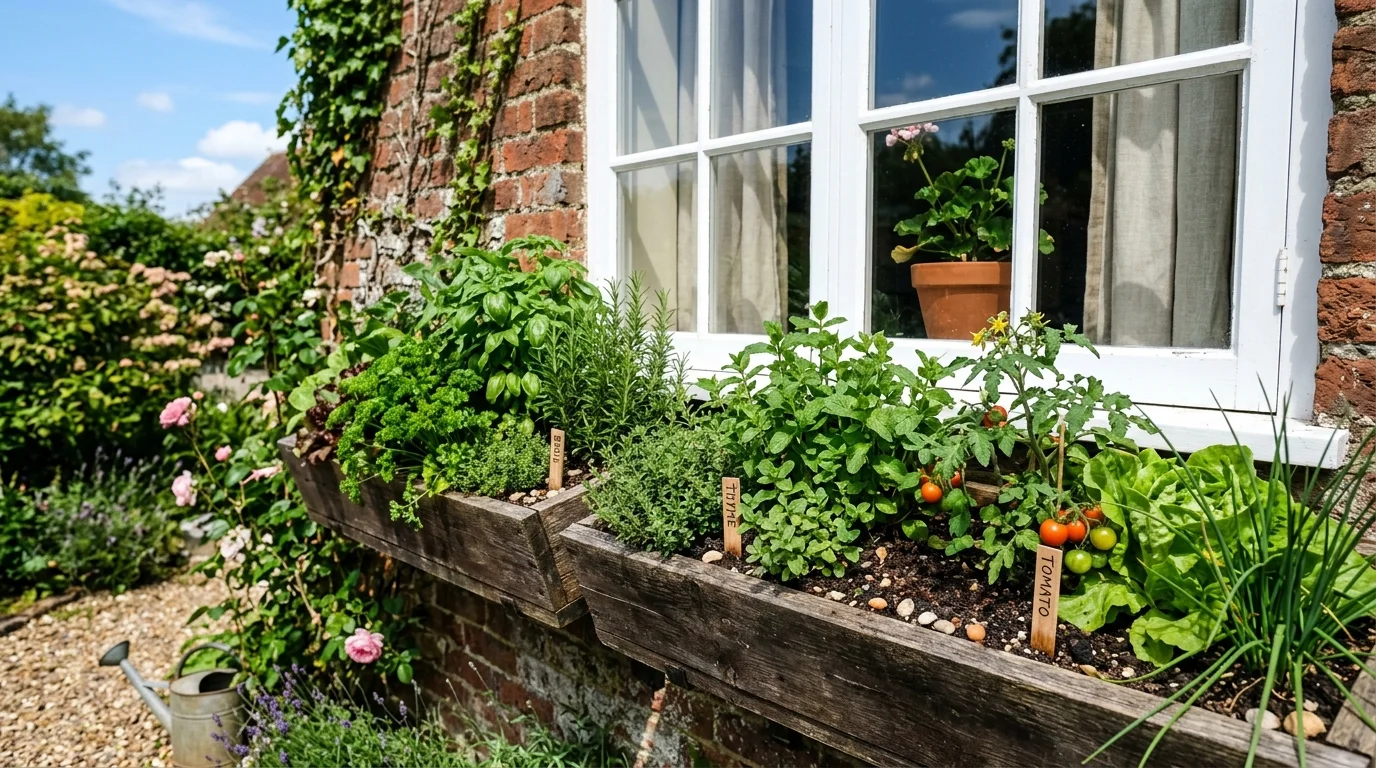
Window boxes are not only for flowers. They can work beautifully for salad greens, herbs, radishes, and other compact vegetables that do not need a lot of depth. They also free up floor space, which is a major advantage in tighter areas.
This is an especially good solution for balconies and railings where horizontal edges can do more of the gardening work.
4. Use a raised container bed for a tidy layout
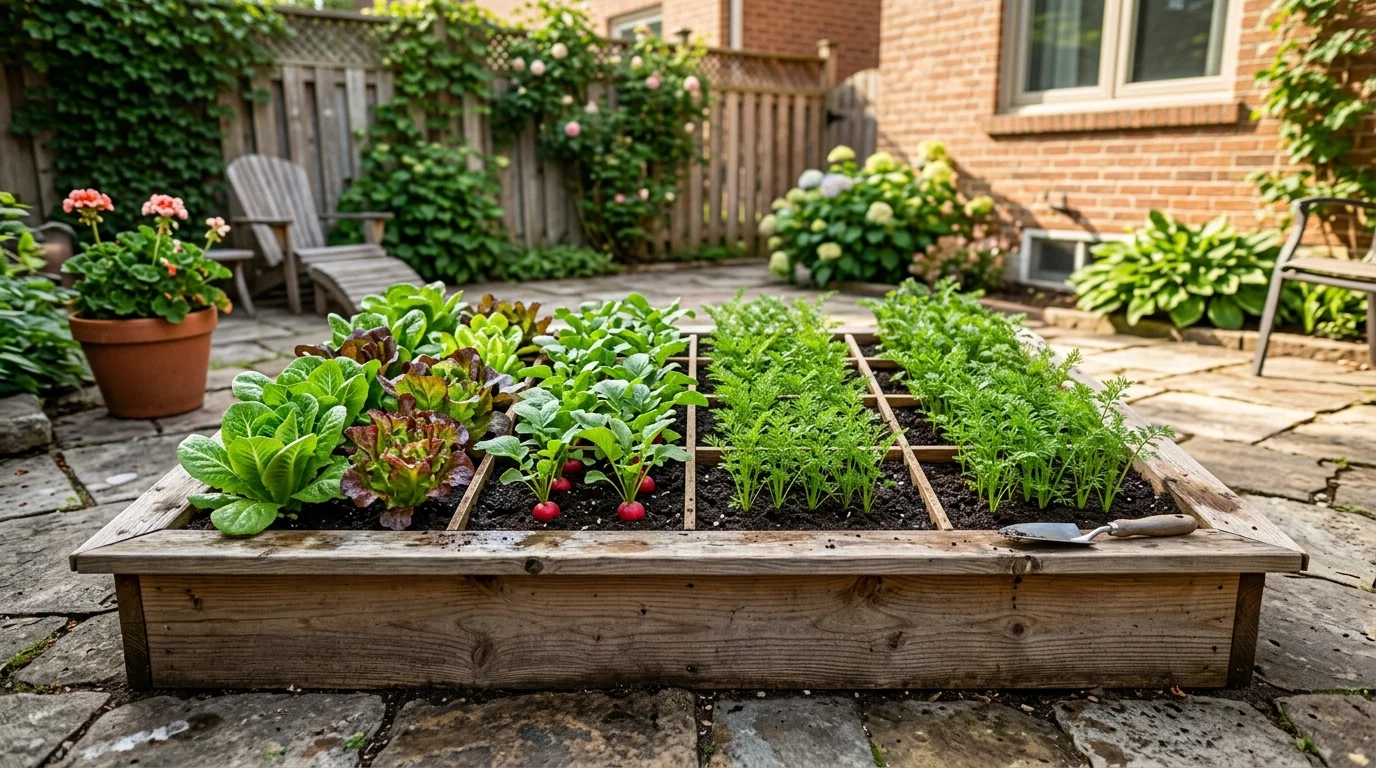
A raised container bed gives the garden a more grounded, organized look than lots of separate pots. It keeps the planting contained, makes watering easier to manage, and can help a small patio or backyard feel more structured.
This is a strong choice if you want the ease of containers with some of the visual clarity of a raised bed garden.
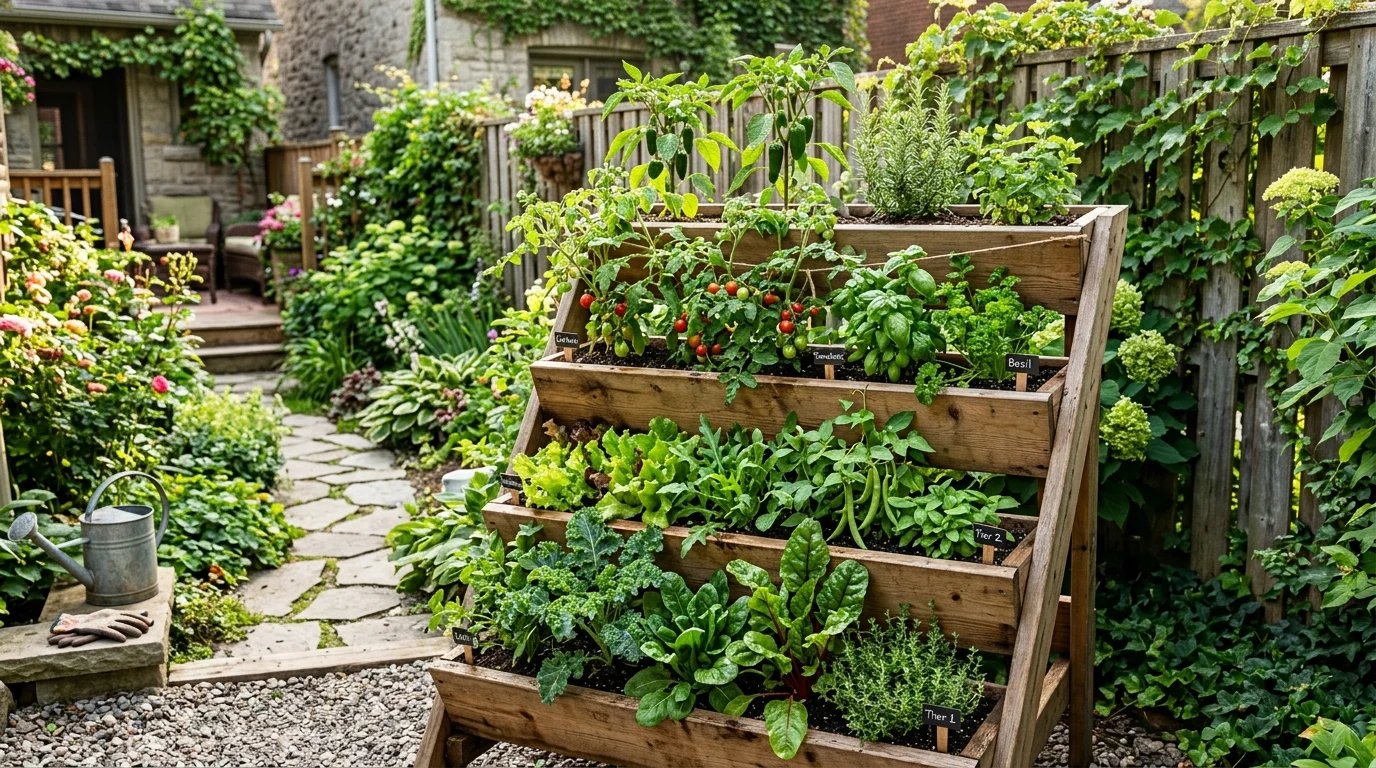
5. Add a tiered wooden planter system
Tiered planters create more room for vegetables by using height instead of only width. They also help organize crops by size, with smaller herbs or greens near the top and larger containers below.
This kind of setup works especially well in corners, along fences, or on patios where you want a compact but visually full arrangement.
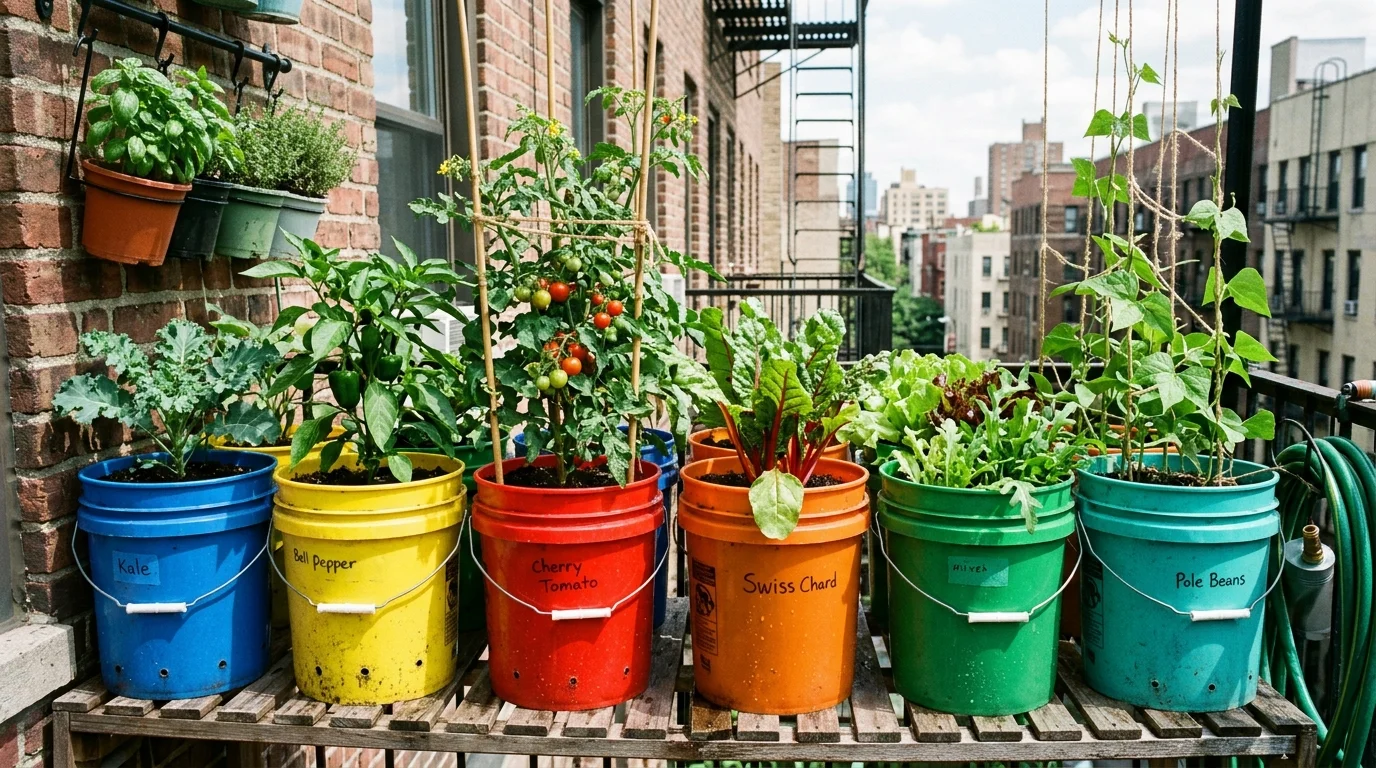
6. Repurpose buckets for budget-friendly growing
Buckets can make excellent vegetable containers when they drain properly and are used intentionally. They are affordable, easy to move, and especially useful for crops like peppers, potatoes, tomatoes, or leafy greens.
This is a practical option for beginners who want to start growing without investing heavily in new planters. Repeated clean containers can still look charming and organized.
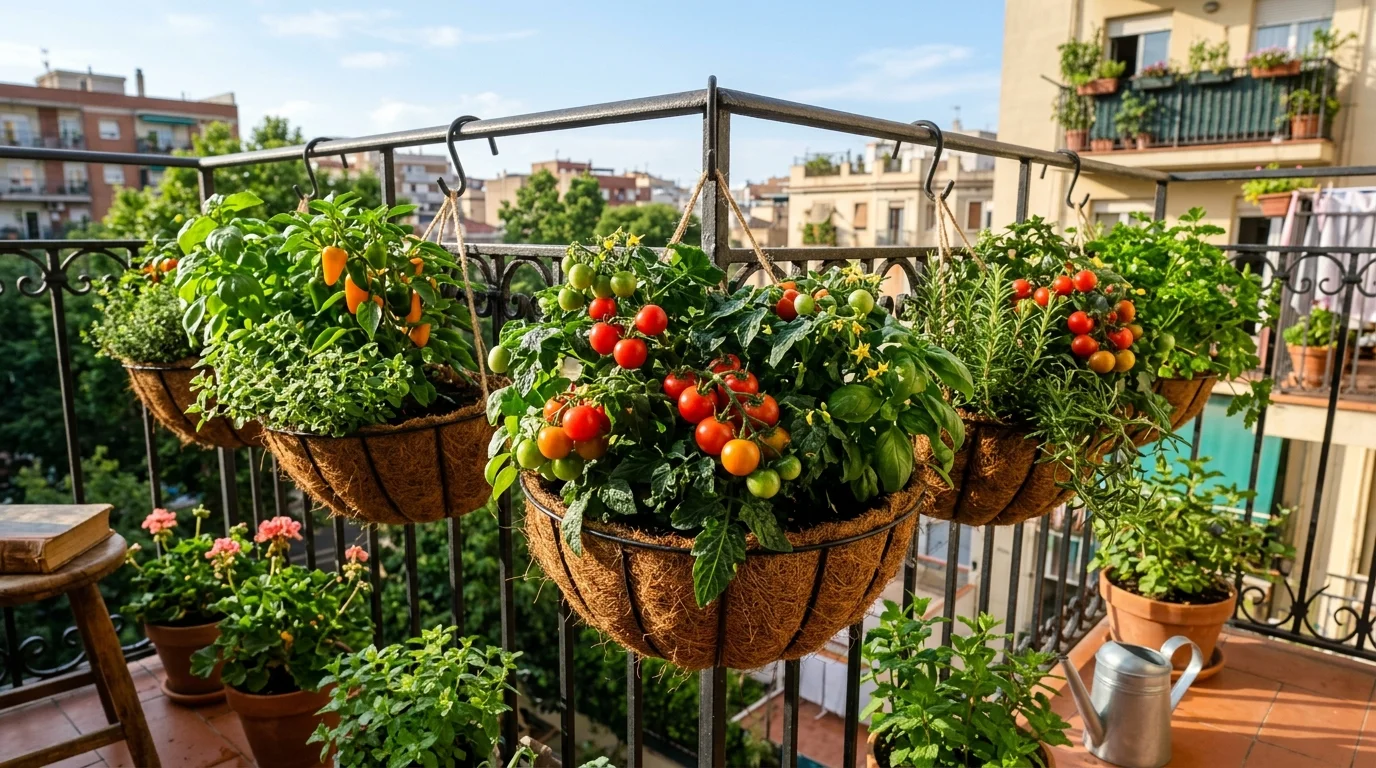
7. Hang containers to save floor space
Hanging planters are perfect when the ground area is limited but you still want more growing room. They work well for herbs, strawberries, and trailing edibles, and they help a small garden feel fuller and more layered.
This also adds visual interest by using the vertical field around the space, not just the floor or ledges.
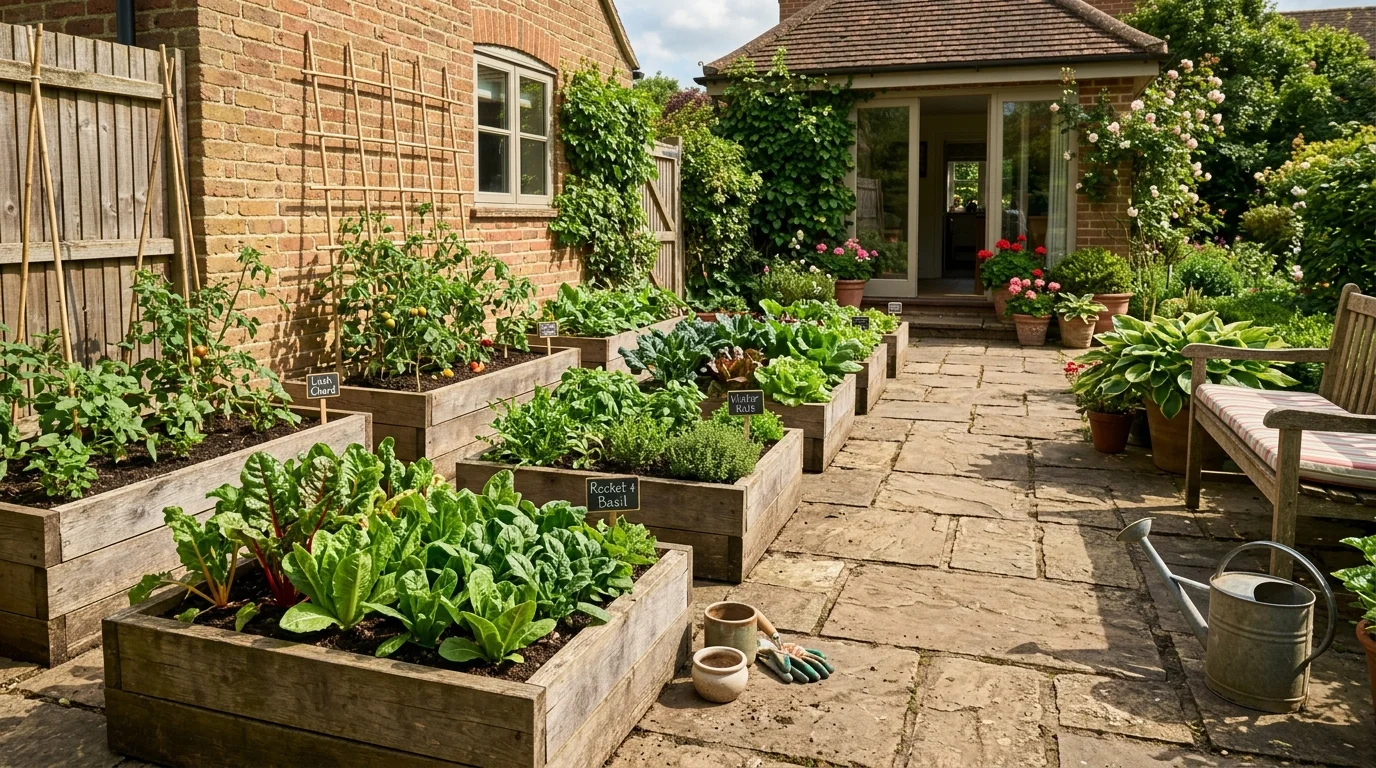
8. Line a patio with vegetable planter boxes
Planter boxes arranged along the edge of a patio can turn a hard outdoor surface into a productive garden zone. They define the space nicely and can make a plain patio feel greener and more purposeful.
This works especially well when the boxes are repeated in a simple rhythm. It keeps the layout feeling calm while still giving you plenty to grow.
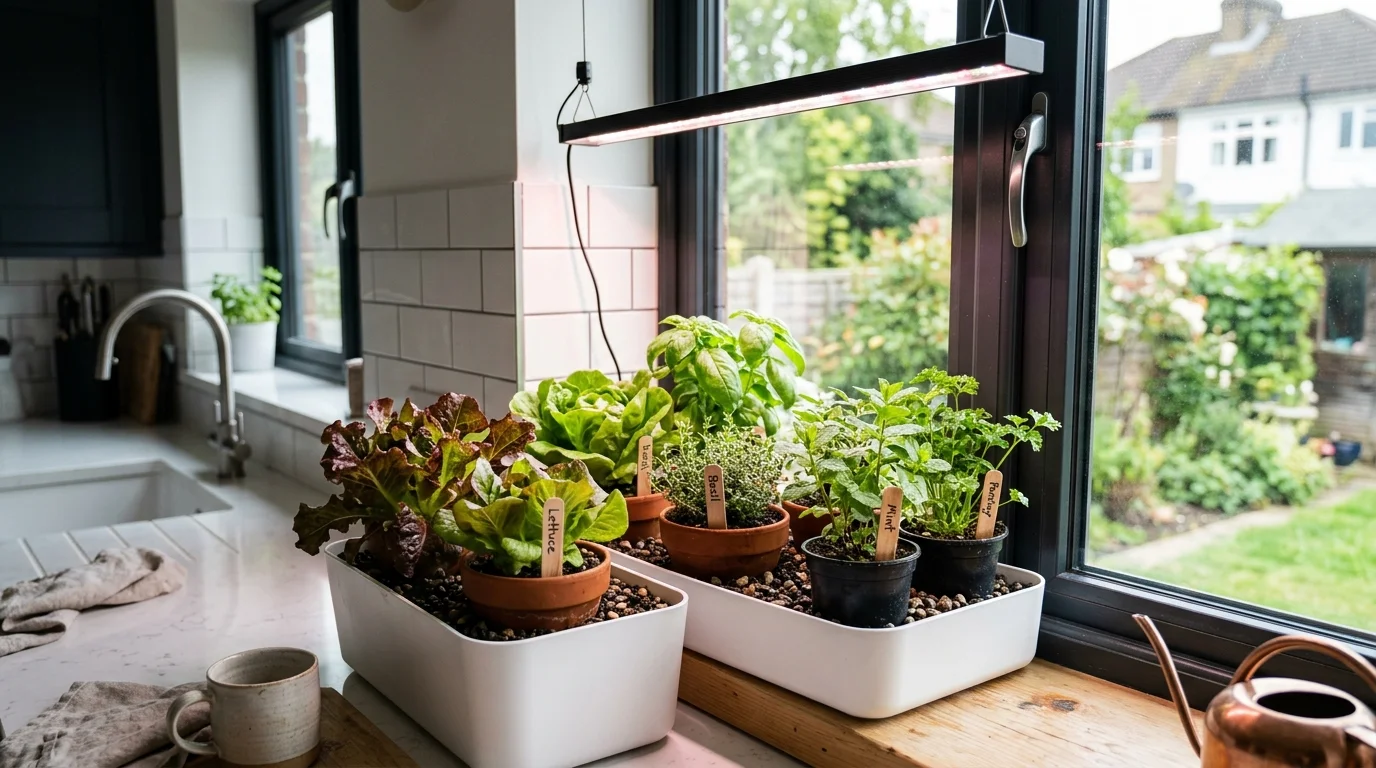
9. Grow indoors with lights when needed
If outdoor space is minimal or light is inconsistent, containers plus grow lights can help you keep herbs and some leafy vegetables going indoors. This is a useful solution for apartments, winter growing, or homes without reliable exterior sun.
The key is choosing crops that suit the setup. Herbs and cut-and-come-again greens tend to be especially good options.
10. Use a herb tower for compact edible planting
A herb tower is one of the most efficient ways to grow a lot in a very small footprint. It keeps multiple varieties in one tight structure and can work beautifully on patios, balconies, and porch corners.
This is especially useful for cooks who want easy access to fresh herbs without giving up a lot of space to separate pots.
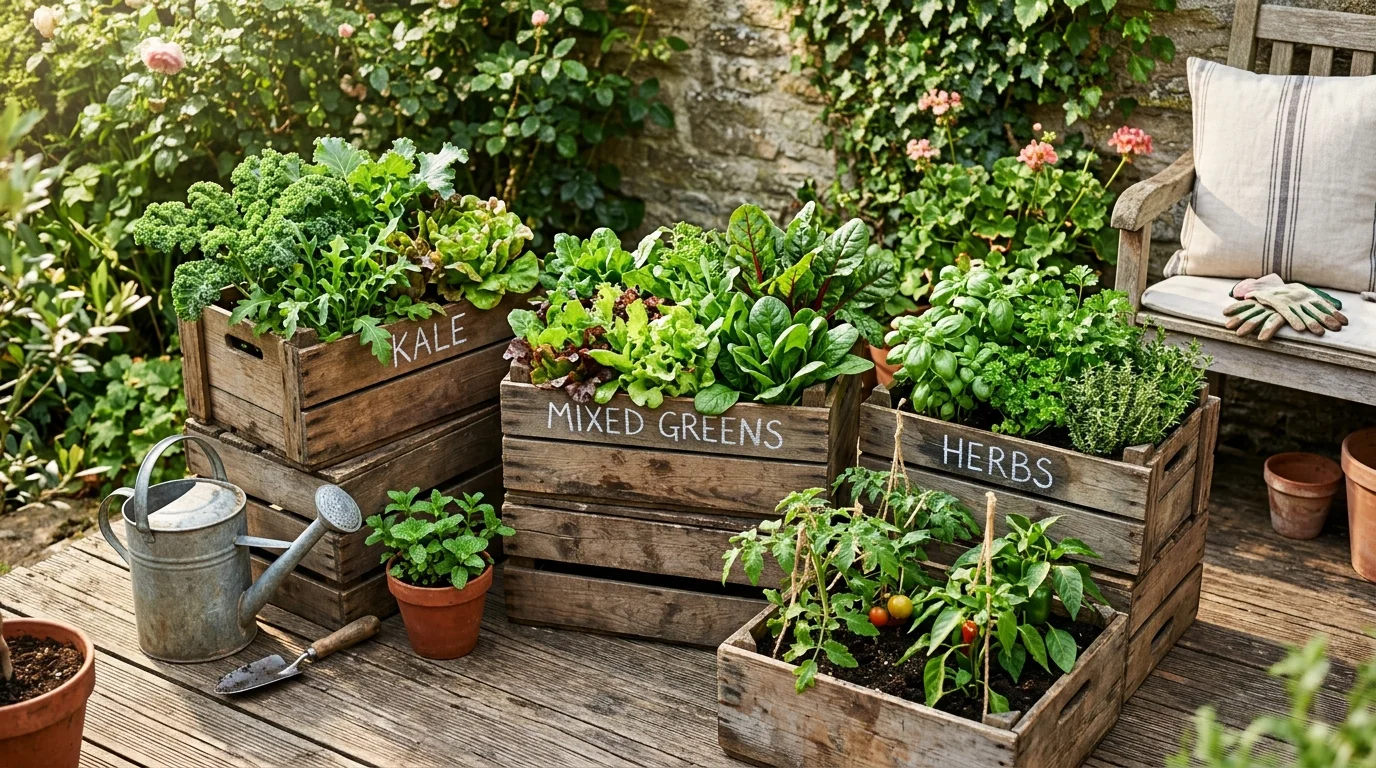
11. Try recycled crates for a casual flexible setup
Crates make useful containers because they are easy to arrange, move, and group. They also bring a relaxed, handmade character that can suit casual patios and small backyard gardens well.
This is a good option if you want a container garden that feels practical and informal without losing charm. Lined properly, crates can become very effective planters.
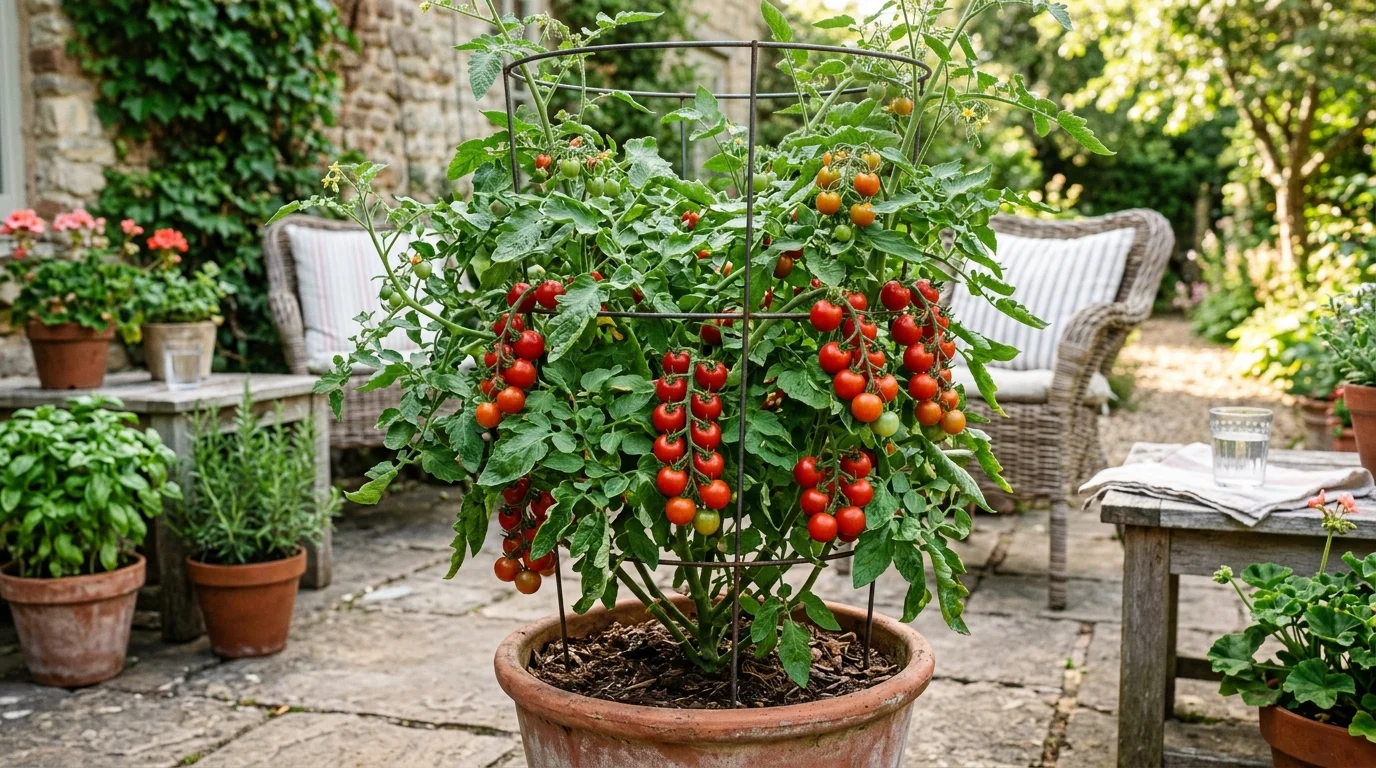
12. Support tomatoes properly in containers
Tomatoes can do very well in containers, but they need enough root room and reliable support. A cage or stake helps keep the plant upright, improves airflow, and makes harvesting much easier in a compact space.
This is a reminder that container gardening still benefits from the same smart structure you would use in a larger garden. Support matters.
13. Use companion planting in grouped containers
Companion planting can work well in containers when the crops have similar needs and the arrangement is kept manageable. Pairing compatible vegetables and herbs can make the garden feel more productive and visually fuller.
It is best to keep the combinations simple. Good pairings help a small garden stay efficient instead of becoming overcrowded.
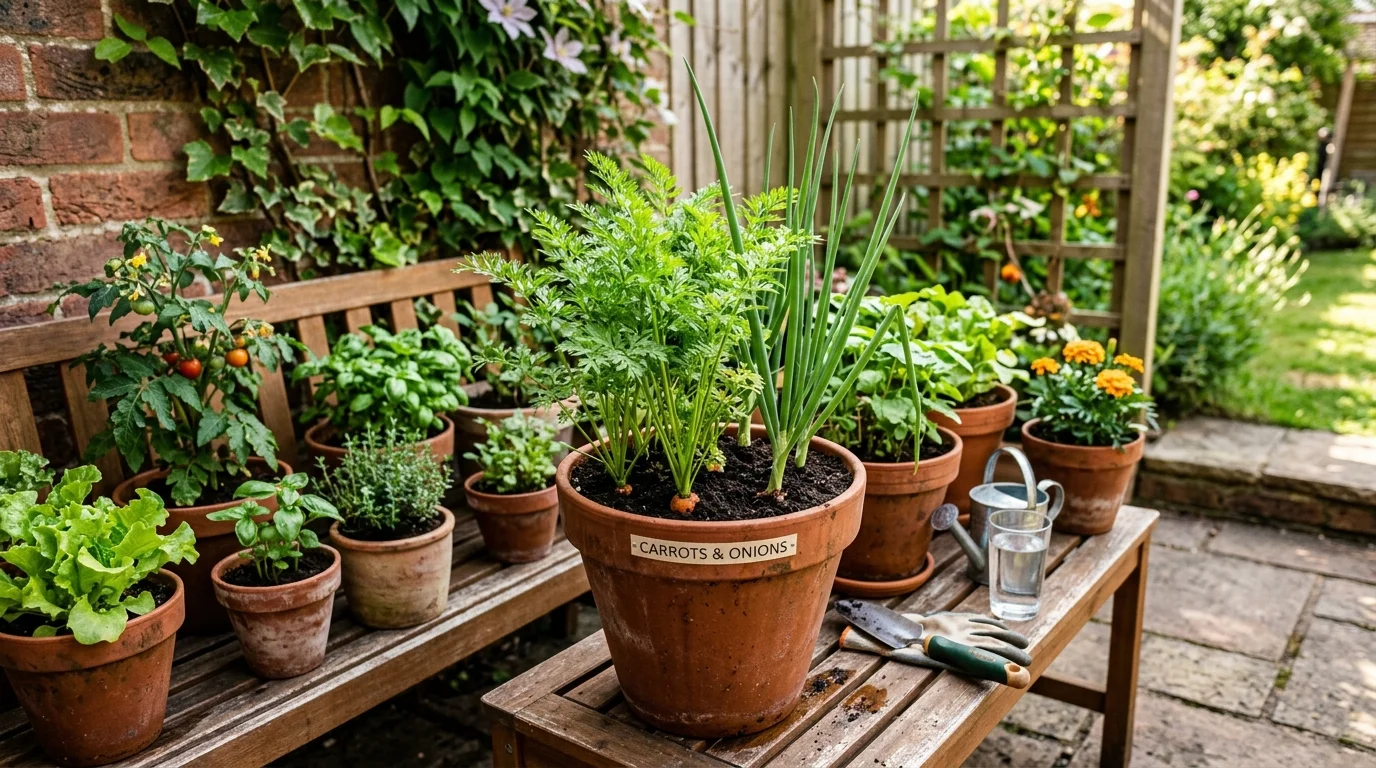
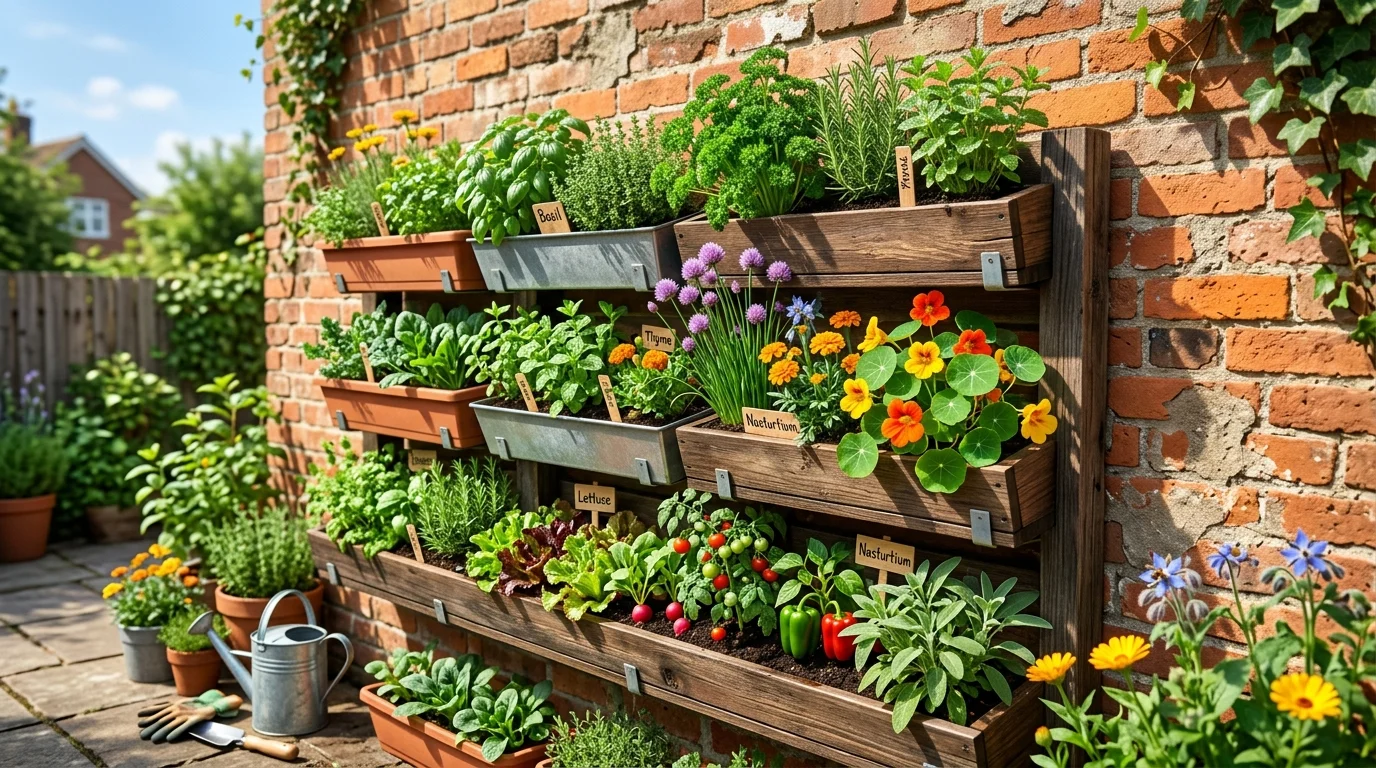
14. Create a hanging herb and vegetable wall
A wall of hanging edible containers can turn a blank surface into a productive feature. It makes excellent use of vertical space and gives the whole area a greener, more designed look.
This is particularly strong for patios, balconies, and narrow outdoor spaces where growing room needs to happen against the wall rather than out on the floor.
Final thoughts on vegetable container gardening ideas
The best container vegetable gardens feel organized before they feel crowded. Good containers, a clear layout, and thoughtful use of vertical space can help a very small area produce much more than most people expect.
If you are just getting started, begin with one or two systems that suit your space well, such as balcony pots, stackable planters, or planter boxes. Once those work smoothly, it is much easier to build outward and grow more with confidence.