Succulents can do far more than fill a pot on a patio. In the right landscape design, they bring structure, drama, texture, and a strong visual identity that makes the entire yard feel more intentional. They are especially powerful in sunny spaces where you want planting to look striking without becoming overly thirsty or difficult to maintain.
The best succulent landscaping ideas succeed because they lean into shape and contrast. Instead of relying only on flowers, they use sculptural leaves, repeated forms, gravel, stone, and architectural planting to create a yard that feels bold and memorable. These ideas are designed to show how succulents can transform everything from compact front yards to layered feature spaces.
How to design a bold succulent landscape
- Use contrast in scale, leaf shape, and planting height
- Pair succulents with stone, gravel, or clean edging for stronger definition
- Repeat key forms so the design feels intentional rather than random
- Treat succulents like structural design elements, not just filler plants
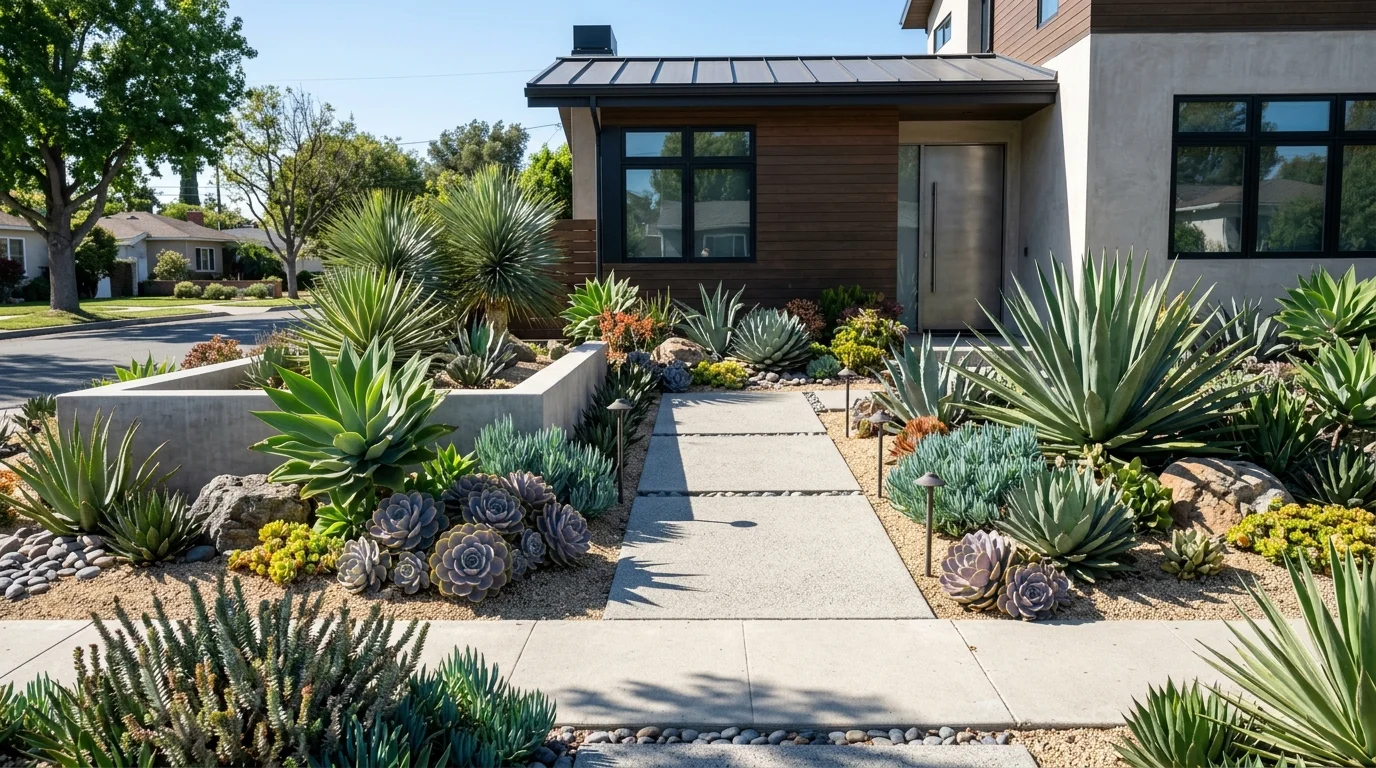
1. Modern Succulent Front Yard
A modern front yard planted with succulents feels clean, sculptural, and highly intentional. Repeated forms, generous spacing, and a strong relationship between planting and hardscape give the whole area a confident, designed look from the street.
This style works especially well if you want a low-maintenance front yard that still feels visually bold. The succulents do most of the design work through shape alone.
2. Succulent Rock Garden
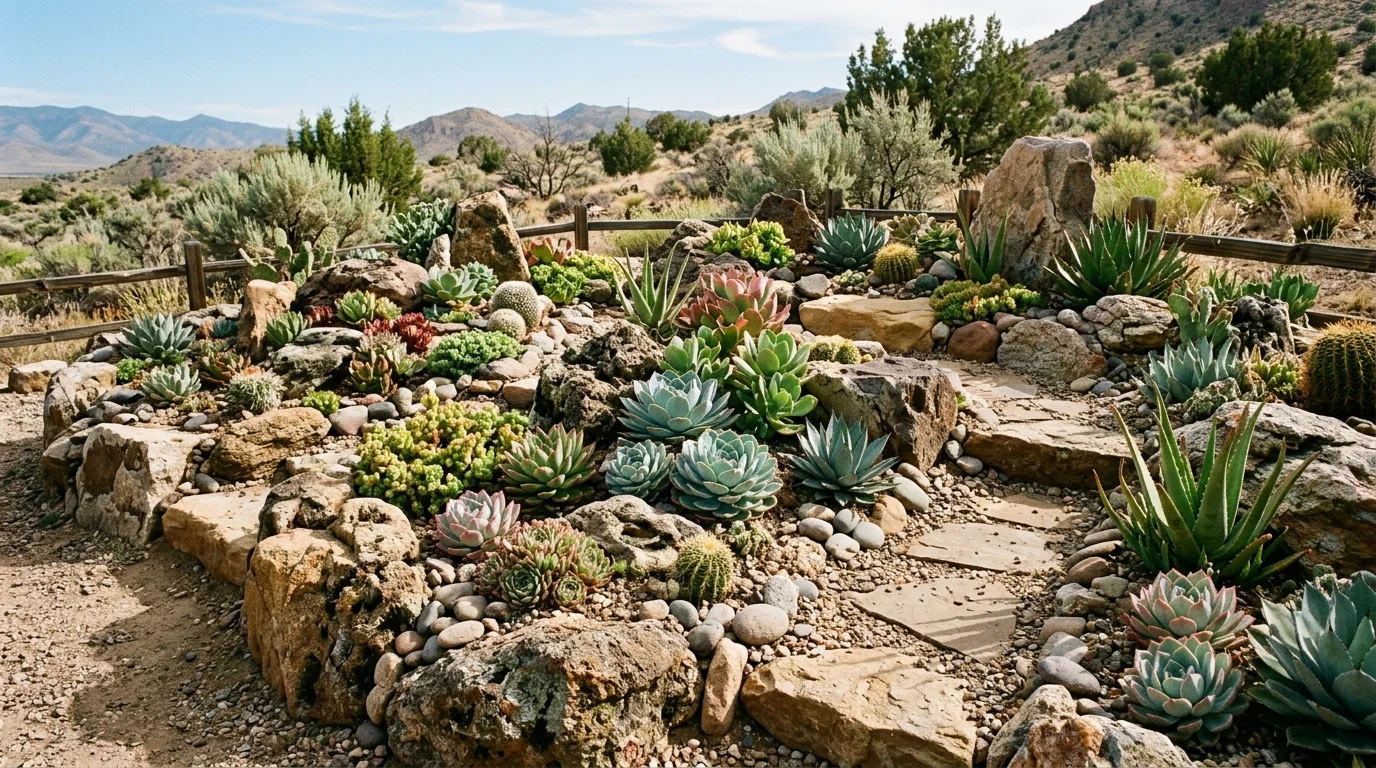
Rock gardens and succulents are a natural pairing because both emphasize texture and structure. Stones anchor the planting visually, while succulents soften the harder edges and bring color variation without making the landscape feel too soft.
This is a great option for dry, bright areas where you want a landscape that feels grounded and easy to maintain. The combination can look rugged, refined, or somewhere in between depending on the materials you choose.
3. Colorful Succulent Mosaic Bed
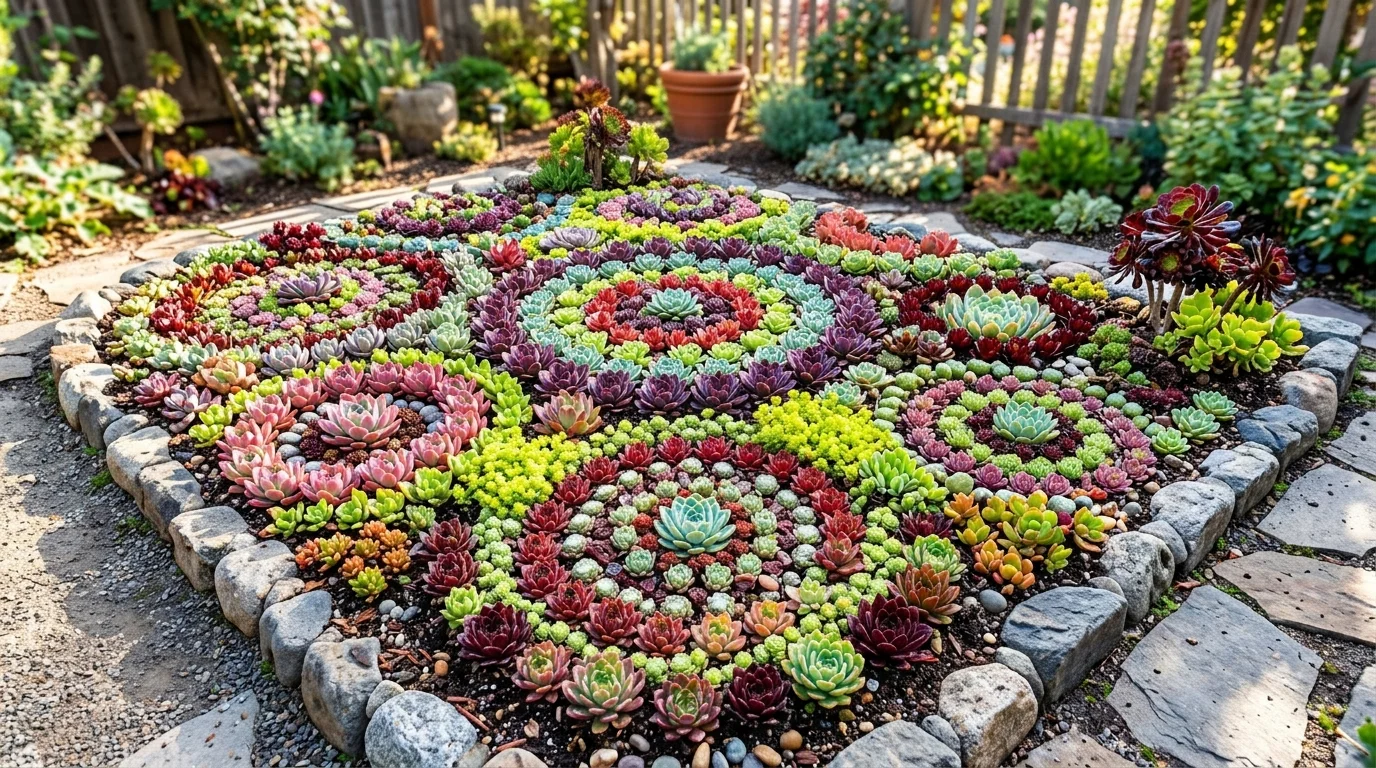
If you want a stronger decorative effect, a succulent mosaic bed can turn planting into pattern. Different leaf colors, rosette forms, and textures create a patchwork look that feels vivid and highly styled even without traditional flowering plants.
The key is to plan the repetition carefully so the design reads as intentional from a distance. Done well, it becomes one of the most eye-catching parts of the yard.
4. Desert-Inspired Minimal Landscape
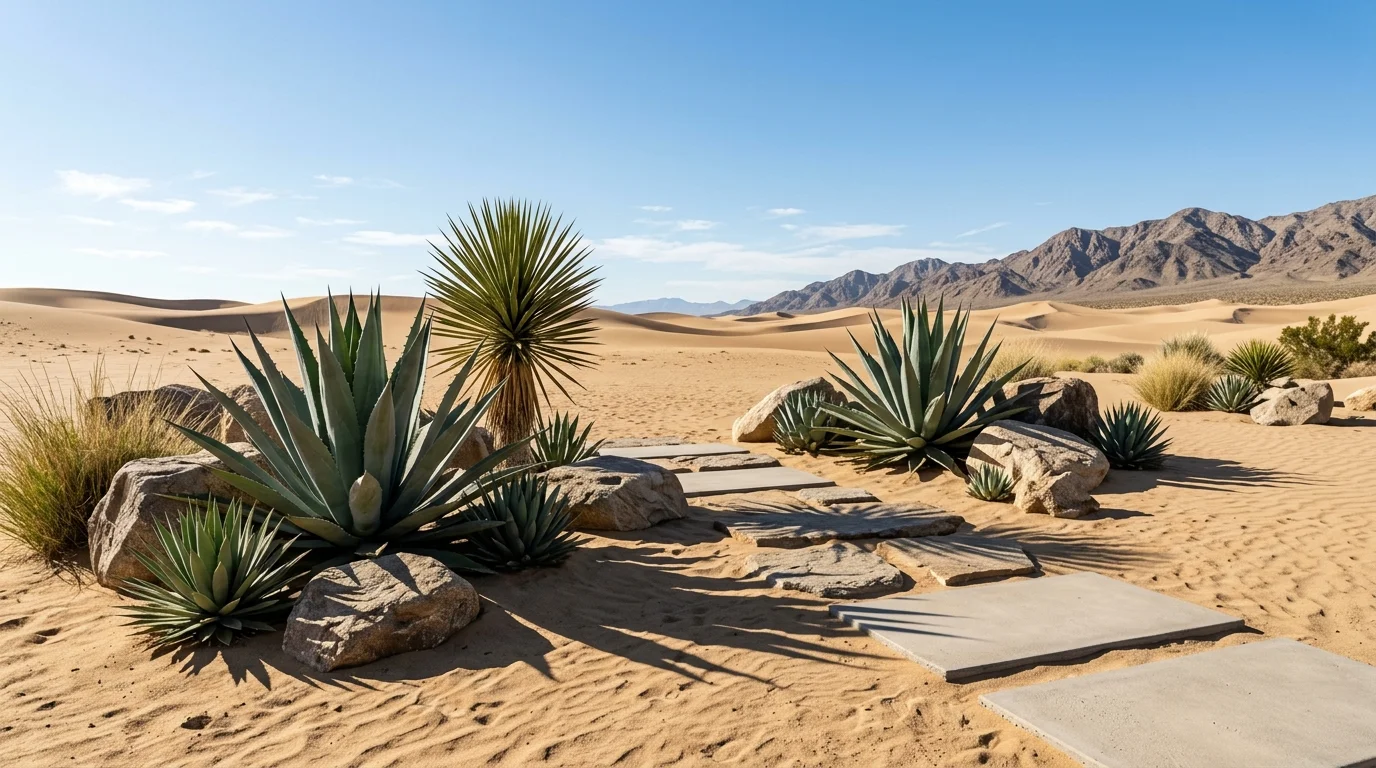
A desert-inspired succulent yard can feel calm, spacious, and quietly dramatic. Minimal planting, warm-toned stone, and strong forms make the design feel modern while still staying connected to natural textures and dry-climate planting.
This is ideal if you want a yard that feels low-clutter but not empty. Every plant earns its place, and the simplicity becomes part of the style.
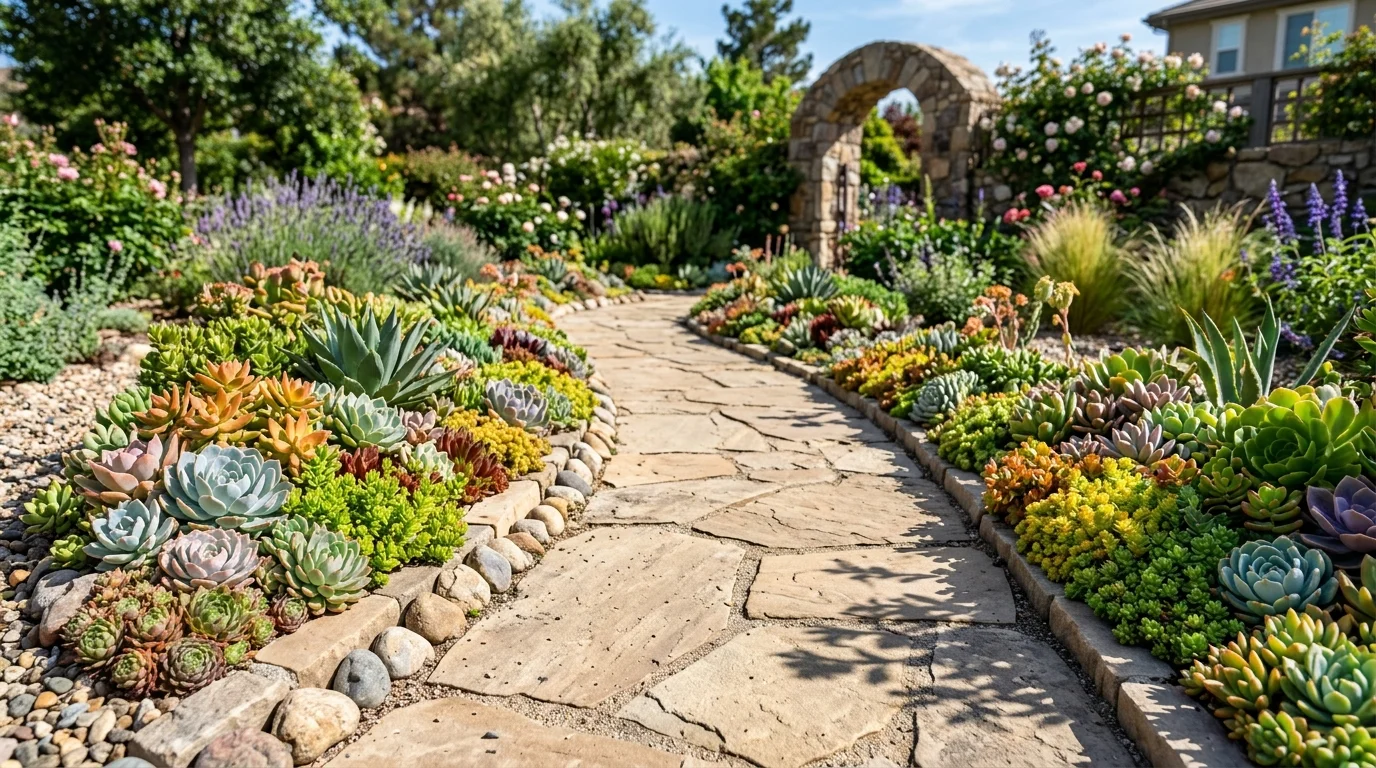
5. Succulent Border Along Pathway
Succulents can create an unexpectedly elegant border along a path. Their repeating shapes keep the walkway neat and defined, while their texture adds interest without making the edge feel too loose or overgrown.
This works especially well in modern gardens or warm-climate yards where you want a border that stays crisp and visually strong through the season.
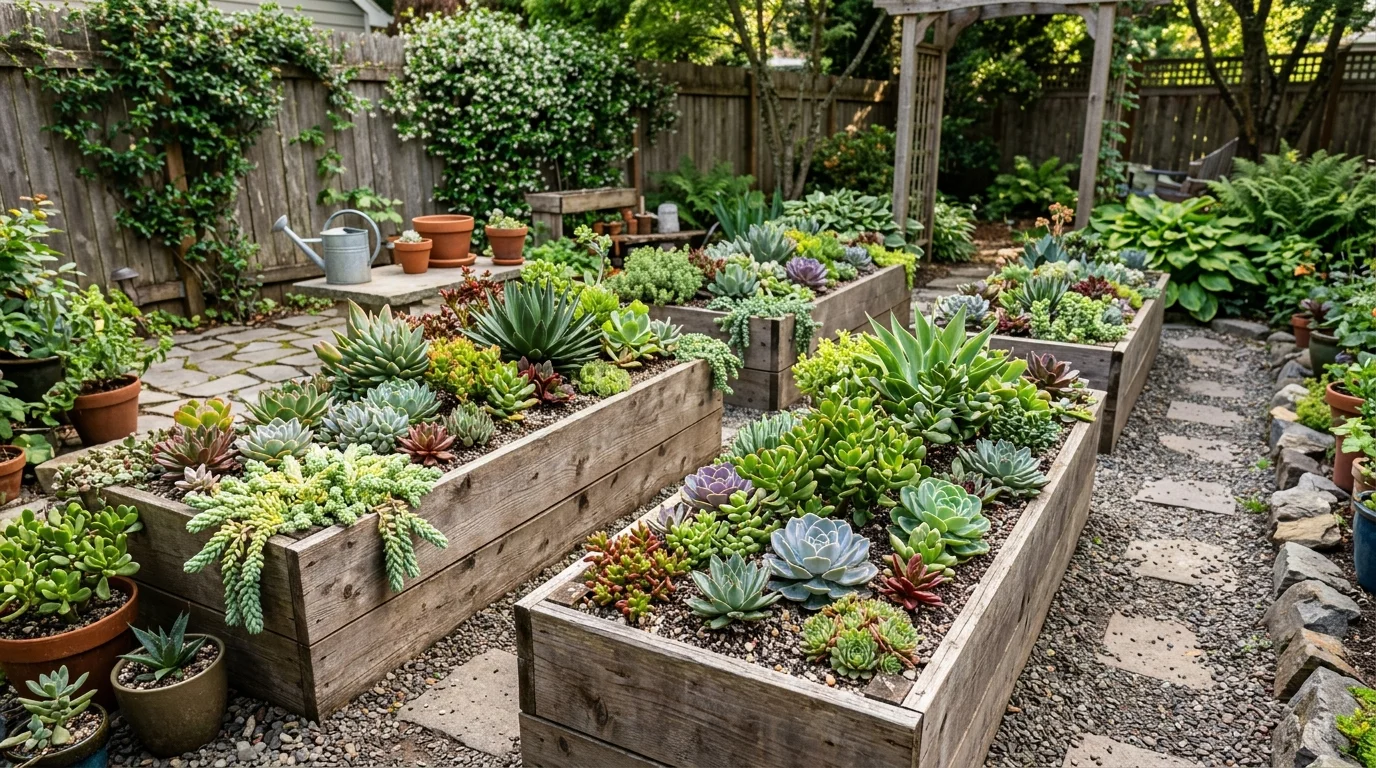
6. Raised Succulent Beds
Raised beds give succulents more visual presence by lifting the planting and making it feel like a feature. They also help create stronger structure in flatter yards where the landscape needs more height and definition.
This approach is especially useful if you want the planting to feel substantial without becoming busy. The raised form gives the garden a more designed, intentional edge.
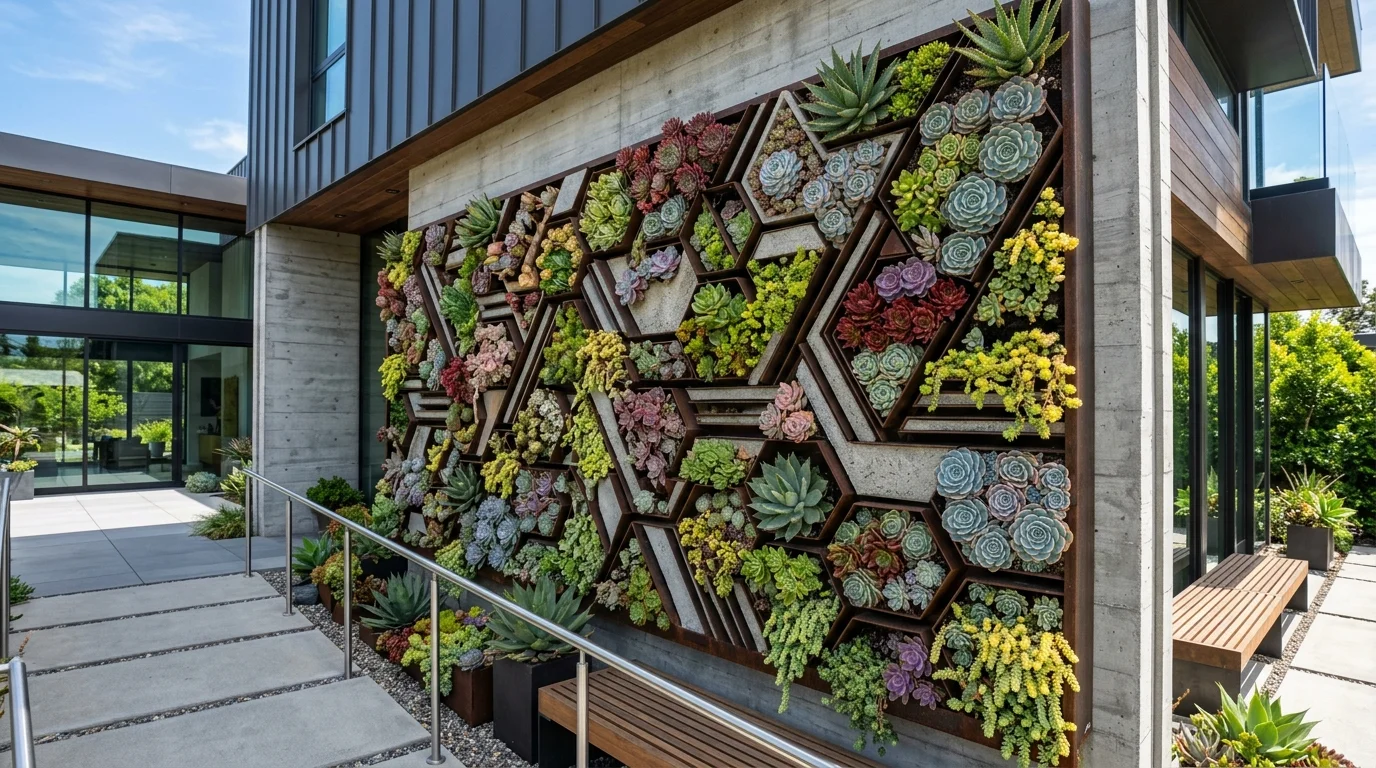
7. Succulent Wall Feature
A succulent wall instantly makes the yard feel more architectural. It uses vertical space in a way that feels modern and bold, while also adding living texture to fences, courtyard walls, or compact side spaces that need more interest.
This kind of feature works best when the planting is repeated with discipline. The effect should feel deliberate and sculptural rather than overly busy.
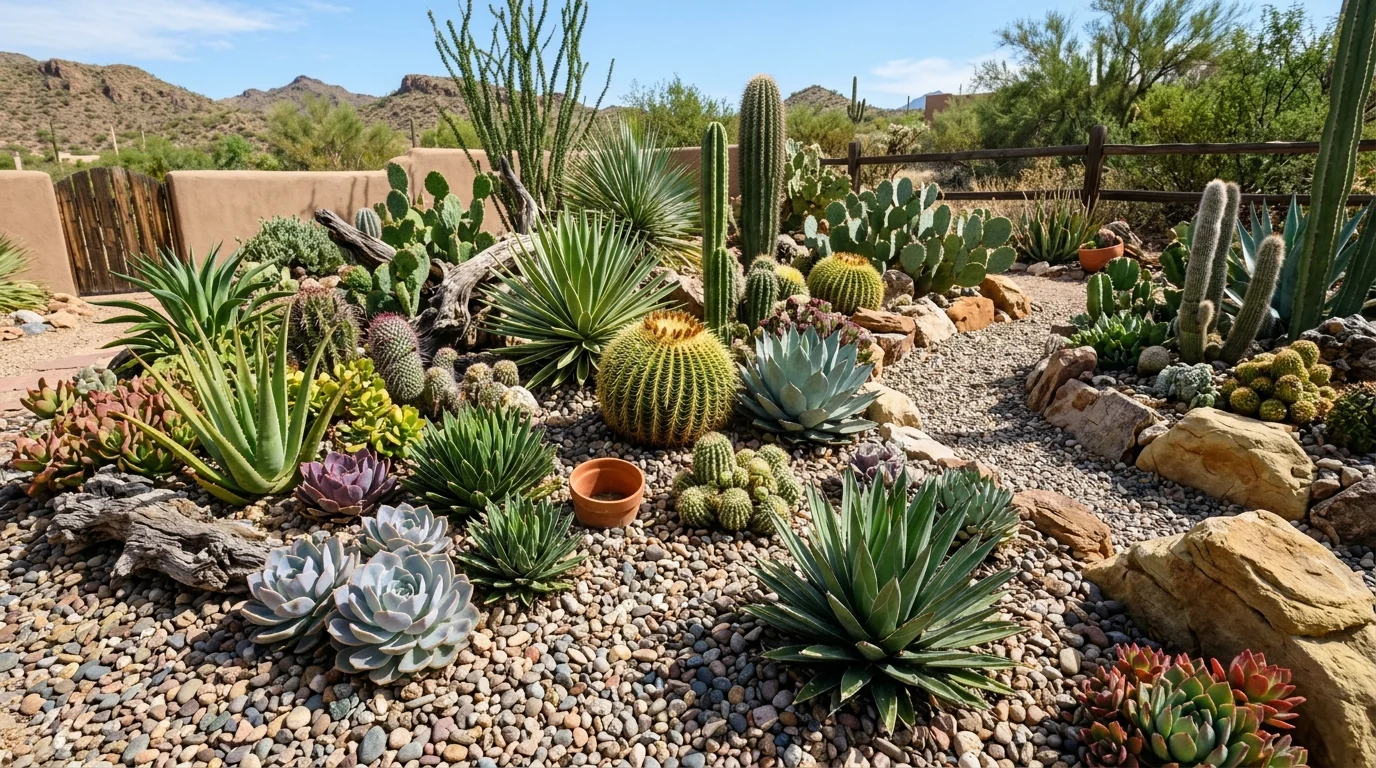
8. Mixed Succulent and Cactus Garden
Combining succulents with cacti creates a landscape with stronger contrast and more personality. The different silhouettes help the garden feel layered and bold, while still staying true to a dry, sunny planting style.
This mix suits anyone who wants a more expressive desert-inspired landscape. It feels slightly wilder and more striking than a purely succulent planting scheme.
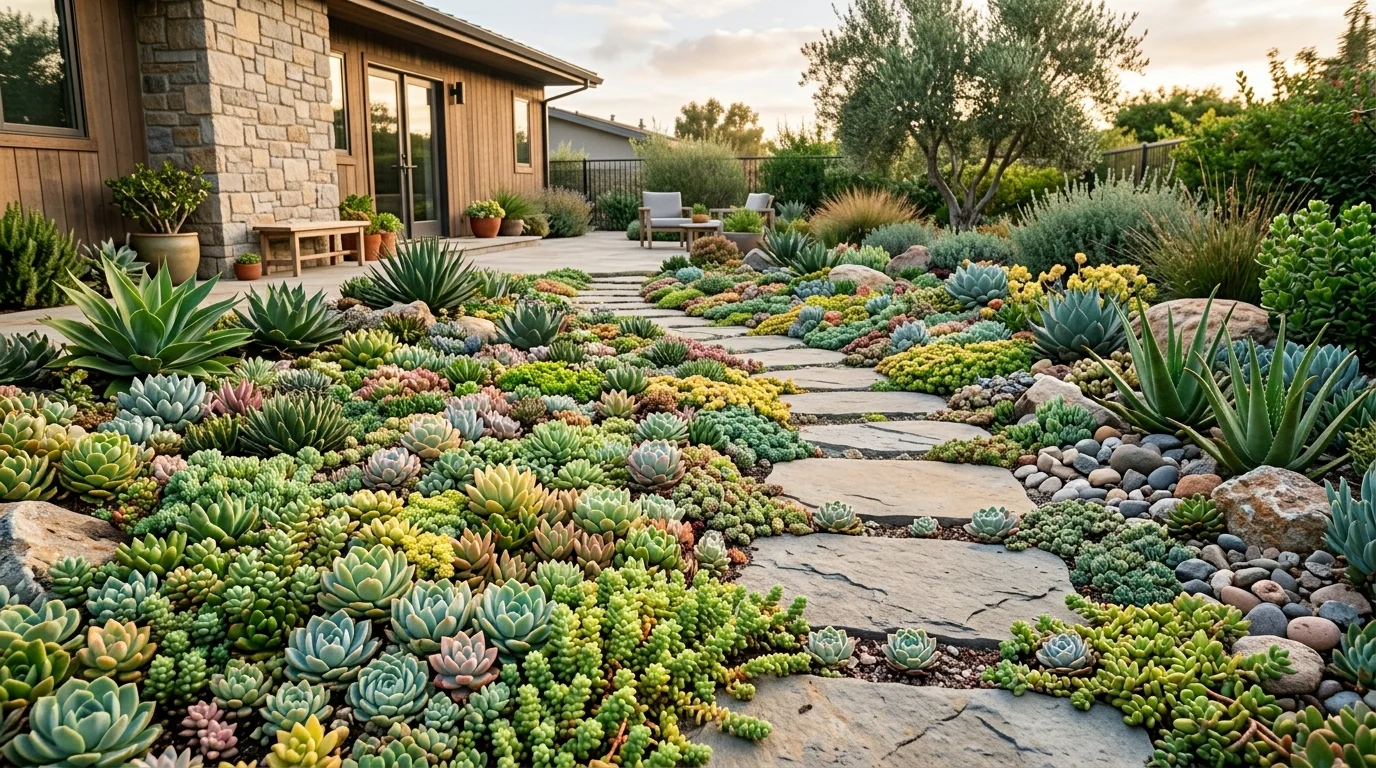
9. Succulent Ground Cover Design
Succulents can also work beautifully as ground cover, especially where you want a lower planting layer that still feels decorative. Repeated across a wider area, they create a carpet-like effect that looks intentional, modern, and highly textural.
This is particularly effective on slopes, around pathways, or in spaces where lawn feels unnecessary or too maintenance-heavy.
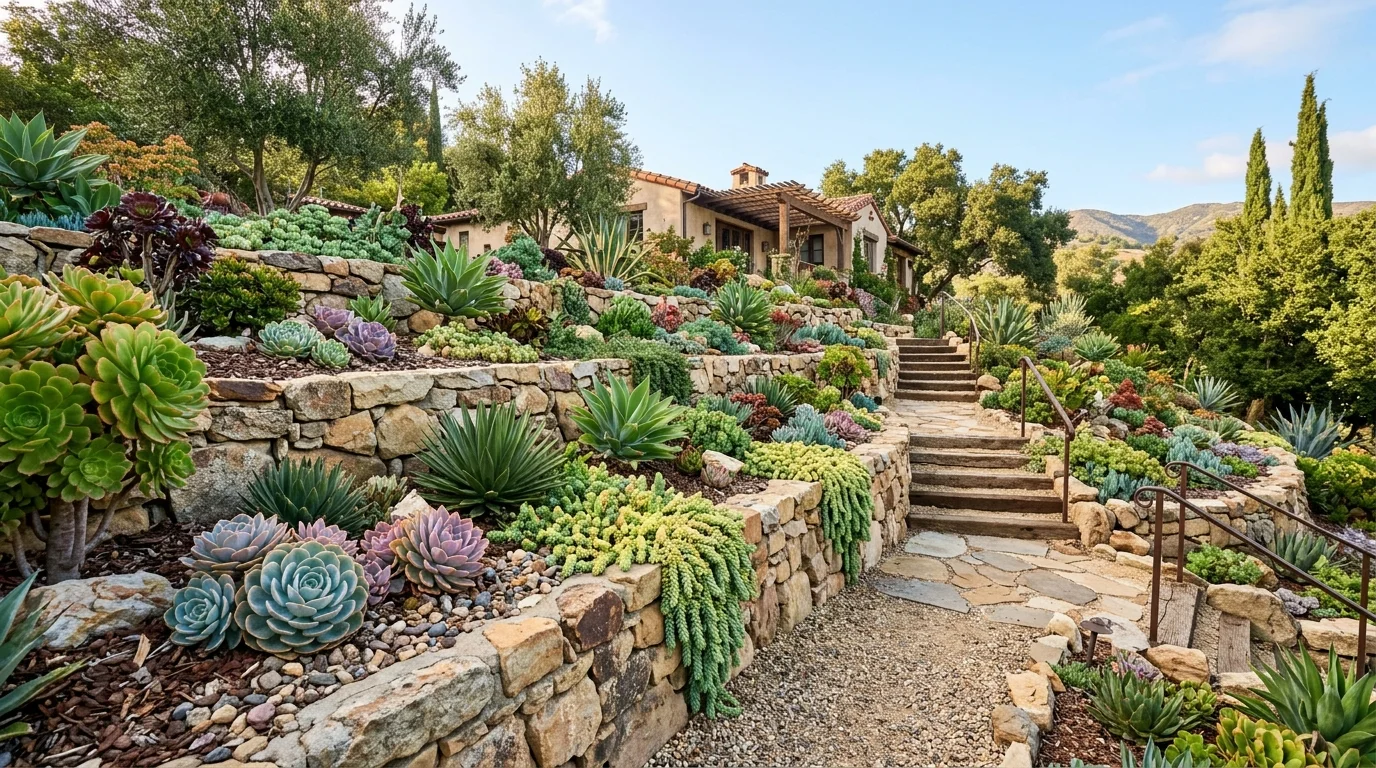
10. Terraced Succulent Landscape
A terraced design helps succulents feel even more dramatic because each level can carry a slightly different planting rhythm. The layered arrangement makes the yard feel deeper and more architectural while still staying rooted in drought-friendly planting.
This works especially well on sloped sites or yards where you want a more structured landscape experience instead of one flat planting zone.
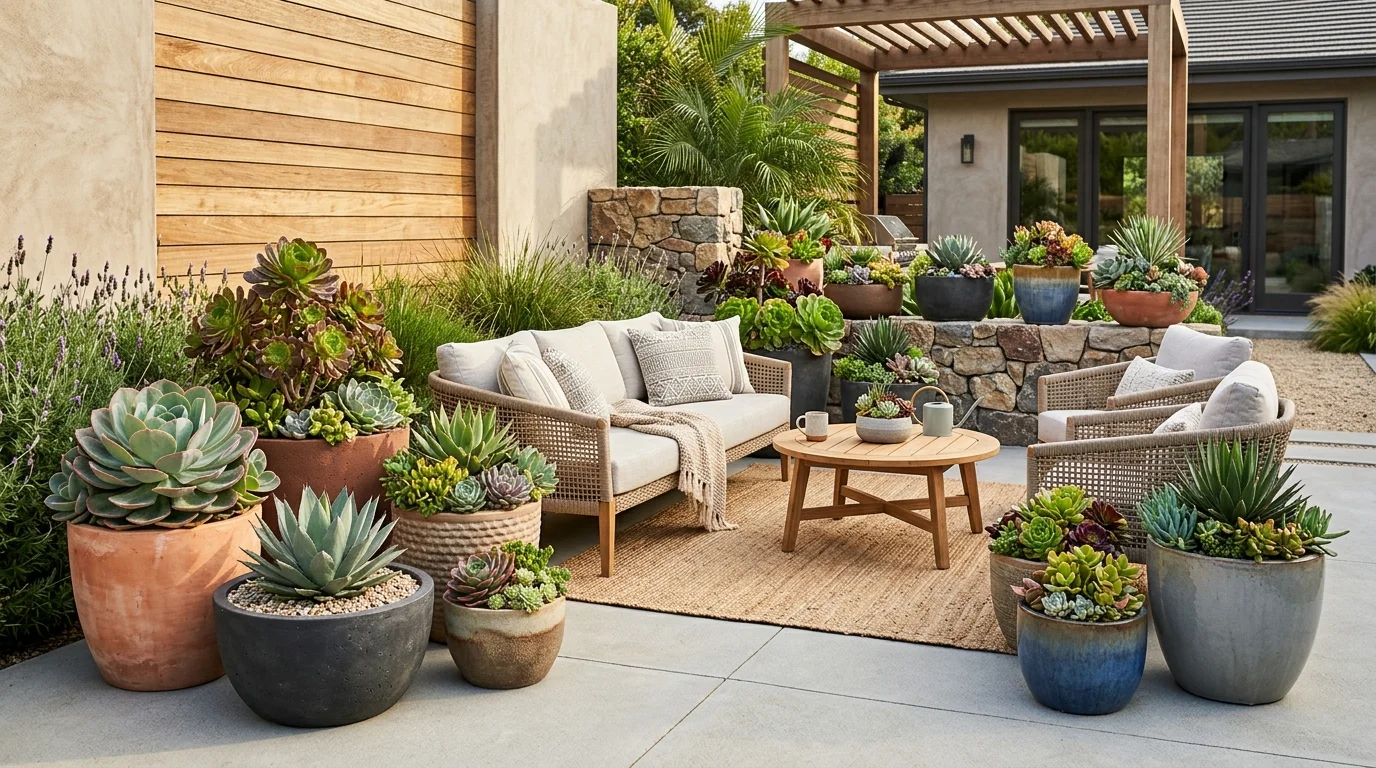
11. Succulent Containers Feature Area
Containers can turn a succulent planting scheme into a curated focal point. Grouped together, they create variation in height and shape while still allowing the planting to stay flexible, movable, and easy to refine over time.
This is a smart option for patios, entry areas, or smaller yards where you want the boldness of succulent landscaping without committing every bed to it.
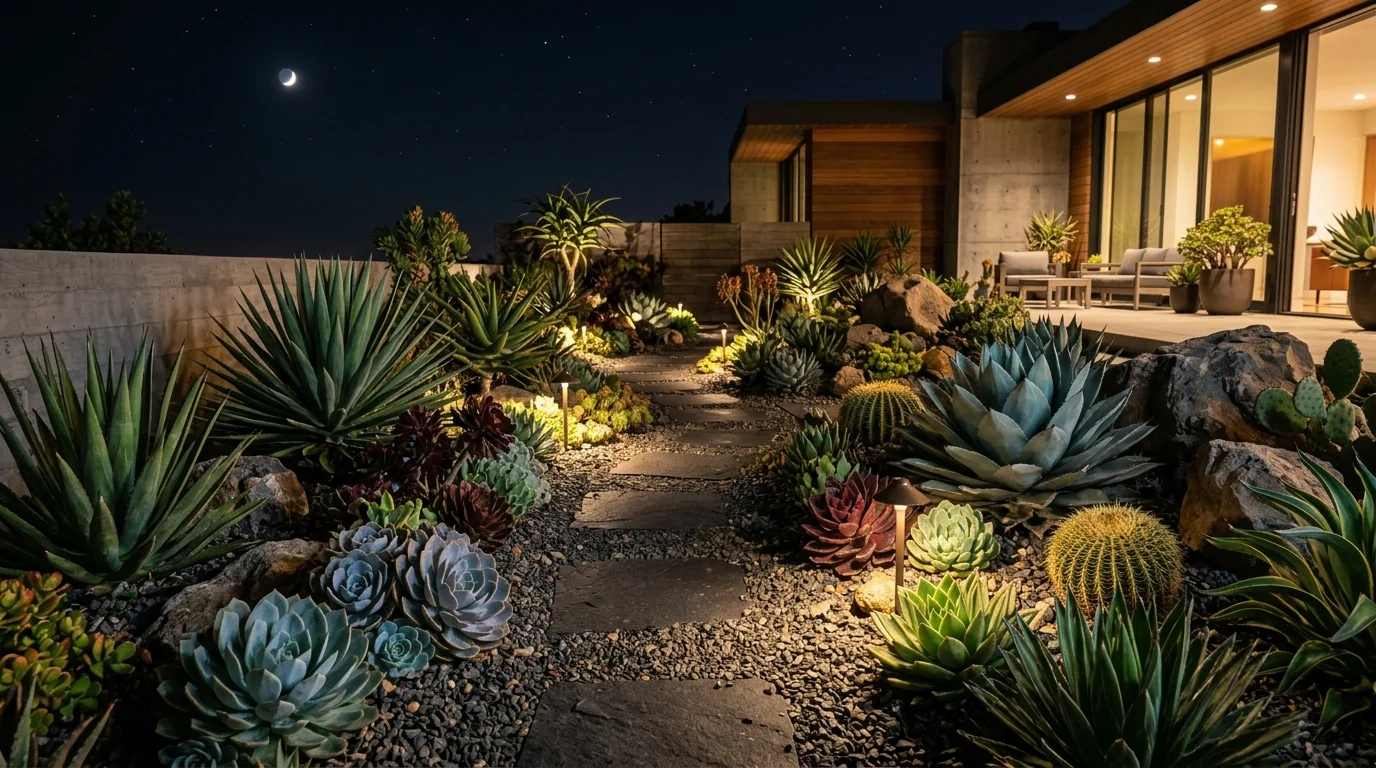
12. Dramatic Night Succulent Garden
Succulent planting can be especially striking at night when lighting catches the sculptural shapes and casts strong shadows across gravel, stone, and foliage. With the right placement, the garden becomes atmospheric in a completely different way after sunset.
This is an excellent approach for yards used in the evening, especially near outdoor dining, patios, or front entries where the landscape should still feel memorable after dark.
Final thoughts on succulent landscaping
Succulent landscapes work best when they are treated as design statements, not just collections of drought-tolerant plants. Their strength comes from form, repetition, contrast, and the way they interact with materials like gravel, stone, and architectural edges.
If you want a yard that feels bold, modern, and easier to maintain, succulents offer one of the most effective ways to get there. Start with one clear design direction, then let the structure of the planting carry the whole landscape.