Small space herb gardening is all about smart layout choices. When you do not have room for large garden beds, vertical surfaces, railings, and sunny corners become your best growing zones. With a little planning, you can grow a surprisingly abundant herb collection in a balcony, patio, or even indoors.
The key is to maximize light and keep plants accessible for regular harvesting. Herbs are happiest when you can pinch them back often, so layouts that feel easy to reach will always perform better.
These small space herb gardening ideas focus on vertical, balcony, and wall-friendly setups that are practical and stylish. Each one can scale up or down depending on how much space you have.
What makes herbs thrive in small spaces
- Consistent light, ideally 4 to 6 hours of sun
- Containers with good drainage and breathable soil
- Easy access for frequent harvesting
- Grouping herbs with similar water needs
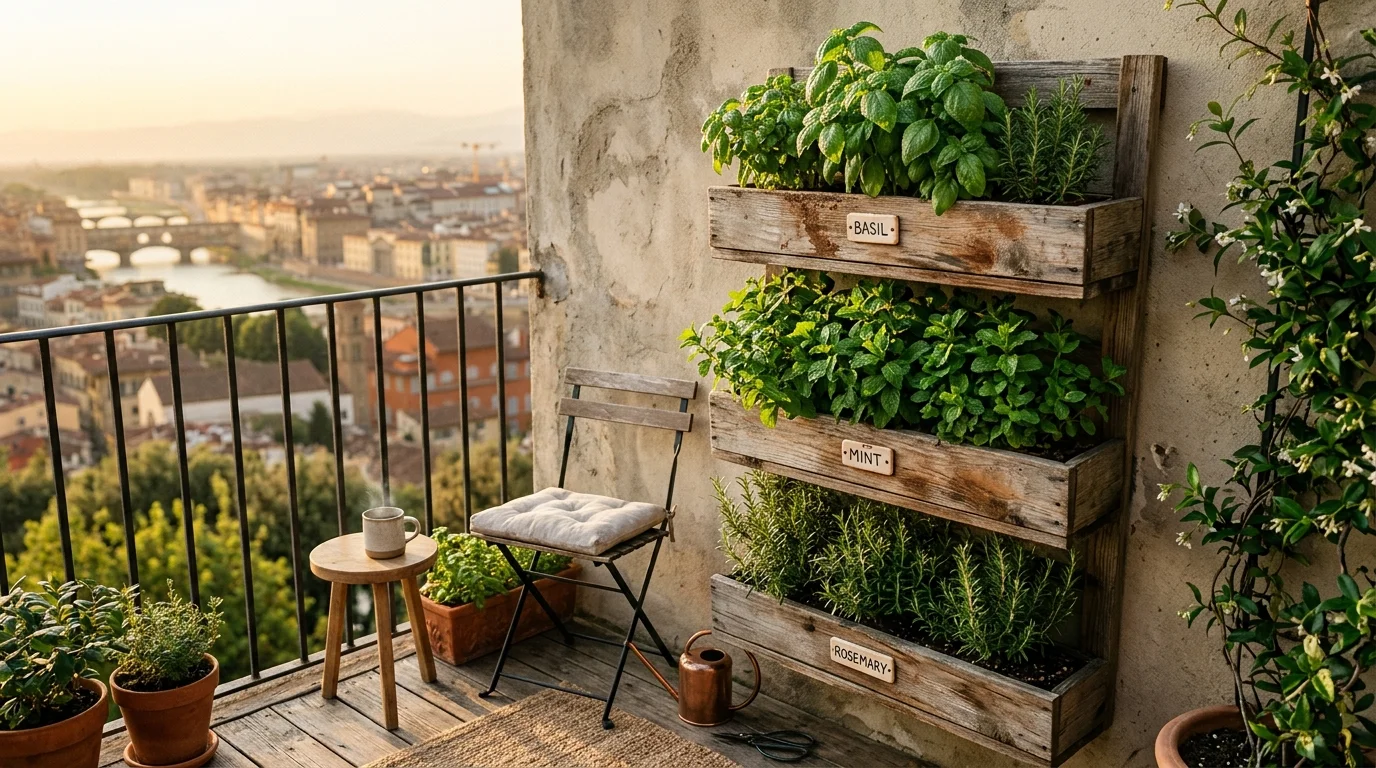
1. Vertical herb wall garden
A vertical wall garden is one of the most efficient ways to grow herbs in a tight space. It keeps the floor open while giving you room for multiple varieties.
Use sturdy containers and make sure the top row does not cast too much shade on the lower plants. This layout is perfect for balconies, patios, or outdoor kitchen walls.
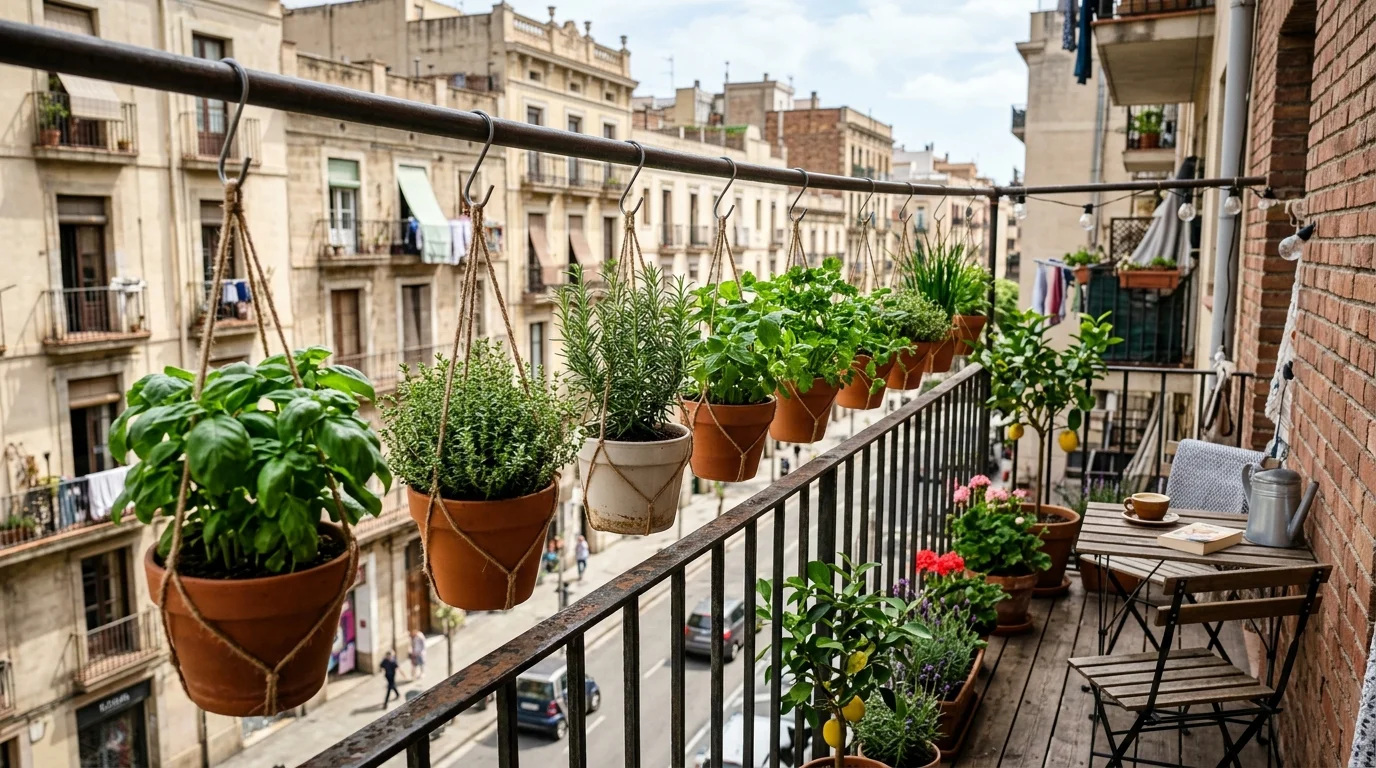
2. Hanging herb pots
Hanging pots create a light, airy look and work well when the floor is limited. They are especially useful on covered balconies or near sunny windows.
Choose herbs that spill slightly, such as thyme or oregano, so the arrangement looks full and natural. Just keep them low enough to water easily.
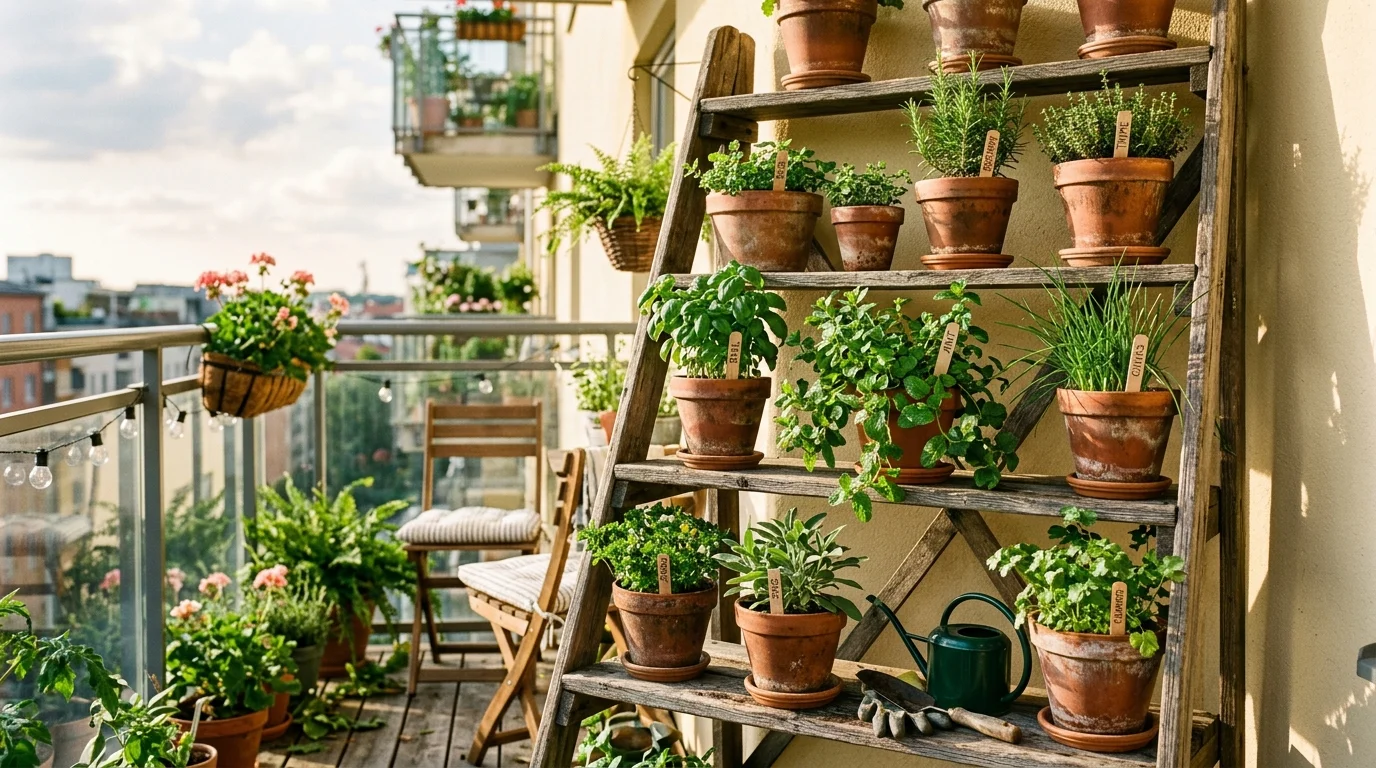
3. Ladder shelf herb display
A ladder shelf gives you multiple levels for herbs while keeping the arrangement neat. It is a great solution for patios because it can sit against a wall without taking much depth.
Use uniform pots to keep it cohesive and rotate the plants occasionally so each level gets balanced light.
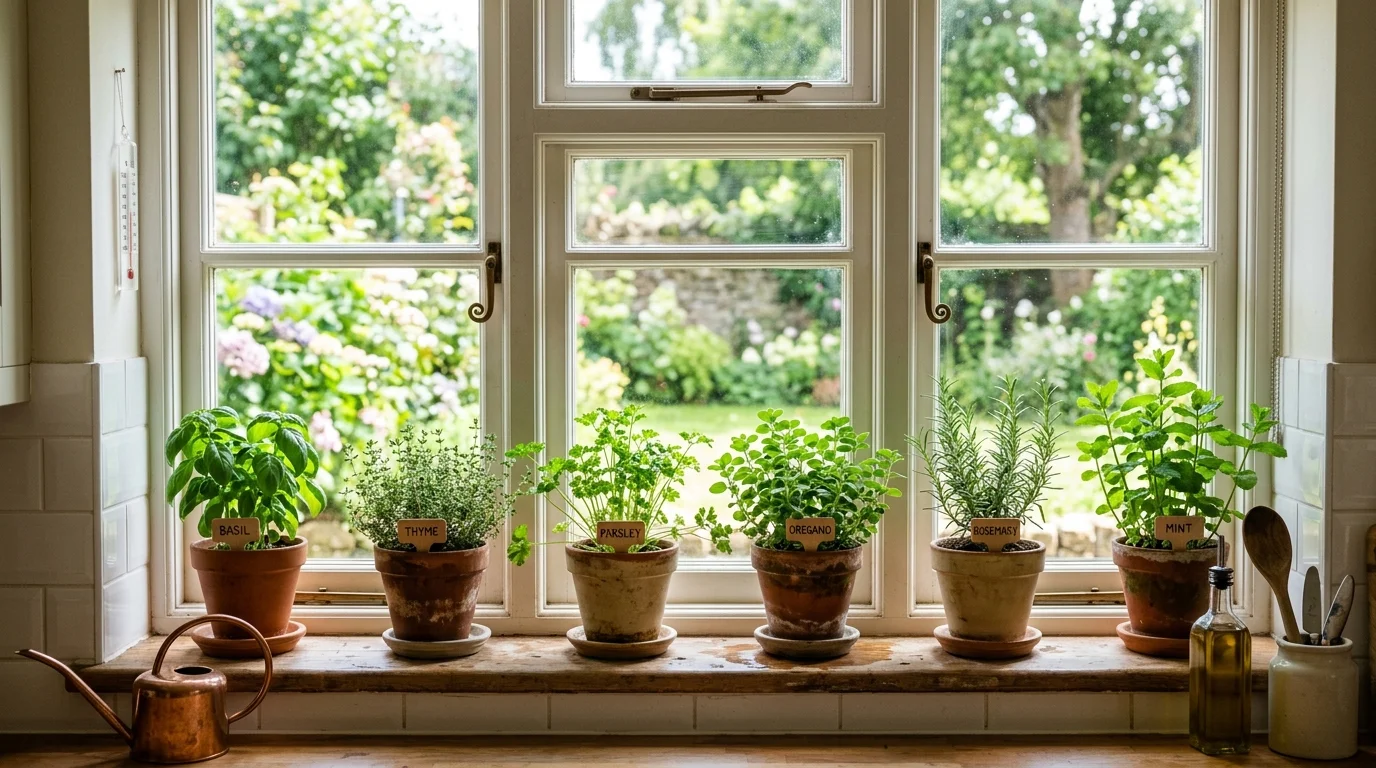
4. Window herb garden
If you are growing indoors, a bright window is often all you need. Window planters keep herbs within arm’s reach and make cooking more convenient.
Rotate the pots weekly so the herbs grow evenly, and avoid overwatering in cool indoor environments.
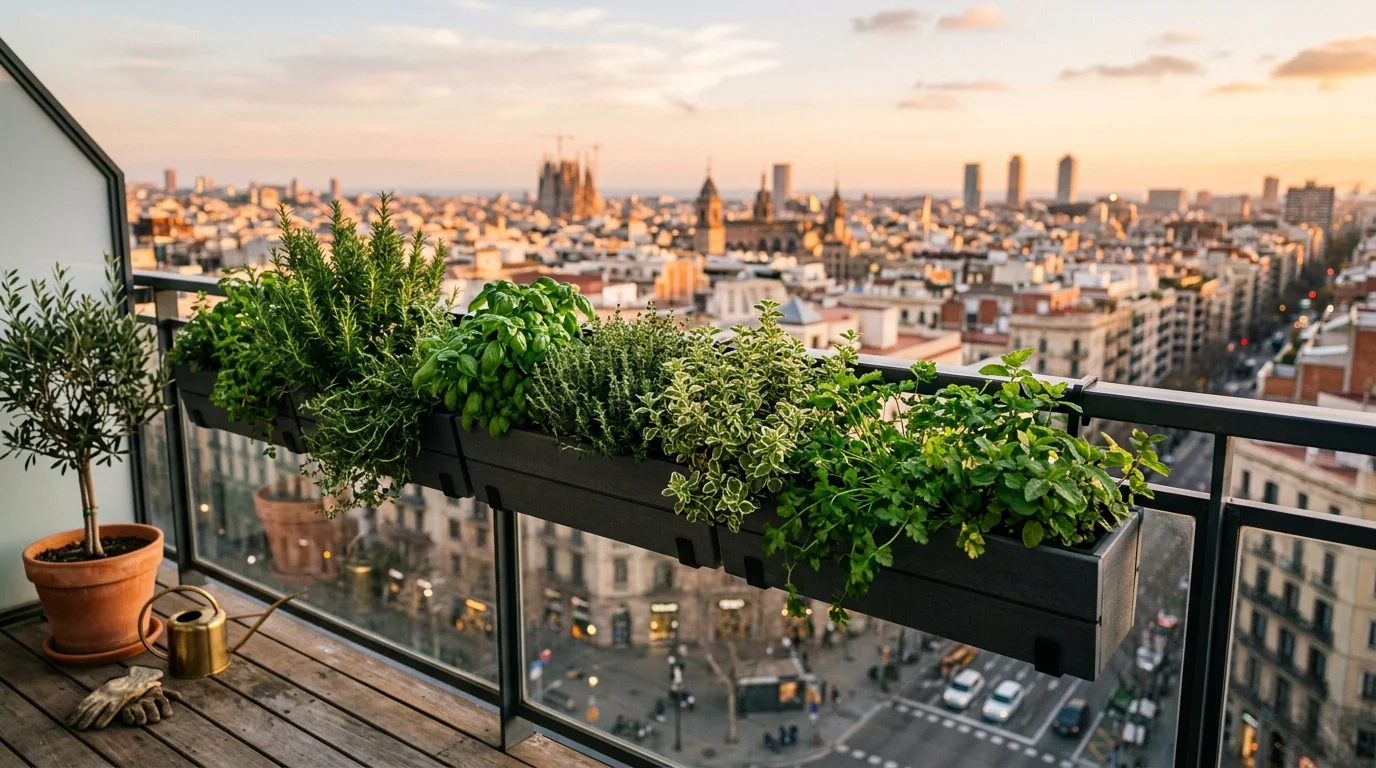
5. Rail planter herb setup
Balcony rail planters are ideal for herbs because they lift plants into better light. This also keeps the floor clear for seating.
Use herbs that handle a little wind, such as rosemary or sage, and secure the planters firmly.
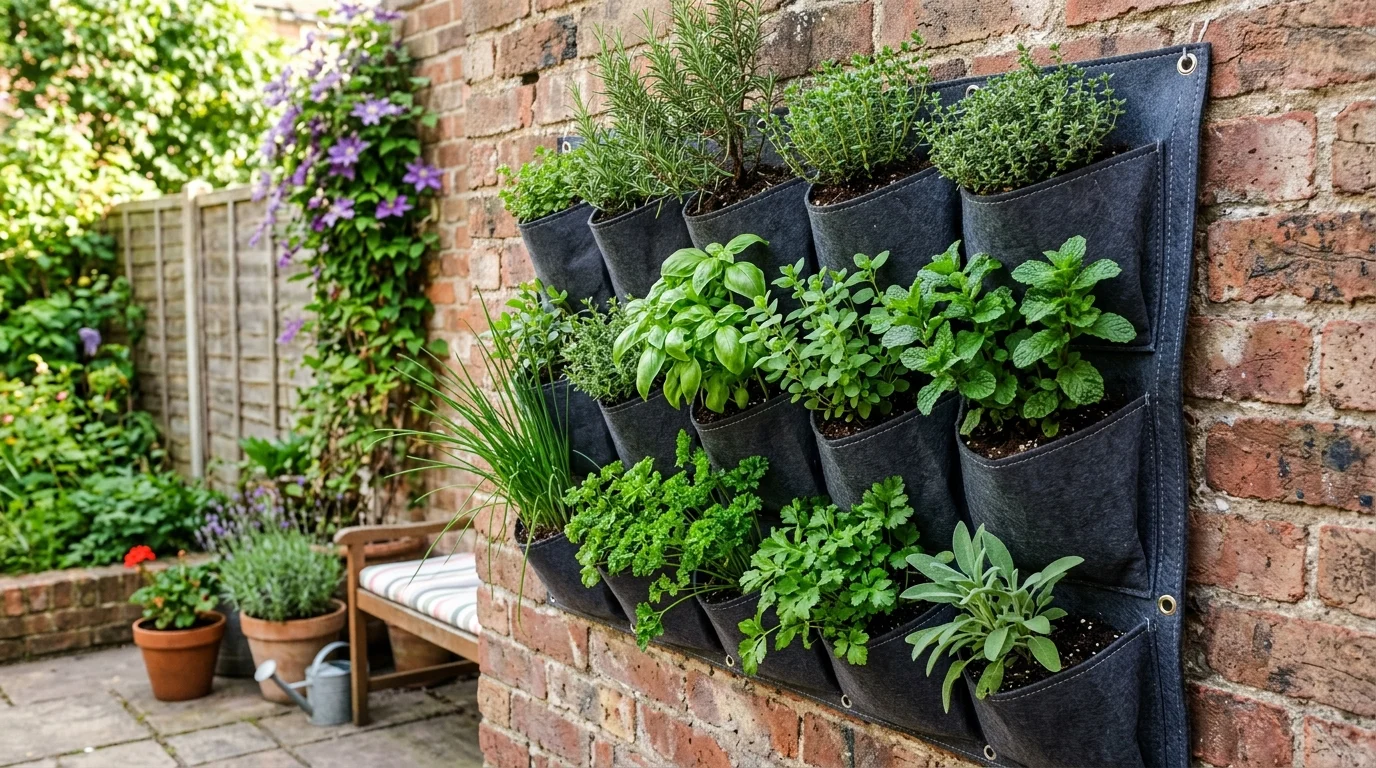
6. Wall-mounted pocket planters
Pocket planters create a lush wall of herbs without heavy containers. They are great for lighter herbs like basil, mint, and parsley.
Check the drainage so water does not drip onto walkways or indoor walls. A slim drip tray can help keep things tidy.
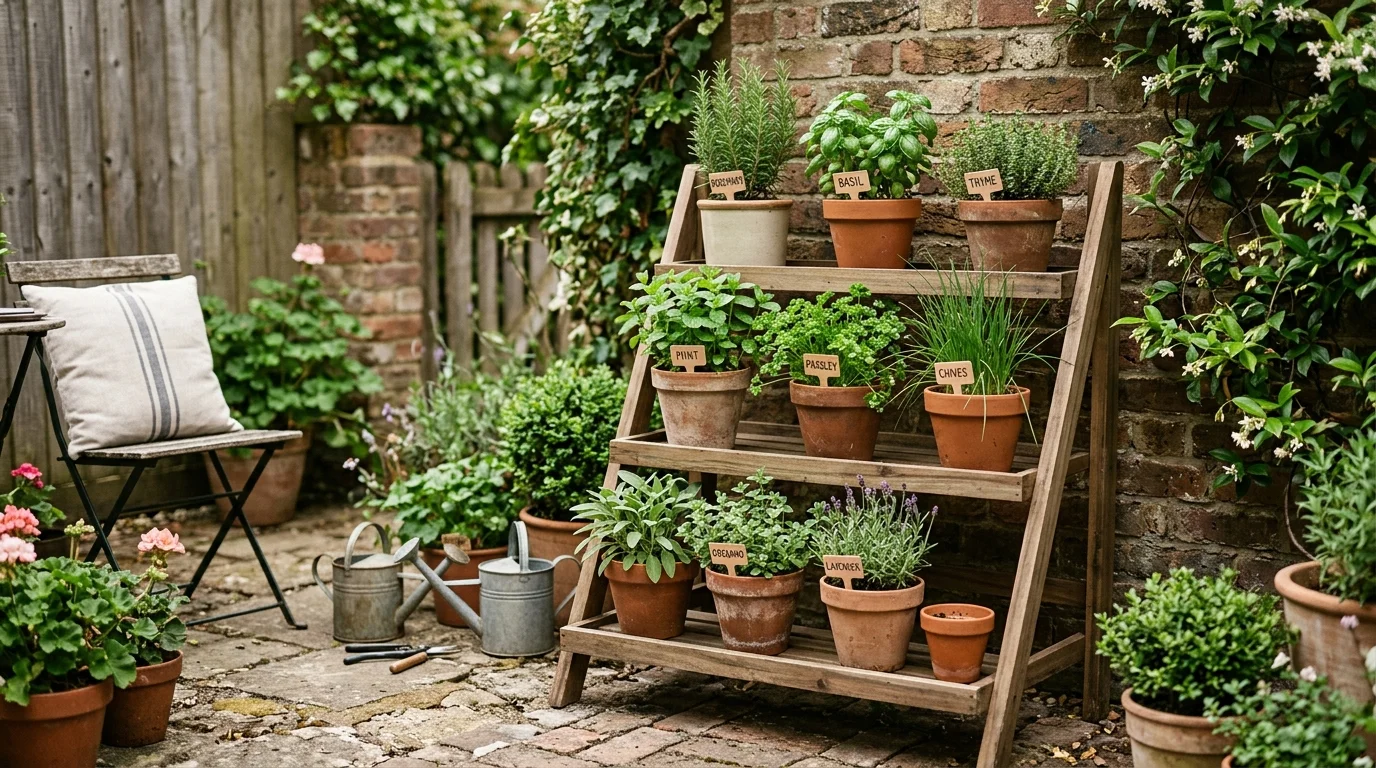
7. Tiered herb stand
A tiered stand works well when you want variety but have little space. It keeps herbs grouped while giving each plant enough light.
Place taller herbs on the lower tiers and smaller varieties higher up to keep the layout balanced.
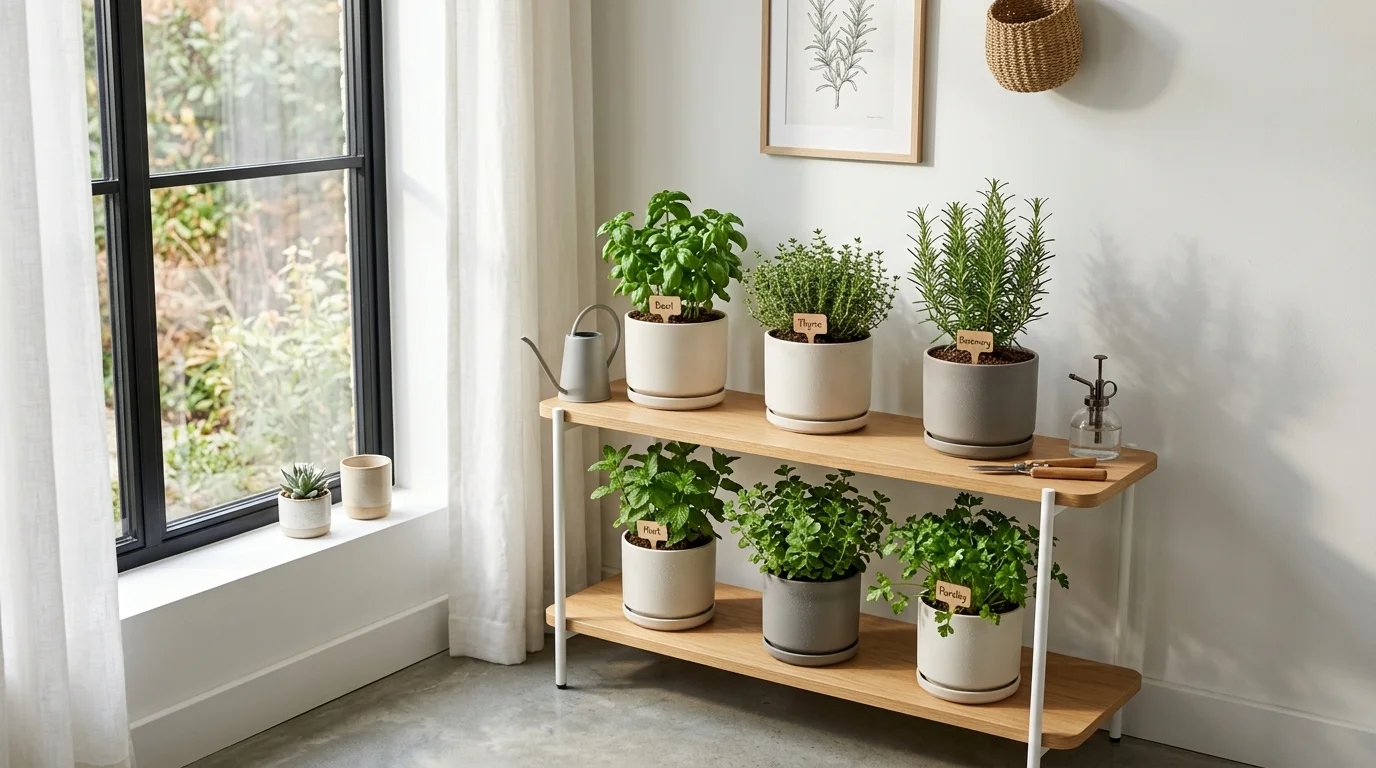
8. Minimalist indoor herb corner
A minimalist herb corner is perfect for kitchens or dining areas. A simple shelf, a few matching pots, and good light create a clean, calm look.
Choose slow-growing herbs so the corner stays tidy. This works well for basil, chives, or compact thyme.
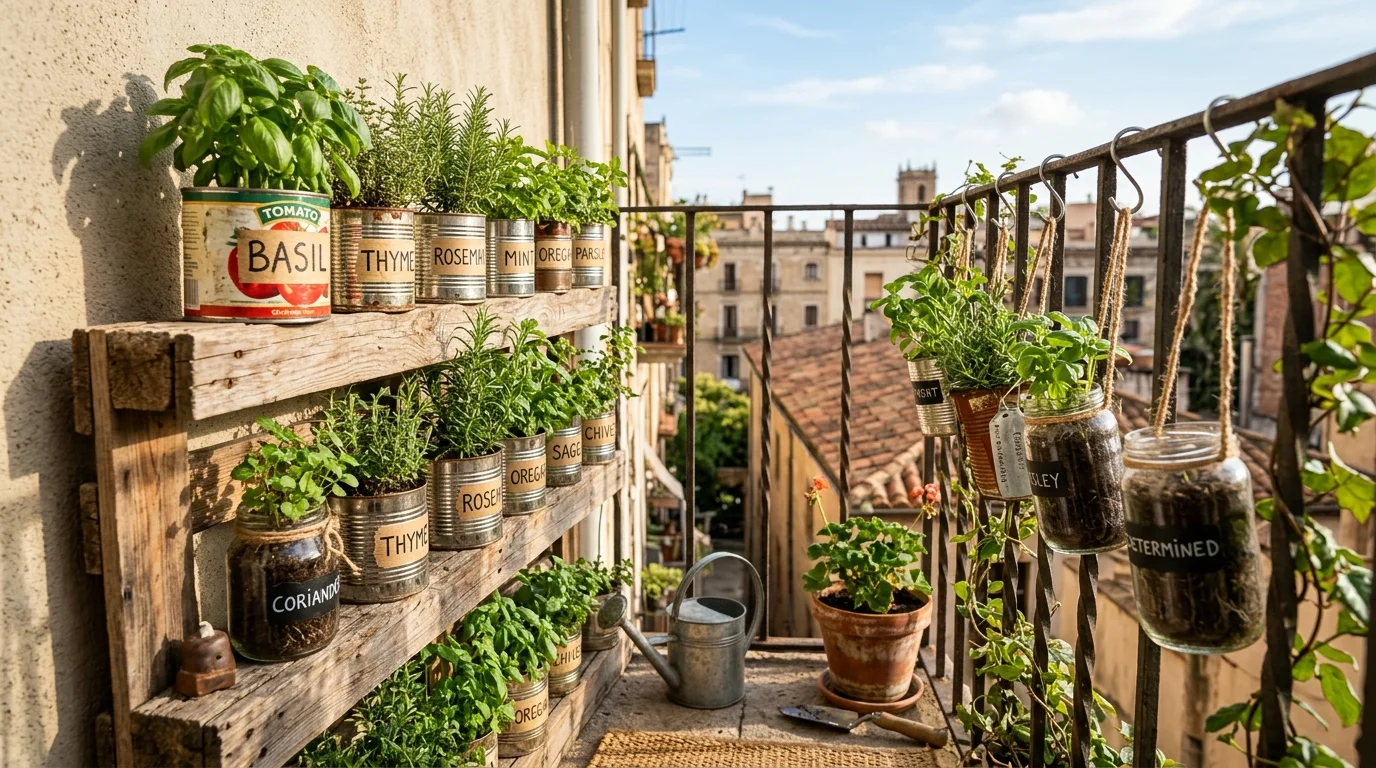
9. Recycled container herb garden
Recycled containers make herb gardening affordable and charming. Tin cans, glass jars, or small baskets can all be repurposed.
Just be sure to add drainage holes or use them as cachepots with a smaller pot inside.
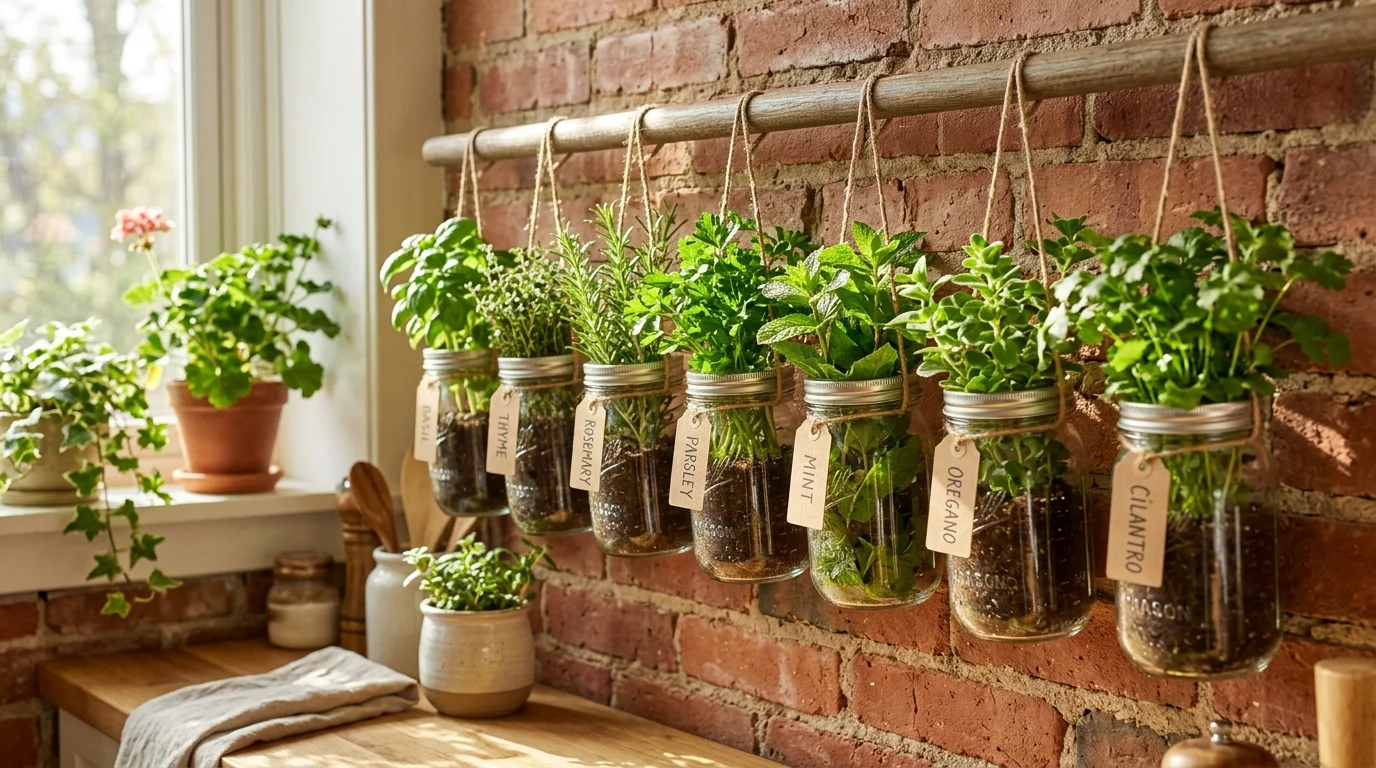
10. Hanging mason jar herbs
Mason jars look beautiful in a small kitchen or balcony corner. Use them for smaller herbs and place them where you can water carefully.
Because jars do not have drainage, line the base with pebbles and avoid overwatering.
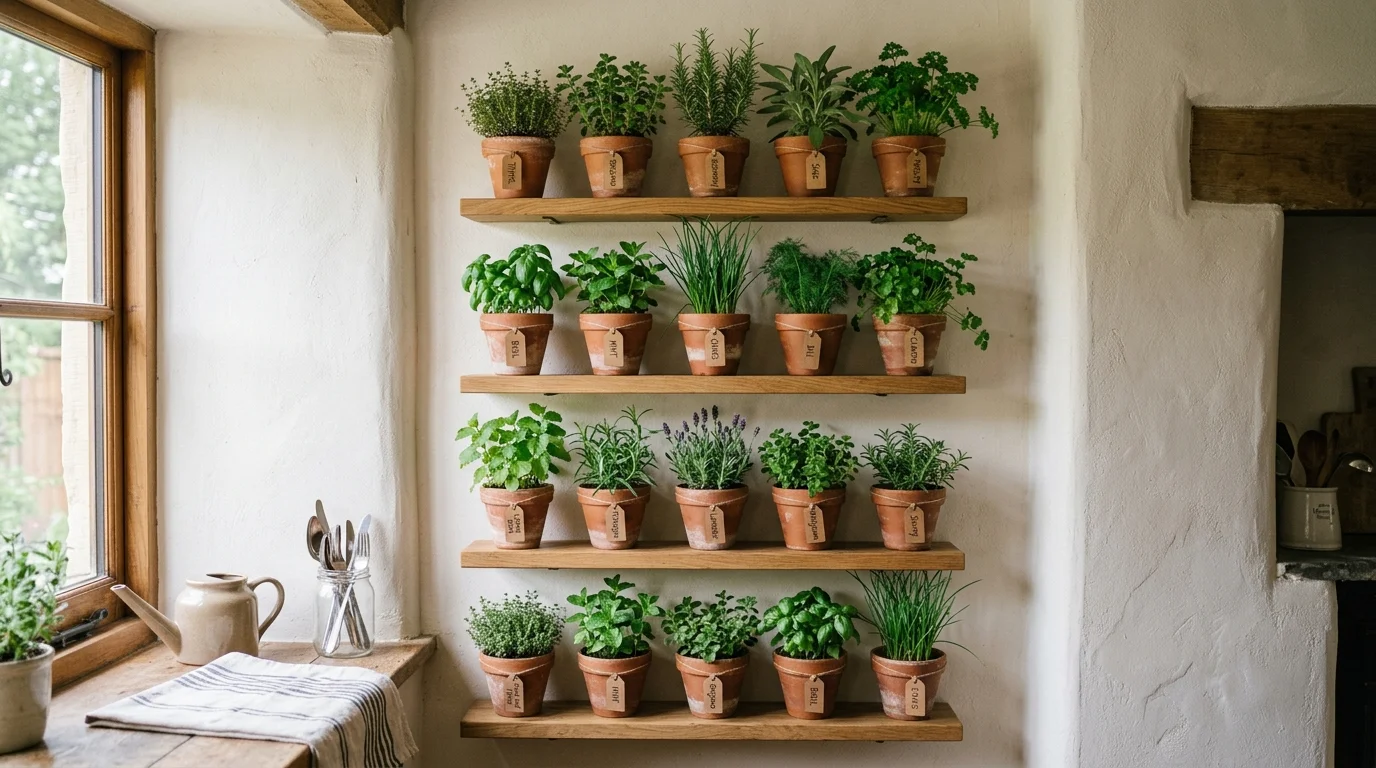
11. Narrow shelf herb wall
A narrow wall shelf gives you a clean way to display herbs without taking up much depth. It is perfect for tight patios or slim balcony walls.
Use lightweight pots and add a lip or rail to prevent them from sliding.
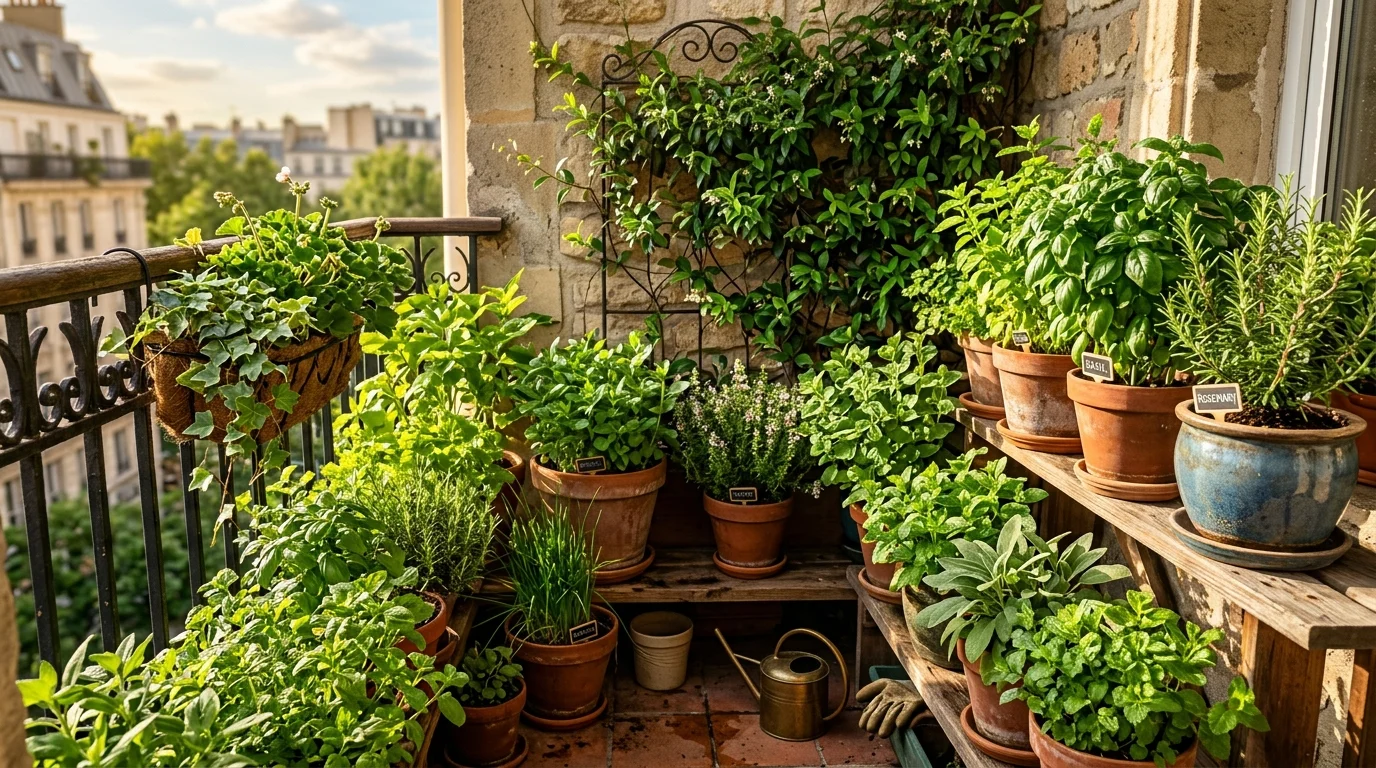
12. Balcony corner herb jungle
If you want a lush look, group herbs tightly in a corner. This creates a microclimate that holds humidity and helps plants stay happy.
Mix upright herbs with trailing varieties for a layered effect. This style feels abundant without needing a large footprint.
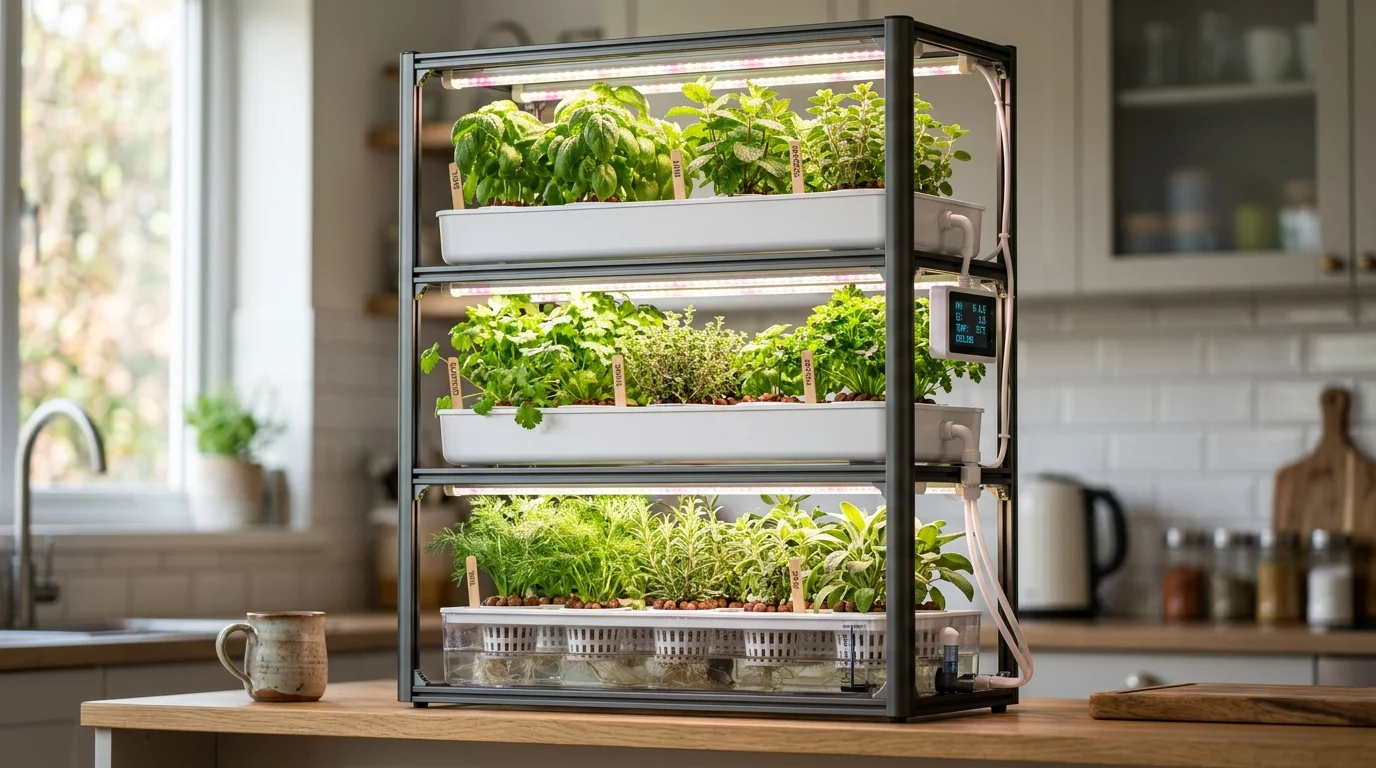
13. Modern hydroponic herb setup
Hydroponic systems are sleek and efficient for indoor herb growing. They give herbs steady water and make growth more consistent.
This is a good option if your home does not get much natural light and you want a clean, modern look.
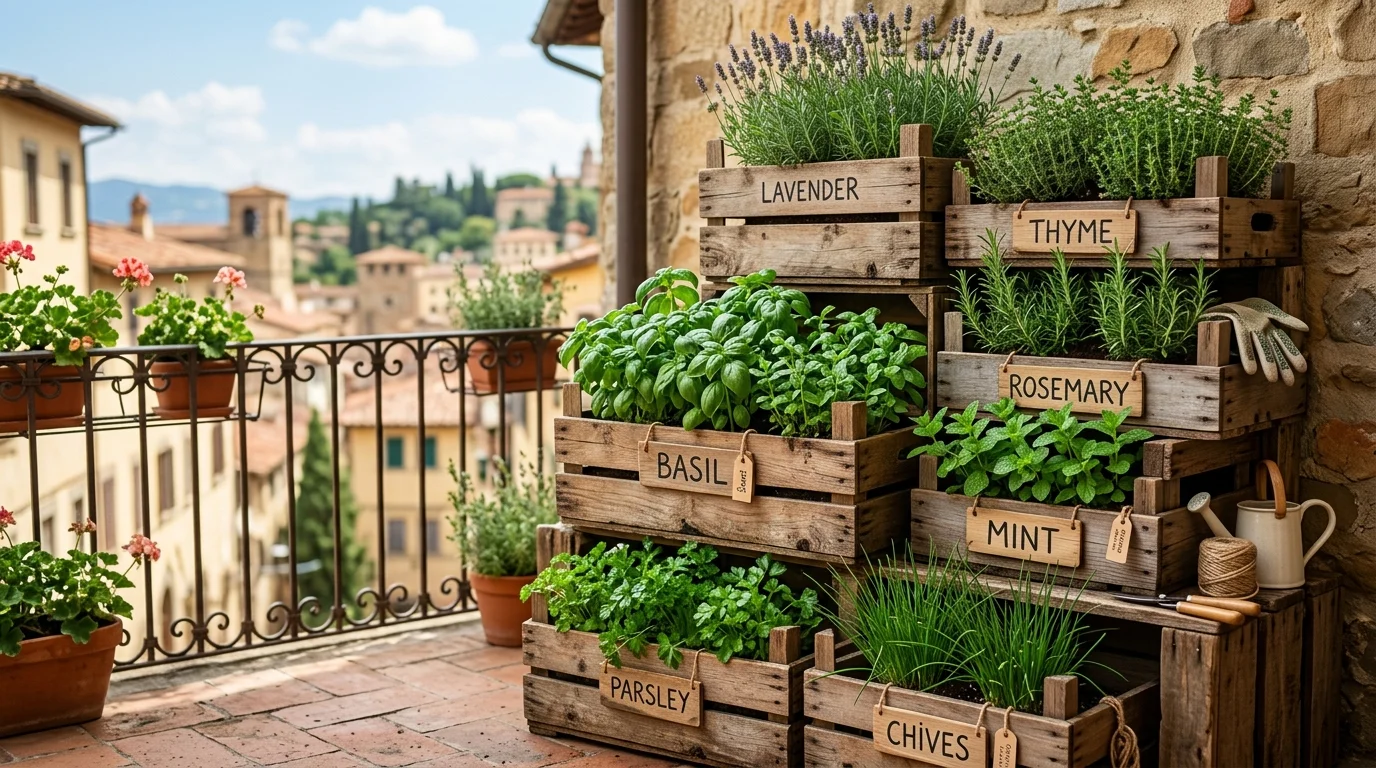
14. Rustic wooden crate herb garden
Wooden crates add warmth and rustic charm. They are sturdy, easy to move, and look great on patios or balconies.
Line the crate with landscape fabric so soil stays in place, and group herbs with similar watering needs.
Final thoughts on small space herb gardening
Small space herb gardens work best when they are simple and easy to maintain. Pick a layout that fits your light, keep the herbs within reach, and harvest often.
With the right setup, even a tiny balcony or windowsill can produce fresh herbs all season long.