
Fresh bouquets do not need a sprawling backyard. A tiny balcony, narrow patio edge, sunny window box, or one well-planned raised bed can produce armfuls of stems when you choose flowers that bloom hard and keep cutting well.
The secret is to treat every small space like a layered floral studio. Combine upright bloomers with filler flowers, repeat colors for impact, and choose containers that let you plant densely without making the area feel chaotic.
How to make a small cutting garden work
- Prioritize repeat bloomers like zinnias, cosmos, marigolds, snapdragons, and dahlias.
- Use vertical space with shelves, hanging baskets, and wall planters.
- Keep a simple watering routine so containers never dry out during peak bloom season.
- Plant for bouquets by mixing focal flowers, filler blooms, and airy texture.
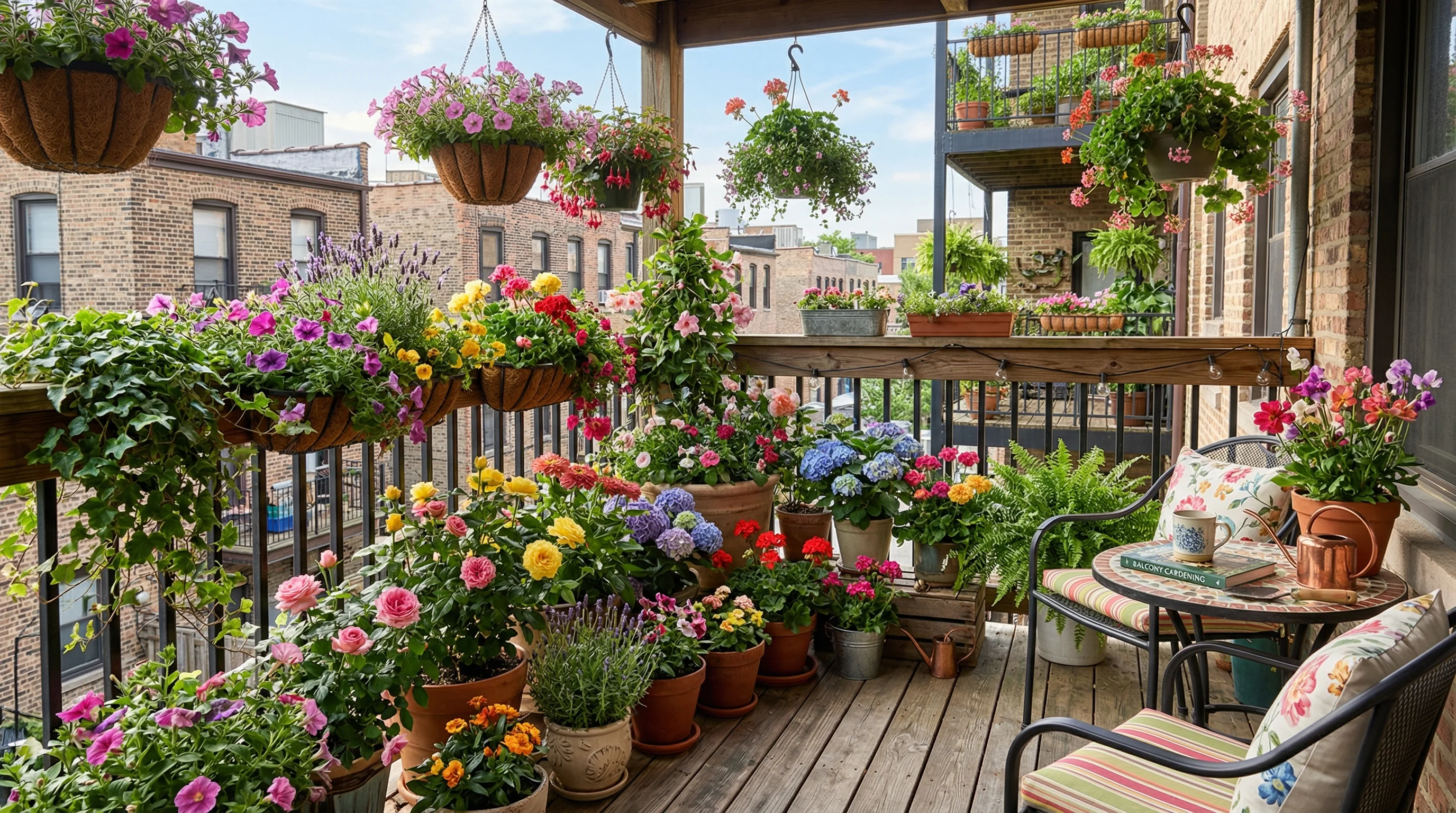
1. Balcony Container Garden
If your main outdoor area is a balcony, turn it into a bouquet station with grouped pots in different heights. A compact seating corner still leaves room for flowers when large planters anchor the edges and smaller pots fill in the gaps.
Choose colors that feel connected, such as coral, yellow, peach, and soft pink, so even a dense setup still reads as intentional. Snipping a few stems at a time keeps plants productive and your balcony looking lush instead of overgrown.
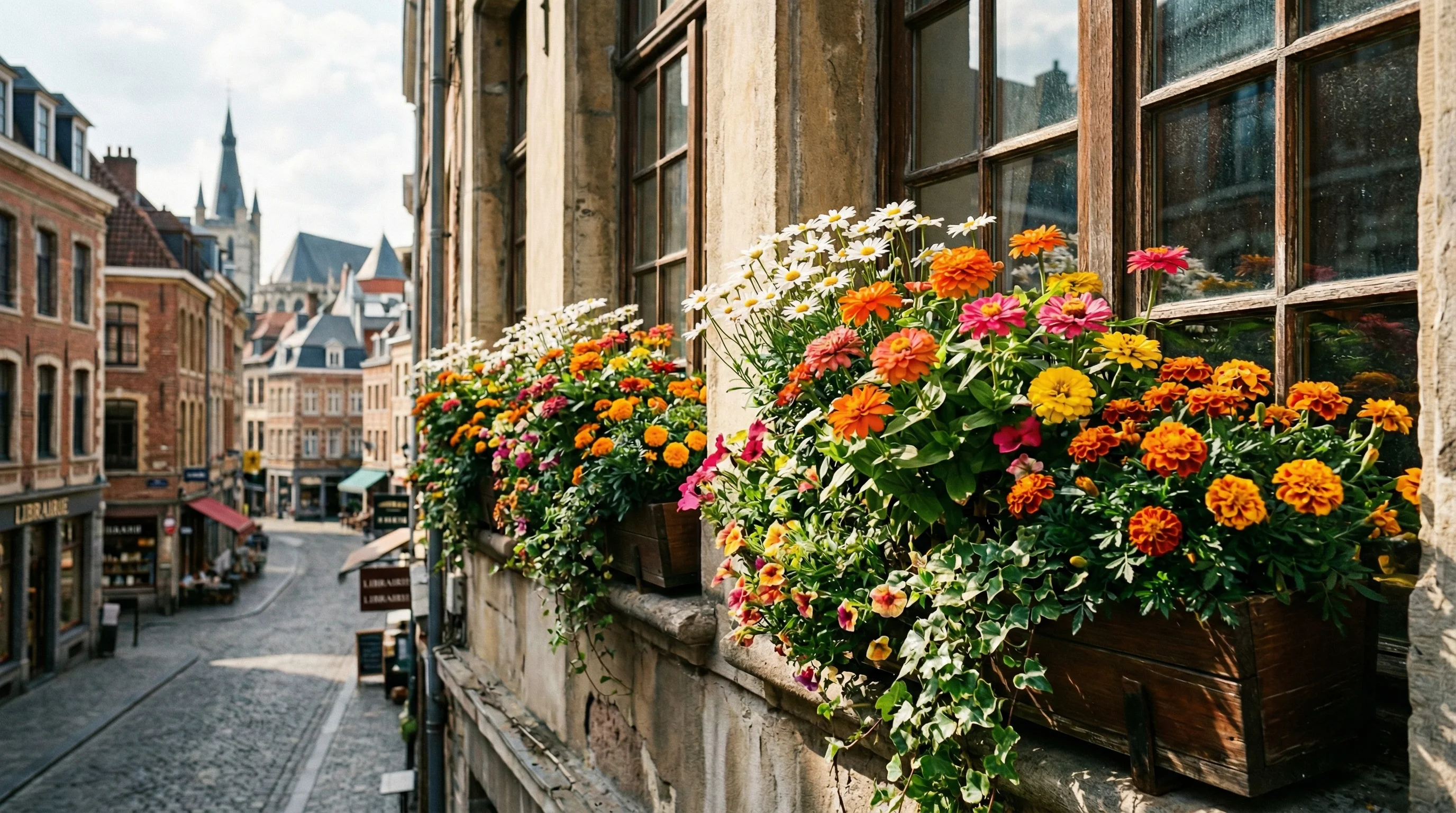
2. Window Box Blooms
Window boxes are one of the easiest ways to add cut flowers when you do not have much floor space. A generous box packed with daisies, zinnias, and marigolds can look full from the street while also giving you enough stems to clip for a tiny vase indoors.
Aim for dense planting, but keep the tallest flowers toward the back so every layer gets sunlight. A trailing edge softens the box and makes even a city-facing window feel more romantic.
3. Vertical Wall Garden
When floor area is tight, go up. A wall-mounted planter system or pocket garden lets you layer color without sacrificing valuable patio space, and it creates a dramatic floral backdrop at the same time.
This approach works especially well for lightweight bloomers and trailing stems. Mix upright flowers with climbing vines so the whole wall feels textured, relaxed, and abundant.
.webp)
4. Raised Bed Mini Garden
A single raised bed can outperform a scattered collection of small pots if you want more consistent cutting material. Even one compact bed gives you enough room for cheerful focal flowers like sunflowers, cosmos, and snapdragons.
Use the back row for height, the center for medium bloomers, and the front edge for airy filler flowers. The rustic structure makes the whole setup feel grounded and easy to maintain.
.webp)
5. Patio Flower Corner
An unused patio corner can become a soft, colorful flower zone with just a few coordinated containers. Lavender, daisies, and compact roses bring fragrance and shape, while one decorative stool or side table helps the arrangement feel styled rather than improvised.
The best patio flower corners mix practical bloom production with atmosphere. You can cut from them regularly and still enjoy the garden as part of your seating area.
.webp)
6. Herb and Flower Combo
Pairing herbs with flowers gives small gardens extra value. Rosemary and thyme provide greenery and fragrance for arrangements, while marigolds and zinnias deliver the color and brightness that make bouquets feel complete.
This is a smart choice for rooftops, balconies, and compact courtyards because every pot works harder. Your cutting garden becomes beautiful, practical, and useful for both the kitchen and the vase.
.webp)
7. Tiered Planter Display
A tiered planter stand creates a strong display when you want plenty of blooms in a footprint that is barely wider than a chair. The vertical stacking also makes harvesting easier because flowers sit at different heights and remain easy to reach.
Try repeating a few colors across all three levels so the setup feels cheerful but edited. This kind of structure instantly adds a sense of abundance to small urban gardens.
.webp)
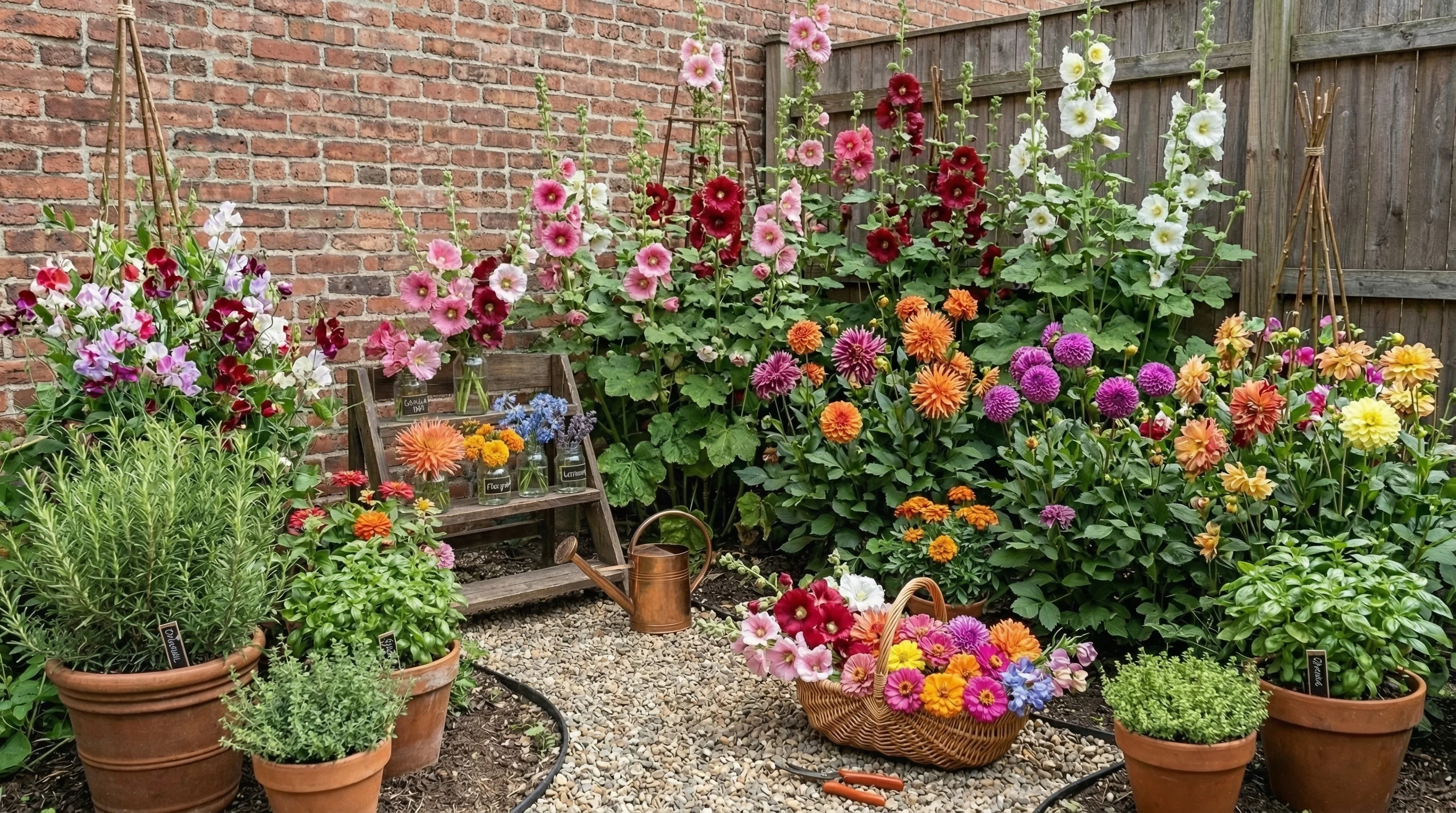
8. Cottage-Style Mini Plot
If you have one small backyard corner, give it a cottage-style planting plan. Hollyhocks, sweet peas, and dahlias create height, softness, and a little drama, while a narrow path or stepping-stone edge makes the area feel like a complete garden room.
The beauty of this style is the generous look. Even a modest plot feels abundant because plants mingle, overlap, and bloom in layers.
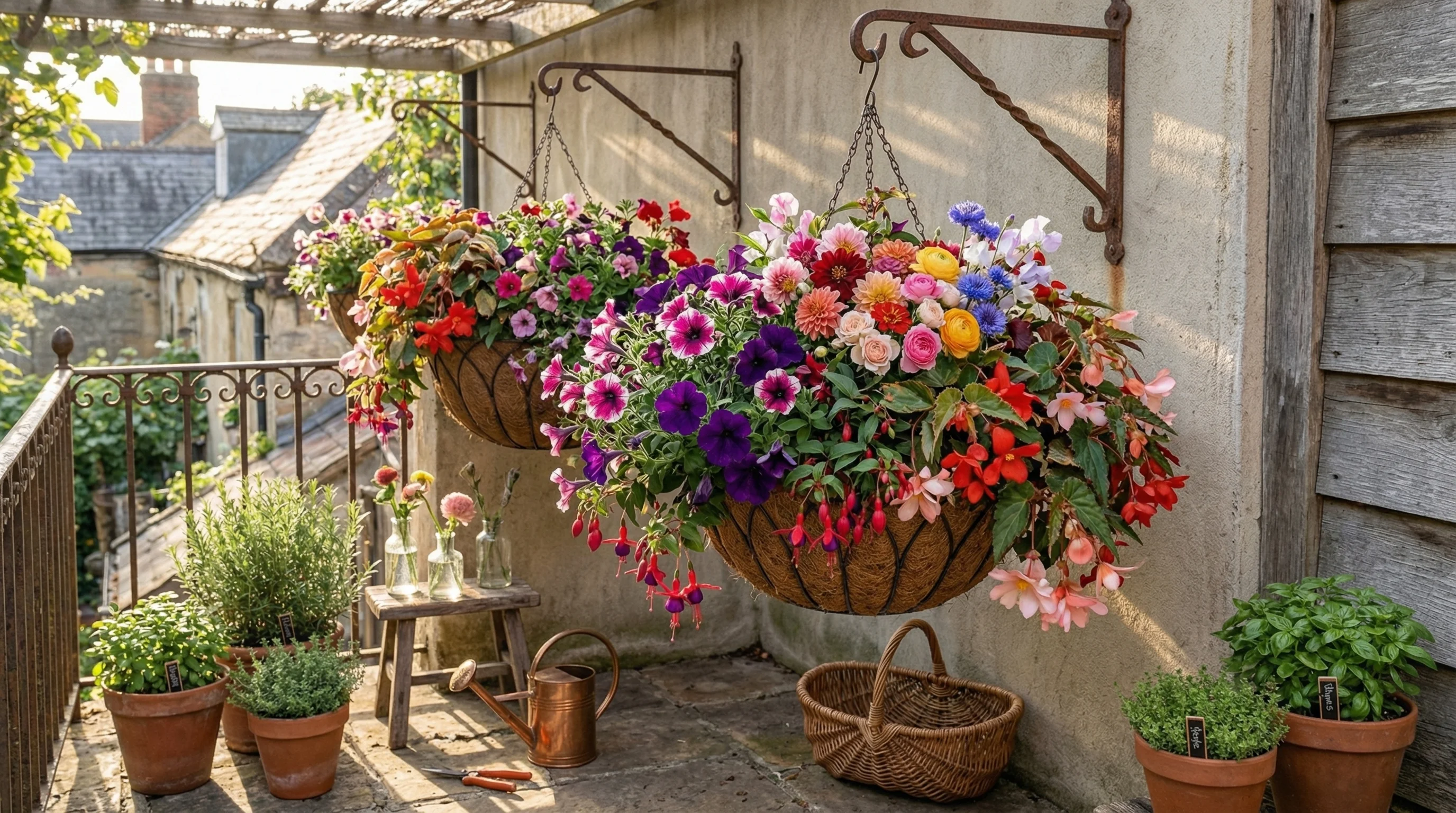
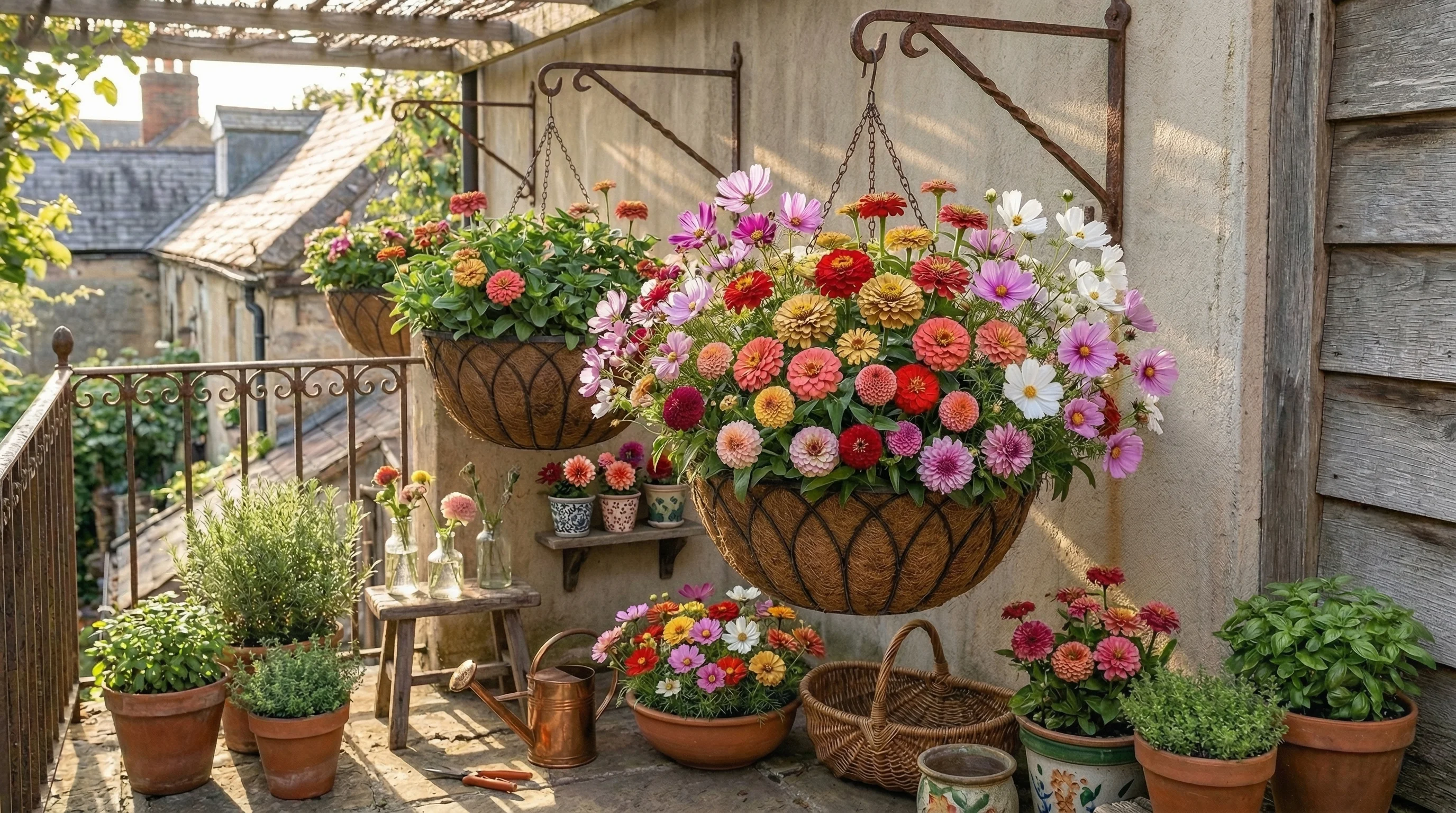
9. Hanging Basket Arrangement
Hanging baskets are not just for foliage and trailing annuals. When packed with blooming varieties like begonias, fuchsias, and petunias, they add eye-level color and help a compact porch or balcony feel rich and layered.
They are especially helpful when you want a lush garden look without losing floor space to containers. Group several baskets together for more impact and cut selectively to keep them full.
10. Mixed Container Display
A mixed container display is perfect if you enjoy changing things through the season. Different pot sizes let you move flowers where they look best, refresh combinations, and shift the layout as plants grow.
Zinnias, cosmos, and dahlias create a lively, relaxed feeling in this setup, especially when terracotta or rustic planters tie the arrangement together. It is flexible, forgiving, and ideal for gardeners who want big bouquet energy in a very small footprint.
Final styling notes for small flower gardens
The most successful small cut flower gardens feel edited, not crowded. Repeating a color palette, choosing a few reliable flower varieties, and keeping containers coordinated will make the whole setup look more intentional.
If you are just starting, begin with one area that gets dependable light and commit to a handful of flowers you love seeing indoors. A few thriving containers can give you more bouquet joy than an oversized planting plan that is hard to keep up with.