Privacy changes how a patio feels. Even simple fixes can make the space calmer, quieter, and more comfortable to use every day. The best solutions layer structure and planting so the patio still feels open and welcoming.
Think in zones rather than walls. A privacy solution should frame a seating area, block a specific sightline, or reduce noise without closing the whole space.
These patio privacy ideas focus on real-world solutions that work in small yards and larger spaces alike.
What makes patio privacy feel natural
- Layering soft plantings with structured screens
- Using height in the right places without blocking all light
- Creating zones that feel sheltered but not closed in
- Choosing materials that match your existing patio style
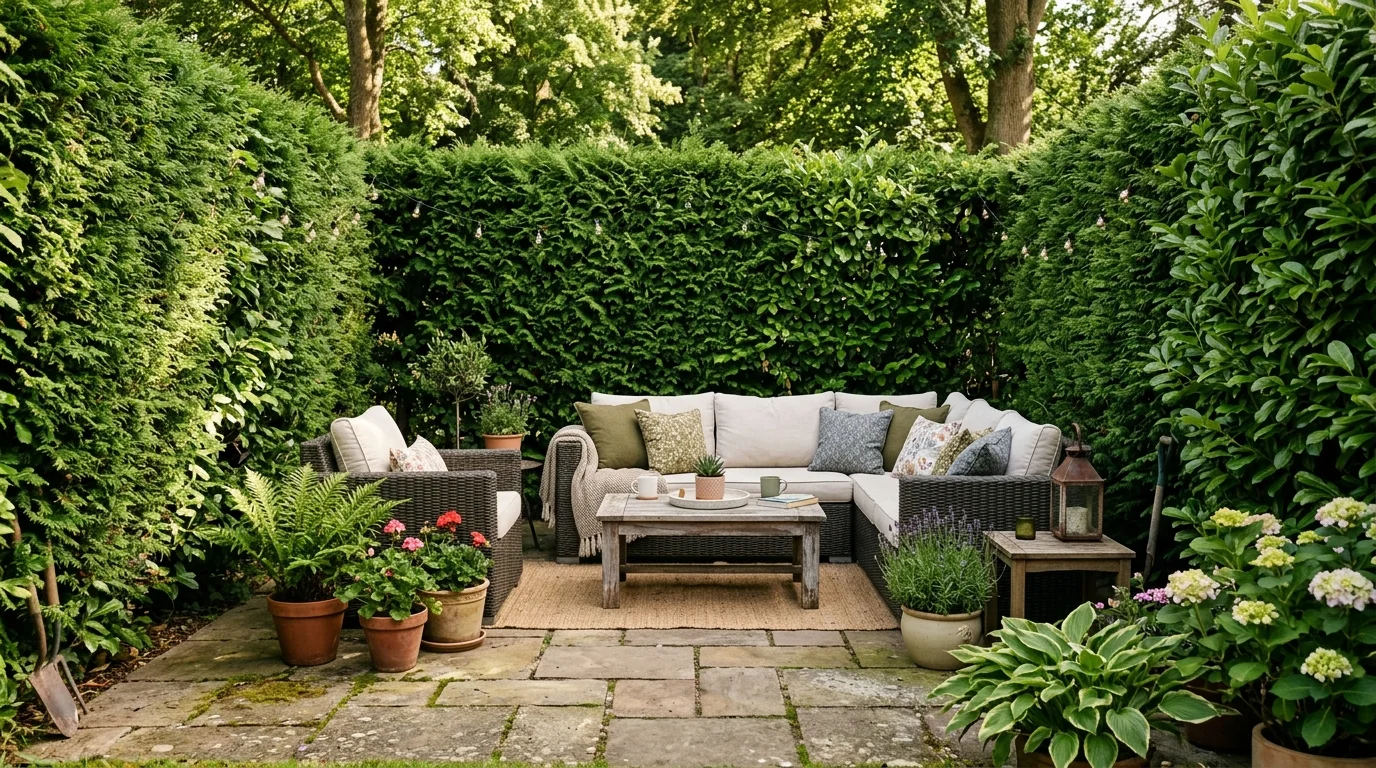
1. Grow a tall hedge privacy wall
Hedges are classic because they feel natural and sound absorbing. Choose a dense evergreen for year-round coverage.
If space is tight, look for narrow or columnar varieties that still provide height without taking up too much width.
2. Install a wooden slat privacy screen
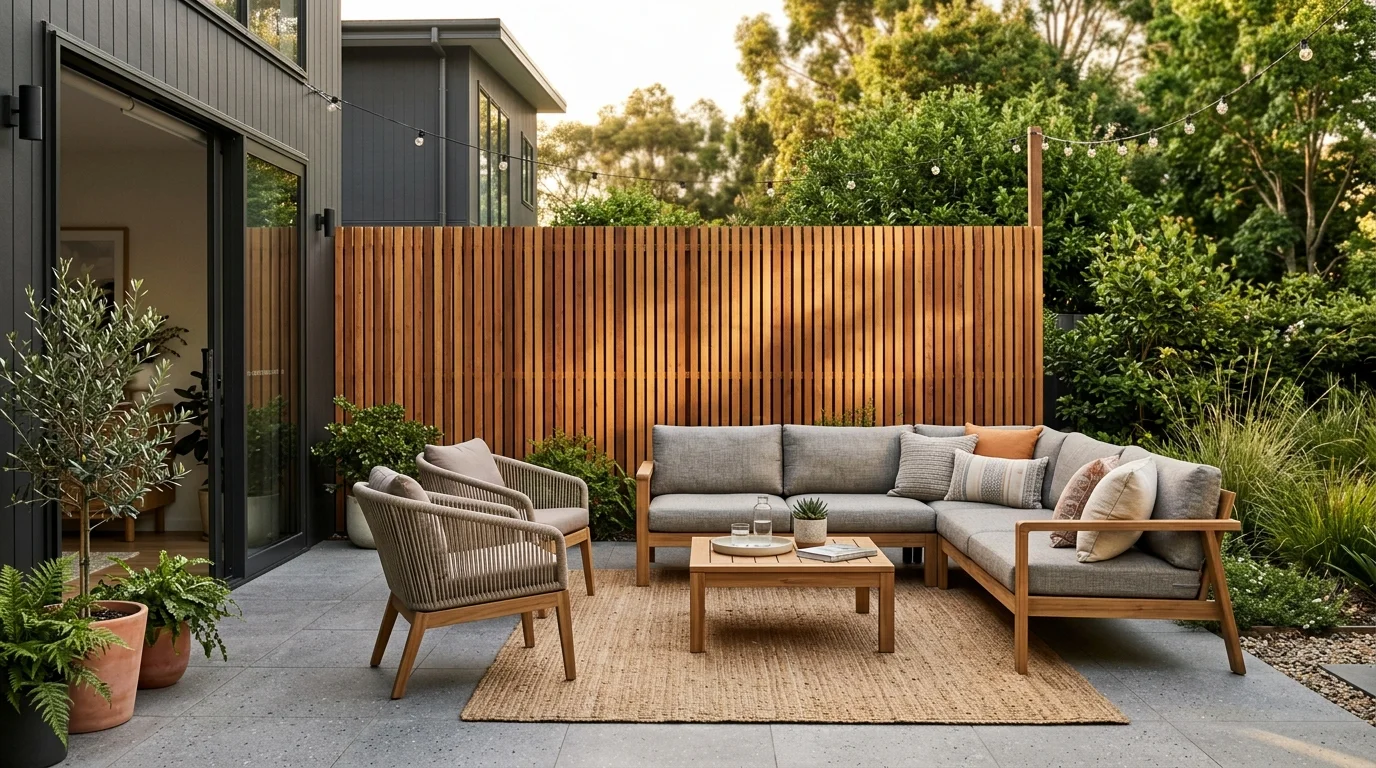
Slatted screens give you privacy while still letting in light and breeze. They also add a clean, modern backdrop.
Stain the wood to match existing furniture or fencing so it feels like a natural extension of the patio.
3. Use a climbing plant trellis
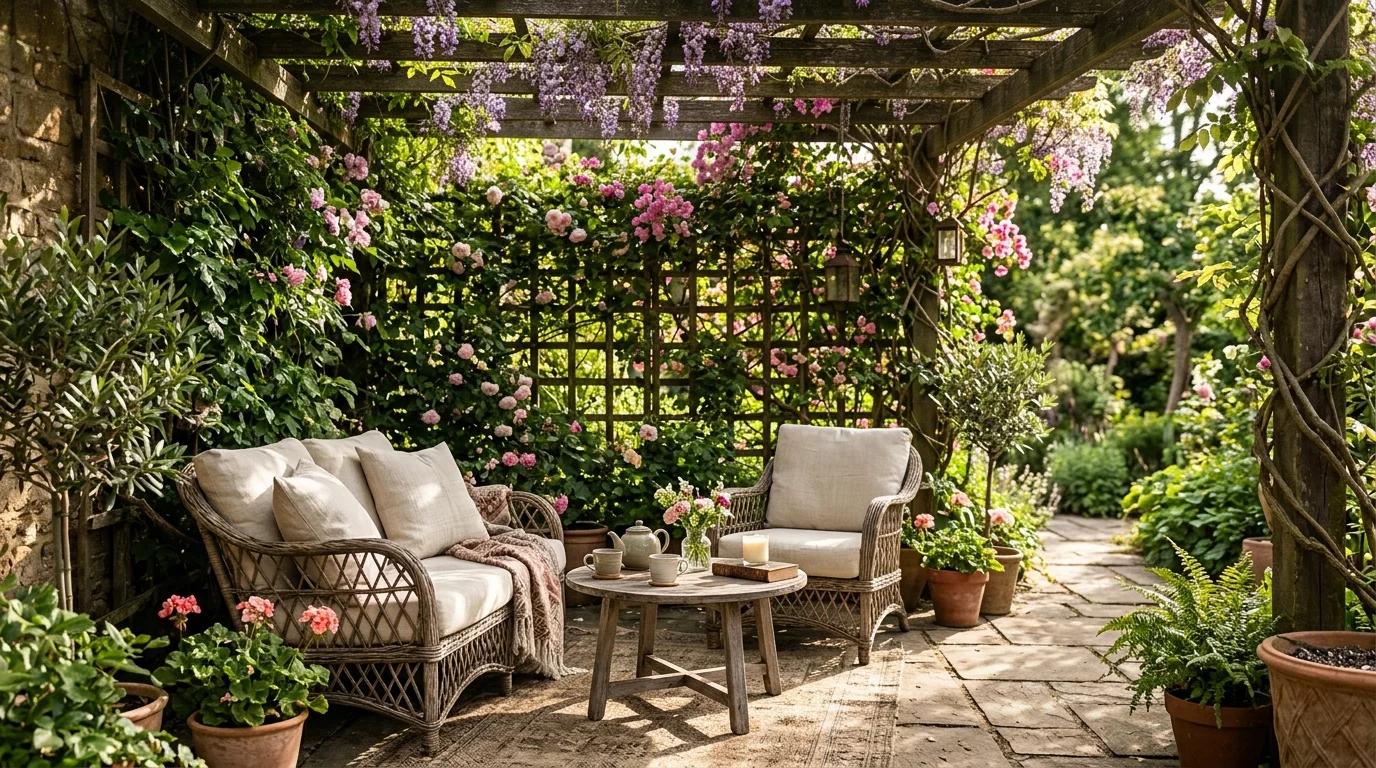
Trellises are great for patios because they soften hard edges with green. Vines add texture and seasonal change.
Pick a vine that suits your climate and the amount of sun the wall gets. Slow growers can be easier to maintain in small spaces.
4. Add outdoor curtains for flexible privacy
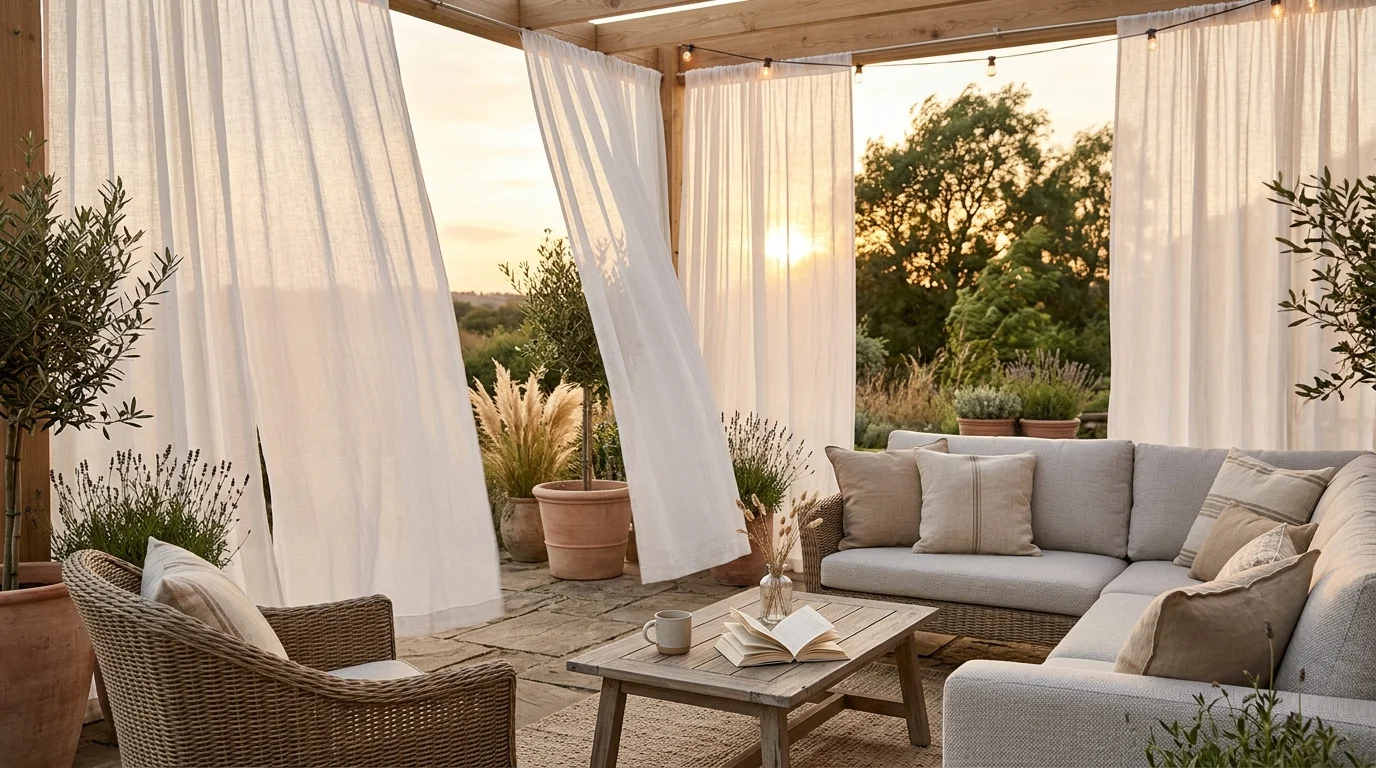
Curtains can open or close as needed, which makes them practical for changing light and weather. Choose outdoor fabric that handles moisture.
This option is ideal for pergolas and covered patios because it gives you instant privacy with minimal construction.
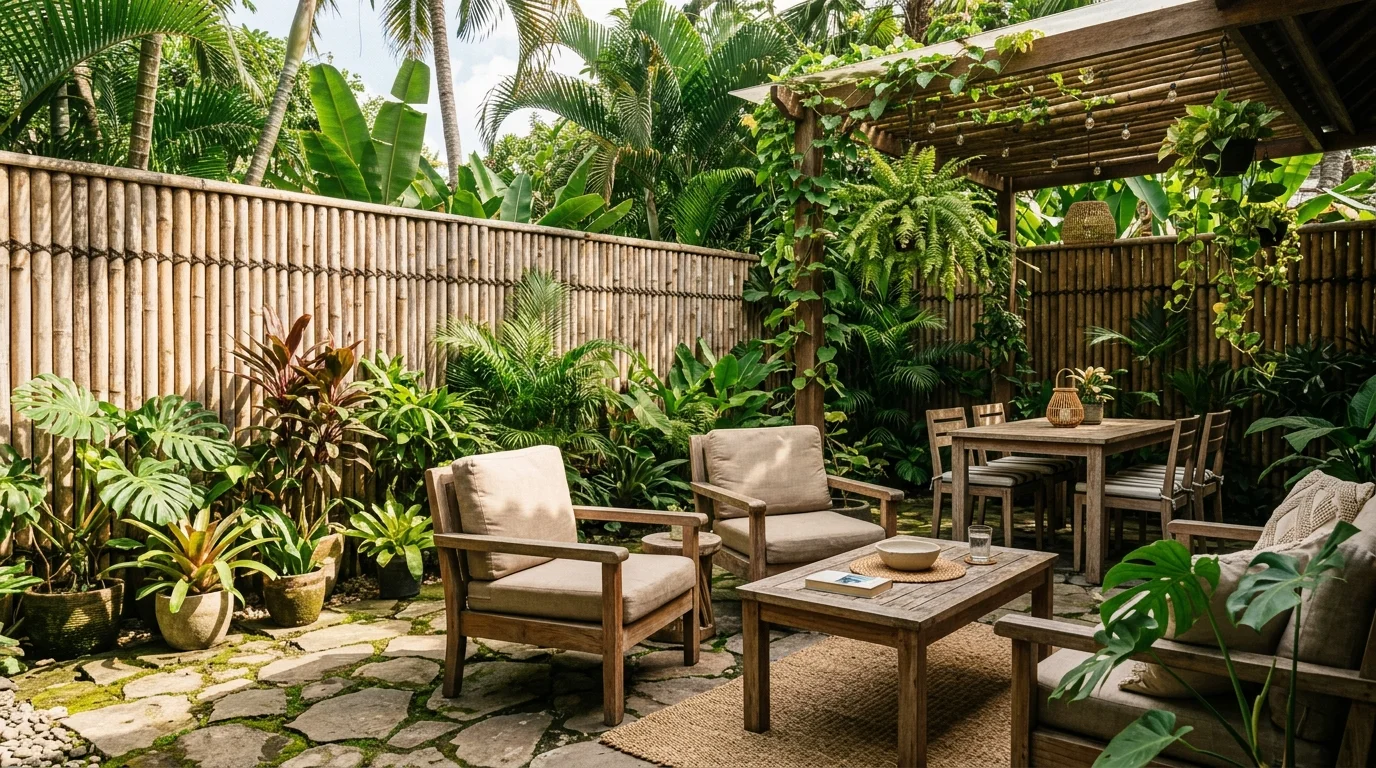
5. Try a bamboo privacy fence
Bamboo feels warm and natural, and it works well for boho or coastal spaces. Use it to cover existing fencing or create a new screen.
Secure it tightly at the top and bottom so it stays neat in wind and storms.
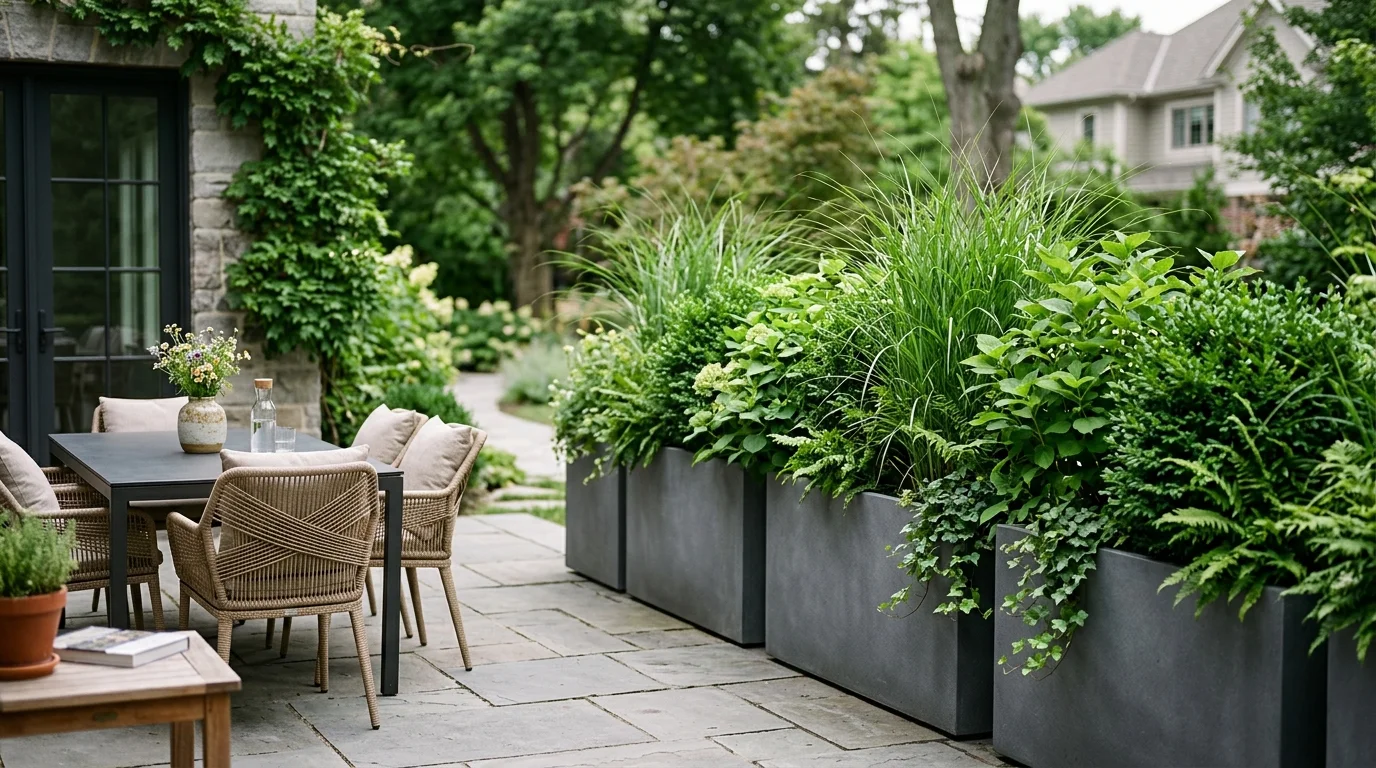
6. Create a potted plant divider
A row of planters can act as a portable privacy wall. It is ideal for renters or patios where you do not want permanent changes.
Use tall planters and mix upright plants with softer fillers to avoid a stiff, uniform look.
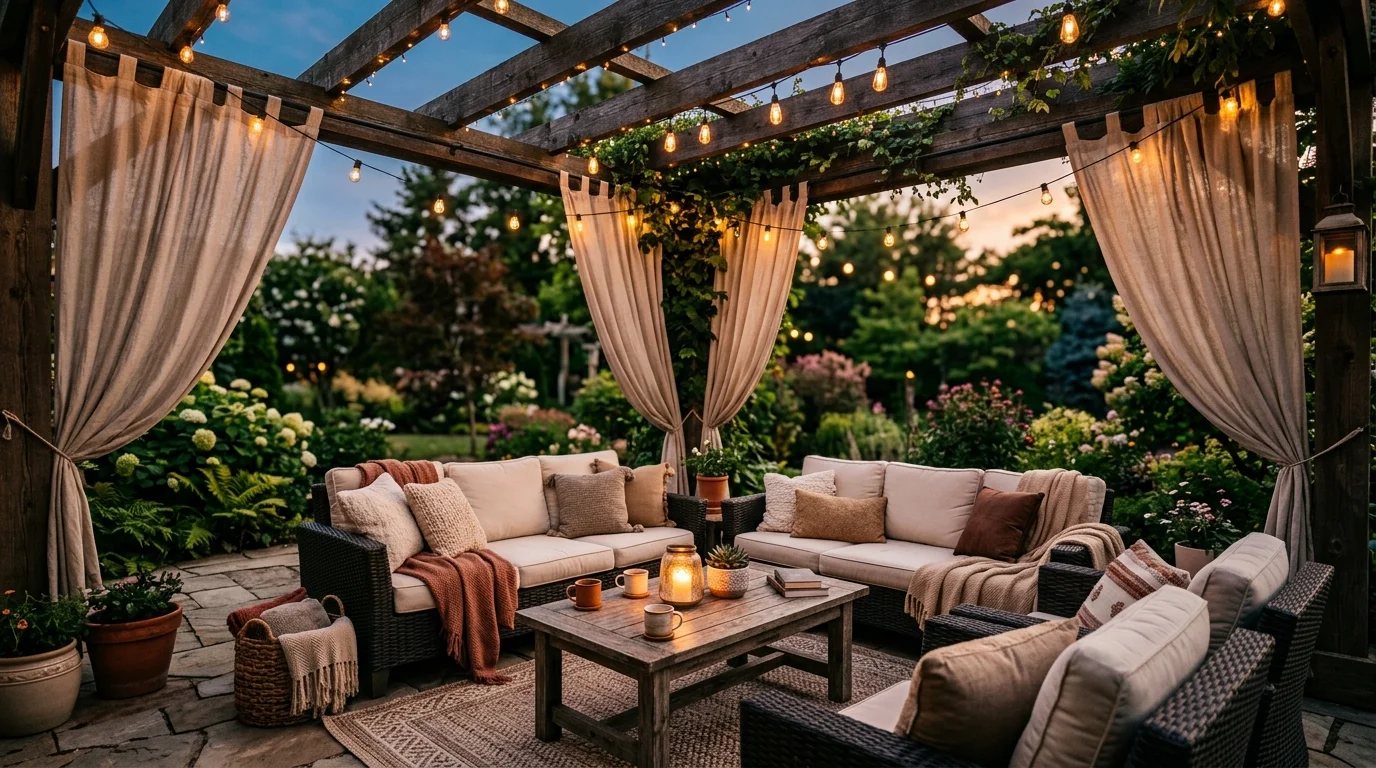
7. Use a pergola with drapes
A pergola gives height and structure, while drapes add the privacy layer. This combination makes a patio feel like an outdoor room.
For a lighter look, use sheer outdoor fabric and tie it back during the day.
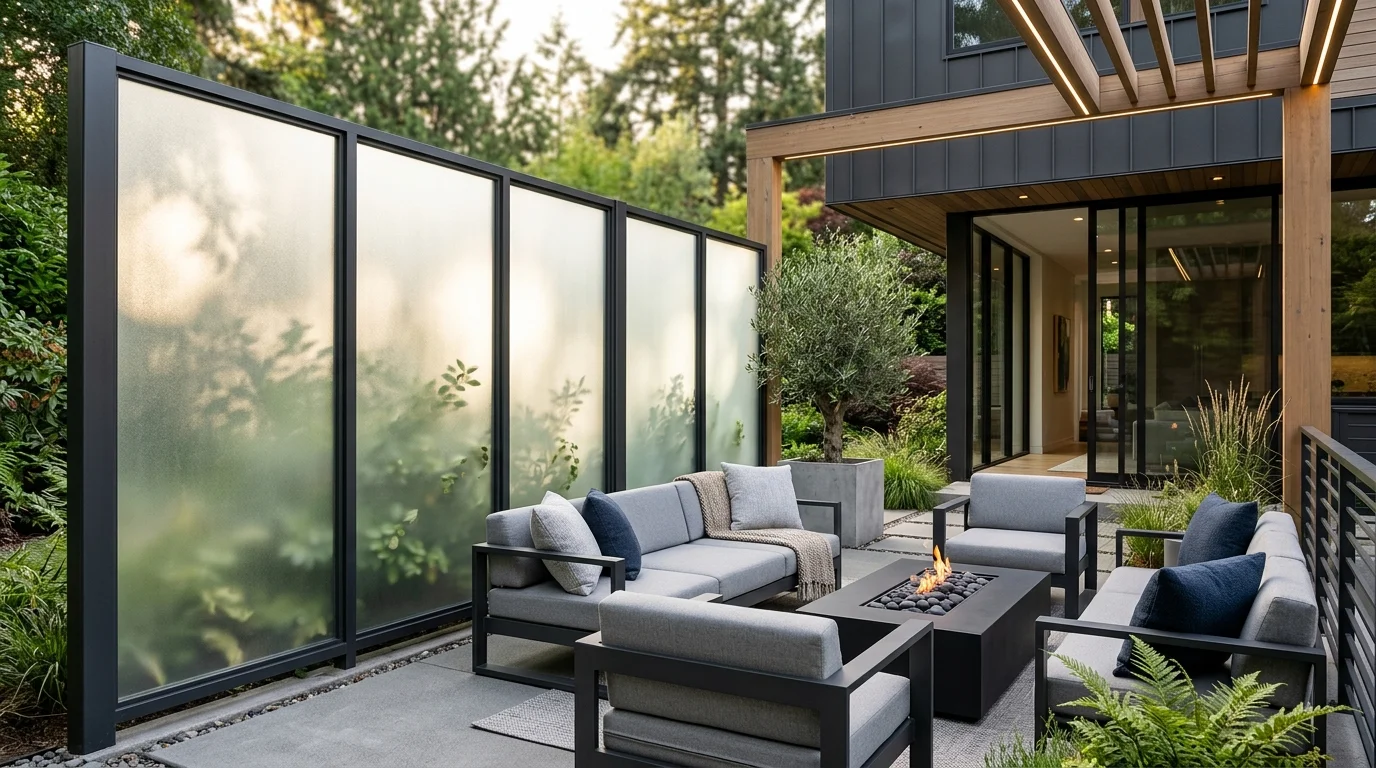
8. Install frosted glass panels
Frosted glass keeps light flowing while blurring sightlines. It works well in modern spaces where clean lines are a priority.
Pair it with black or natural wood frames to keep the panels from feeling too industrial.
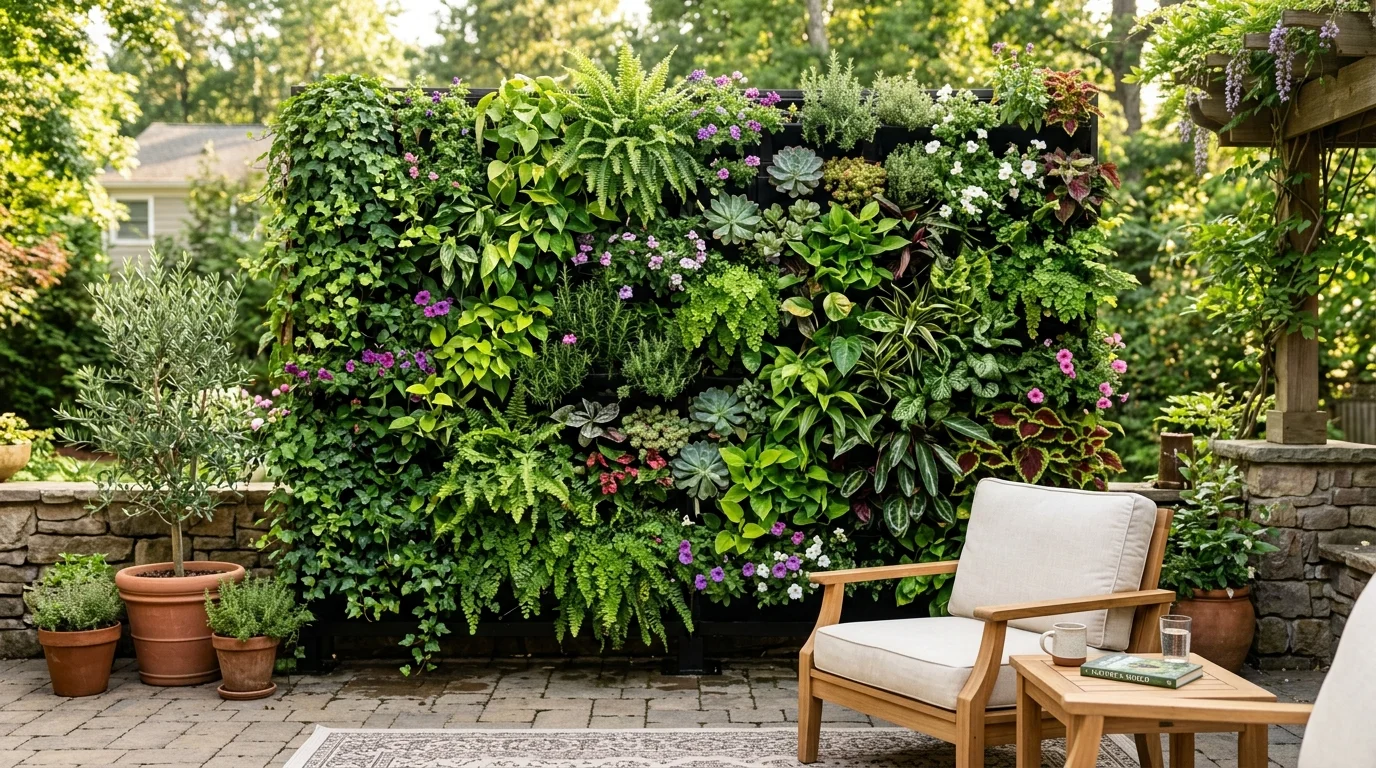
9. Build a vertical garden wall
A vertical garden adds privacy and lushness at the same time. Use hardy plants and a simple irrigation setup for easy maintenance.
If you do not want built-in irrigation, use modular pots and group plants with similar watering needs.
10. Add decorative lattice panels
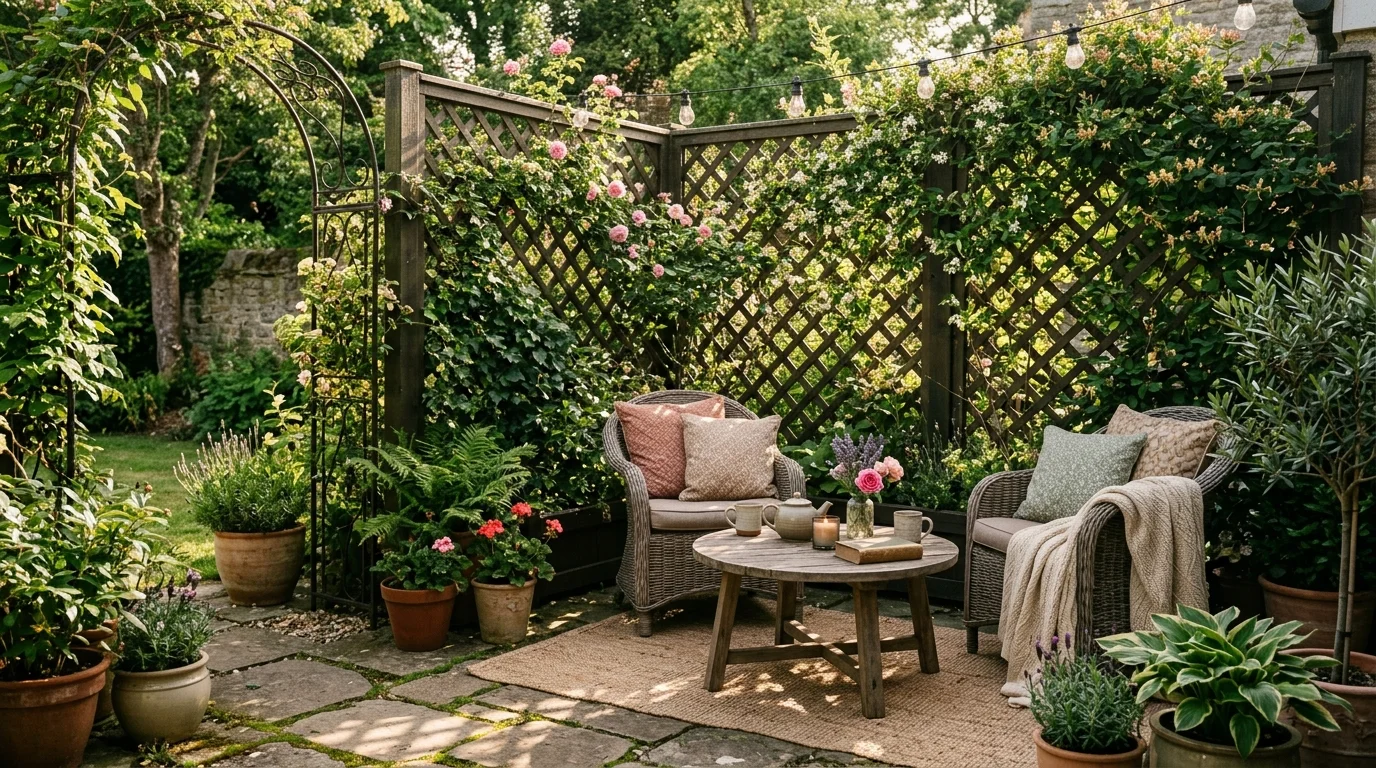
Lattice gives partial screening and looks great with climbing plants. It is an easy upgrade that feels light and charming.
Choose a lattice pattern that complements your patio style, from classic diamond to modern square grids.
11. Layer multiple privacy elements
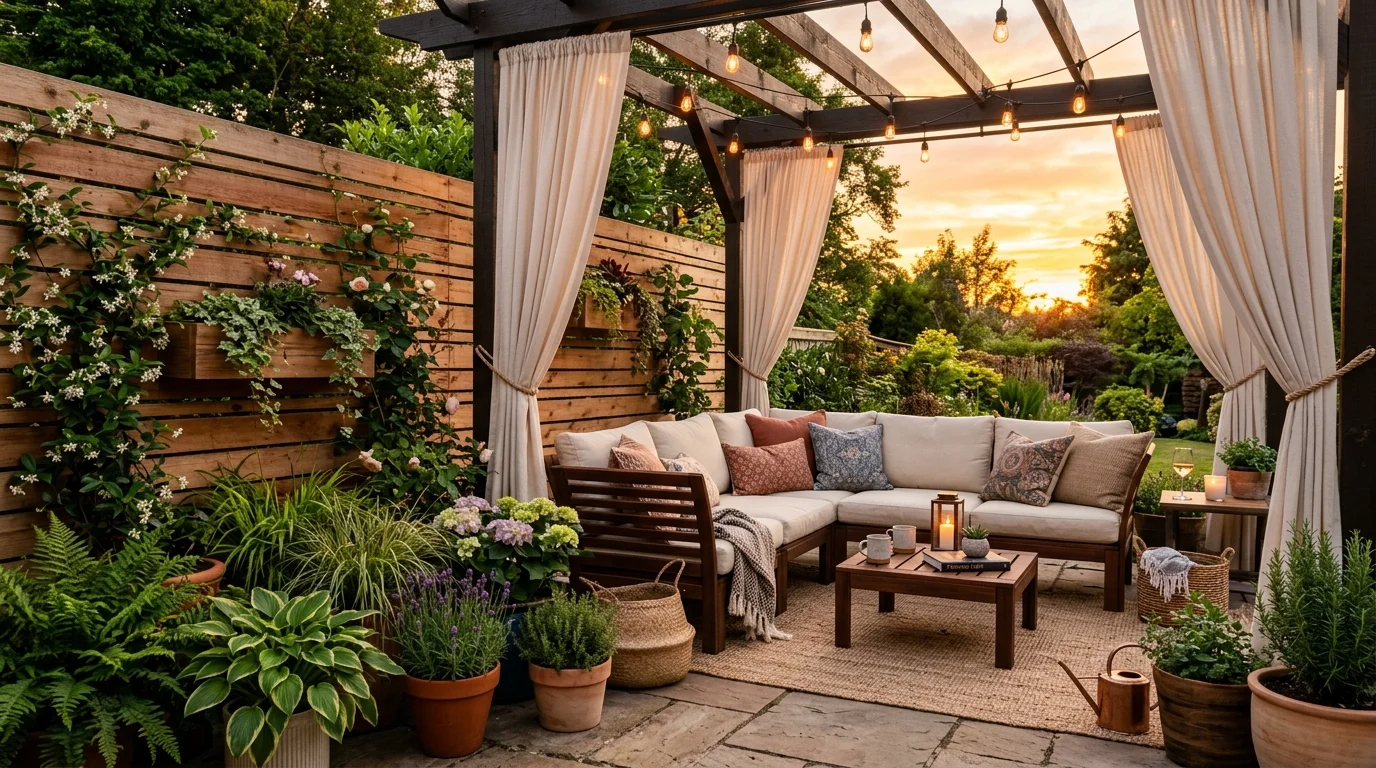
The most effective patios use layers. Combine fencing, plants, and fabric to create depth and flexibility.
Layering also makes the space feel designed rather than blocked off. It is the secret to privacy that still feels open.
Final thoughts on patio privacy ideas
The best privacy solutions still feel open and inviting. Start with one strong layer, then add soft plantings or flexible elements until the patio feels just right.
Once the sightlines are softened, the patio becomes a place you actually want to linger. Small changes can make a surprisingly big difference.