Mediterranean gardens feel warm, relaxed, and timeless.
They rely on texture, sun, and a balance of stone and planting.
The style is easy to adapt to small yards or large courtyards.
Choose materials that age well and feel natural.
Focus on simple lines and strong focal points.
Herbs, olive trees, and gravel bring the look together.
These tips are about atmosphere as much as layout.
Use them to create a garden that feels sun-washed and calm.
Keep planting drought-tolerant for low maintenance.
The result is a space that feels effortless and enduring.
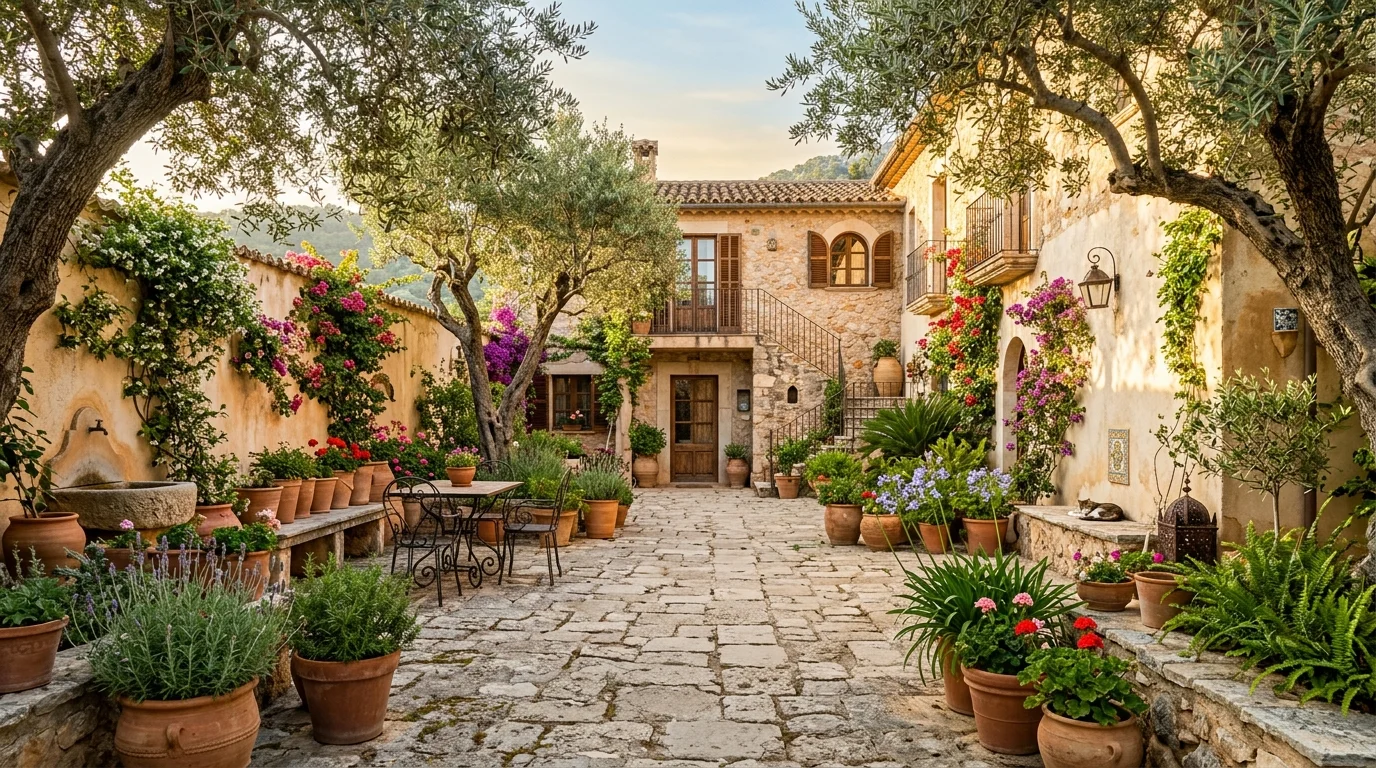
1. Start with a stone courtyard garden
Stone grounds the Mediterranean aesthetic instantly.
Use natural stone or aged pavers for authenticity.
Keep the layout simple and open.
Stone reflects light and keeps the space cool.
Pair it with terracotta pots for warmth.
Add a few sculptural plants for contrast.
This creates a balanced, timeless foundation.
It also makes the garden easy to maintain.
Stone works well in sun and shade.
It is the perfect base for Mediterranean style.
2. Use an olive tree focal point
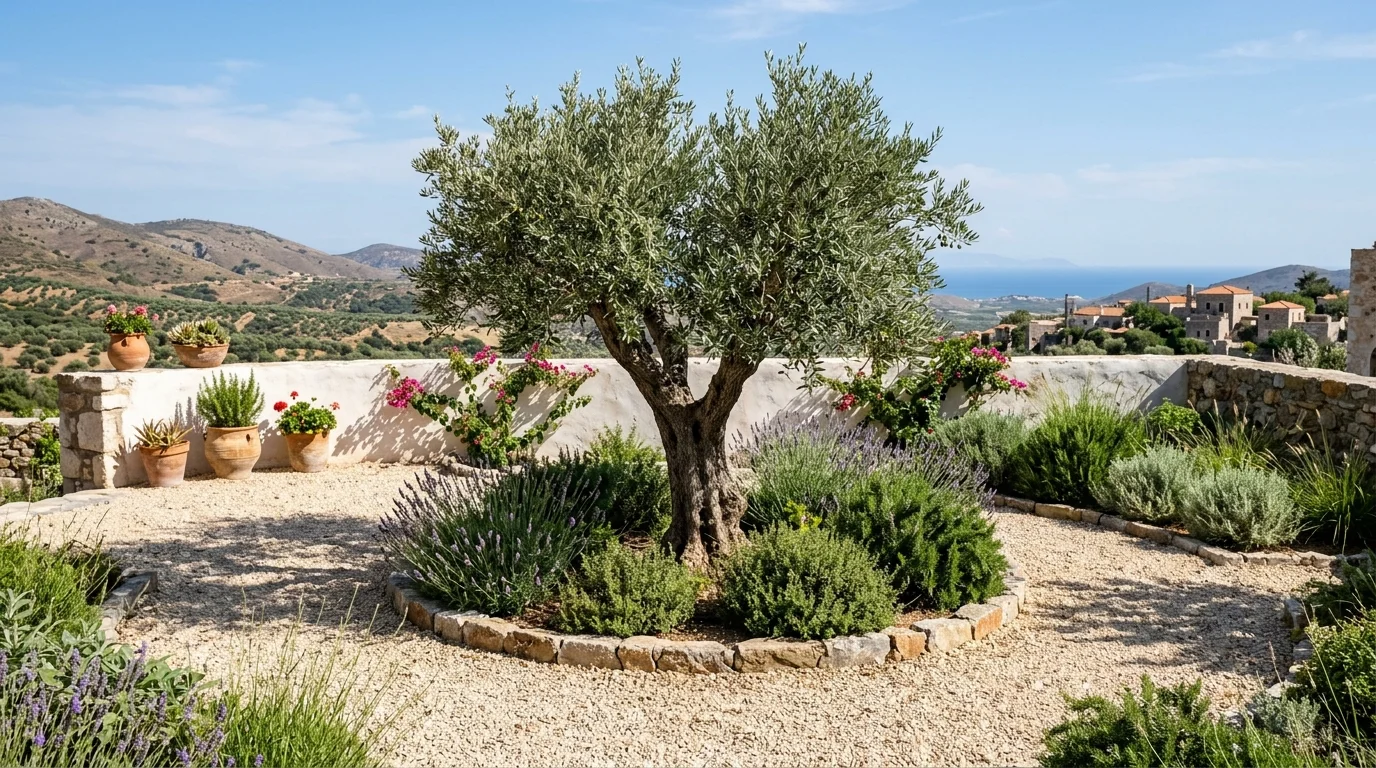
Olive trees are iconic in Mediterranean gardens.
They bring structure and a soft, silvery texture.
Place one in a central pot or corner.
Keep the base clear so the trunk stands out.
This creates a calm, sculptural focal point.
Olives pair well with gravel and terracotta.
They also handle heat and drought easily.
A single tree can define the whole space.
Choose a mature tree if possible for impact.
It is a timeless element that always looks elegant.
3. Add terracotta pot groupings
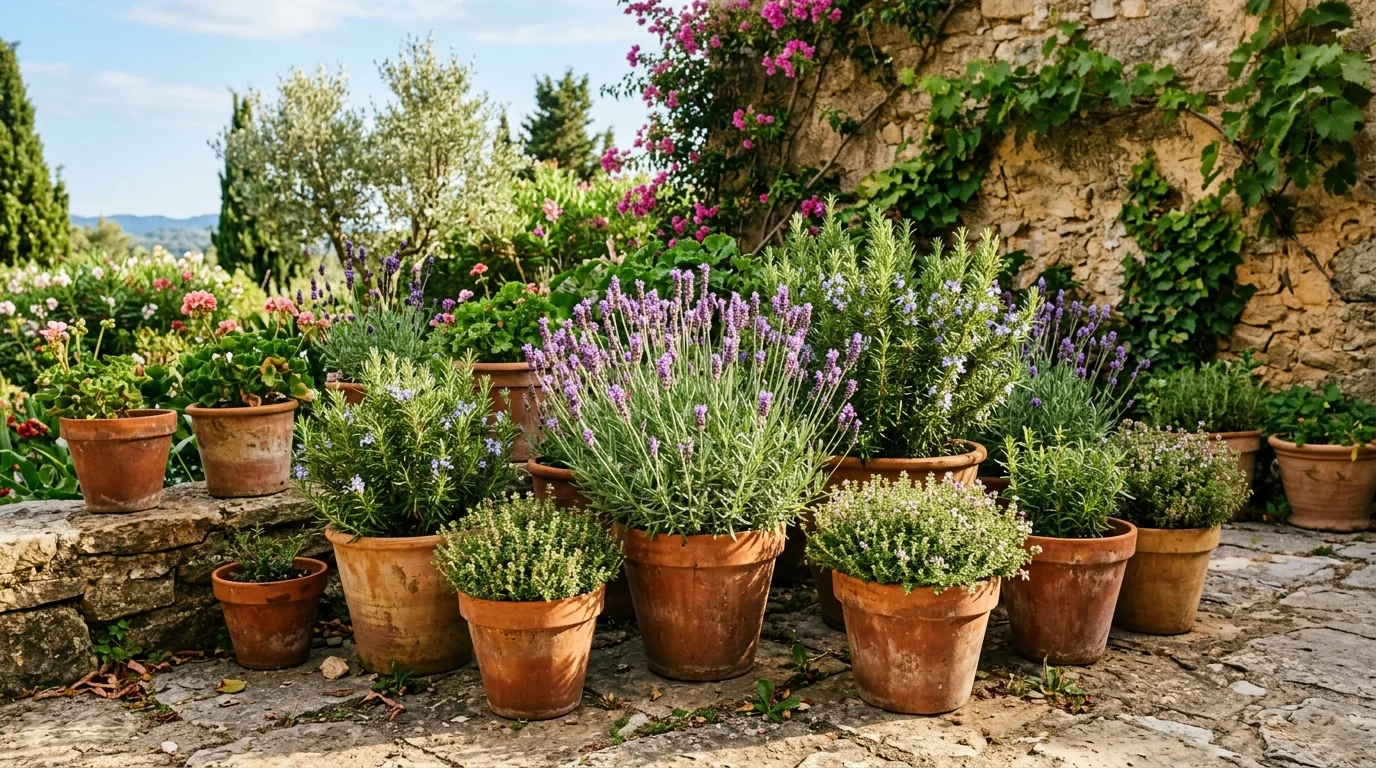
Terracotta adds warmth and authenticity.
Group pots in different sizes for a layered look.
Use herbs or small trees for planting.
Keep the colors consistent for a cohesive feel.
Terracotta ages beautifully with time.
This is an easy way to add texture.
Place pots along walls or near seating.
It creates a soft, lived-in atmosphere.
The pots can be moved seasonally if needed.
This detail feels classic and effortless.
4. Embrace whitewashed walls and greenery
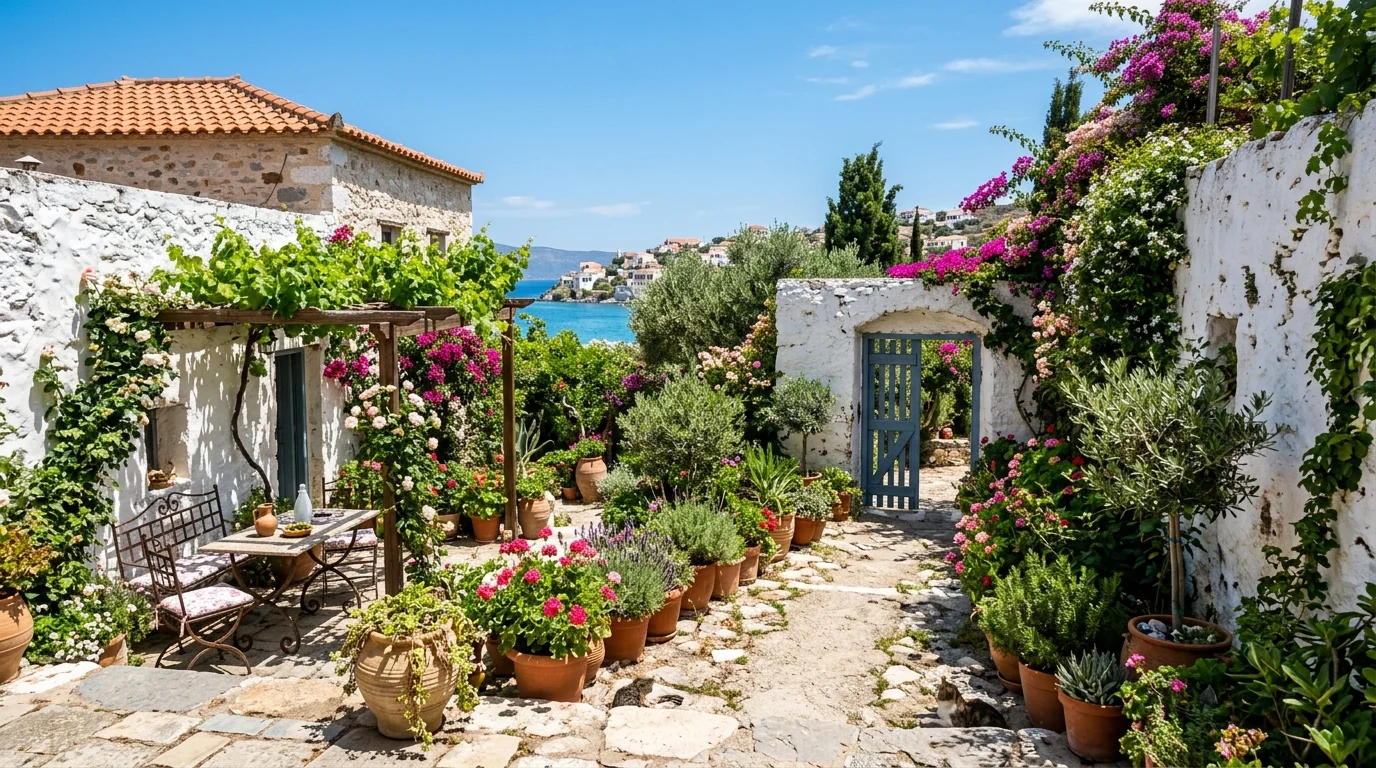
White walls reflect light and create contrast.
They make greenery pop against the background.
Use vines or climbing plants for softness.
This creates a bright, sun-washed look.
It also makes small spaces feel larger.
Pair with warm wood or stone for balance.
White walls are timeless and easy to maintain.
They suit both modern and rustic homes.
Keep the palette simple and calm.
This is a signature Mediterranean move.
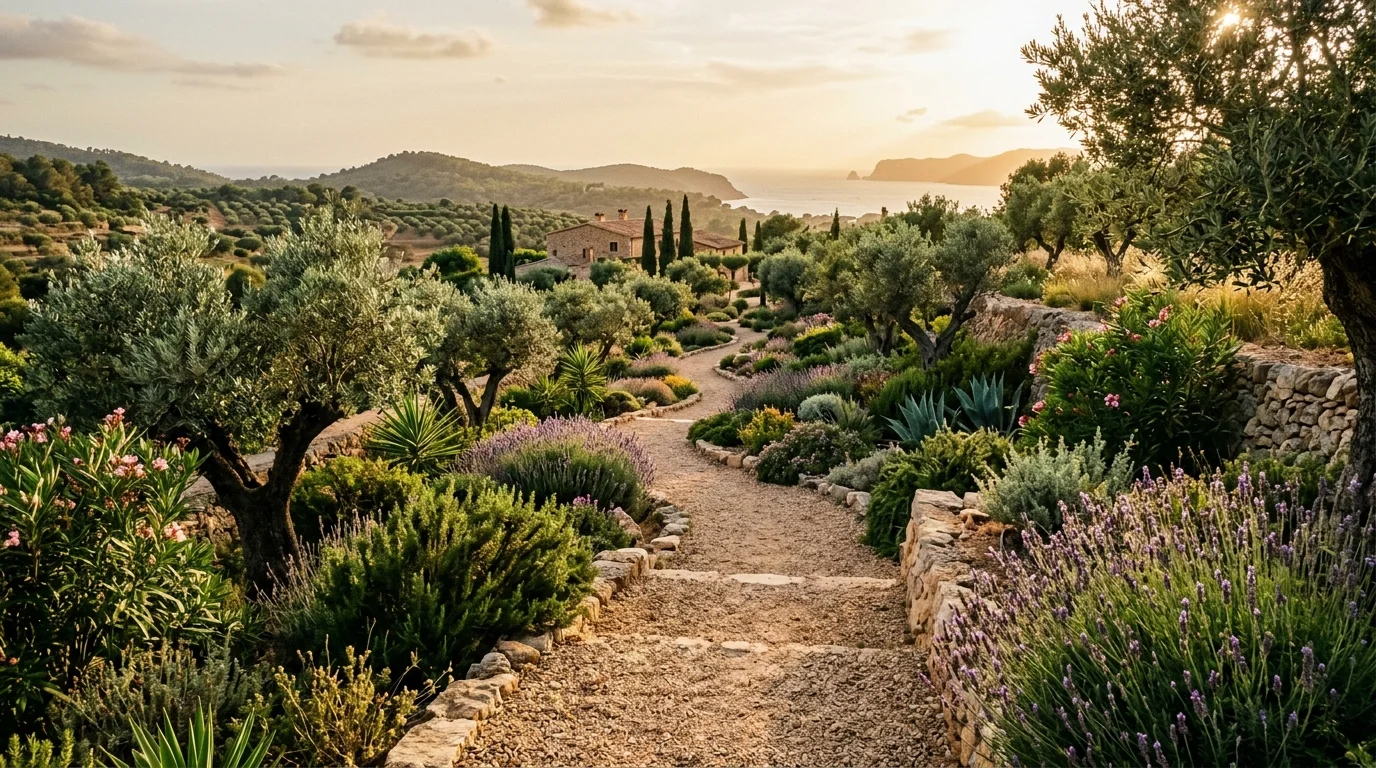
5. Design a gravel pathway garden
Gravel paths are practical and stylish.
They provide drainage and reduce mud.
Use light gravel for a bright, airy feel.
Edge the path with herbs or lavender.
This adds softness and fragrance.
Gravel is easy to refresh and maintain.
It works well in dry climates.
The crunch underfoot adds sensory texture.
Paths also help define the garden layout.
This simple detail feels very Mediterranean.
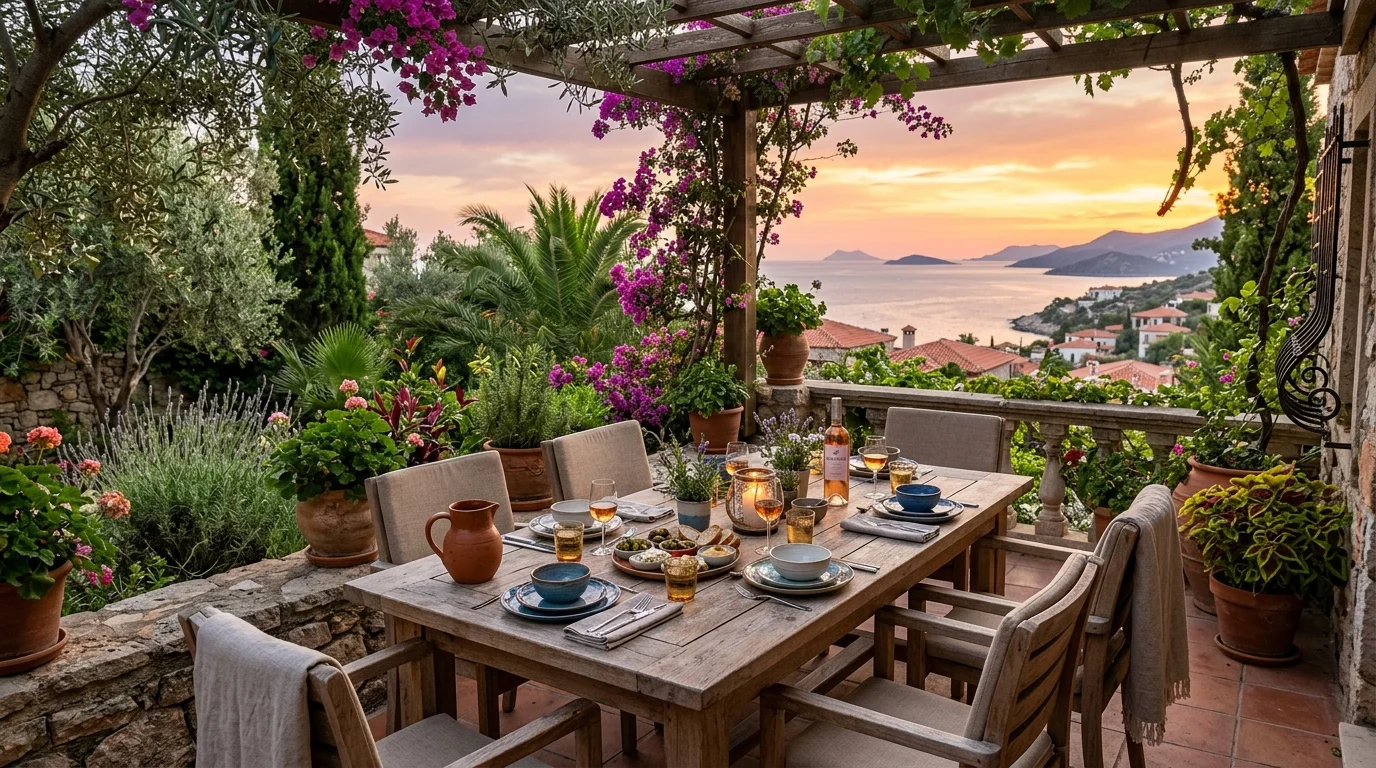
6. Create an outdoor dining terrace
Dining terraces are central to Mediterranean living.
Use a simple table with natural materials.
Shade it with a pergola or canopy if needed.
Place it near herbs for fresh, edible flavor.
Keep lighting warm and soft for evenings.
This makes the garden a true gathering place.
Stone or tile underfoot keeps it practical.
Add cushions in neutral tones for comfort.
The terrace becomes the heart of the garden.
It encourages slow, beautiful outdoor meals.
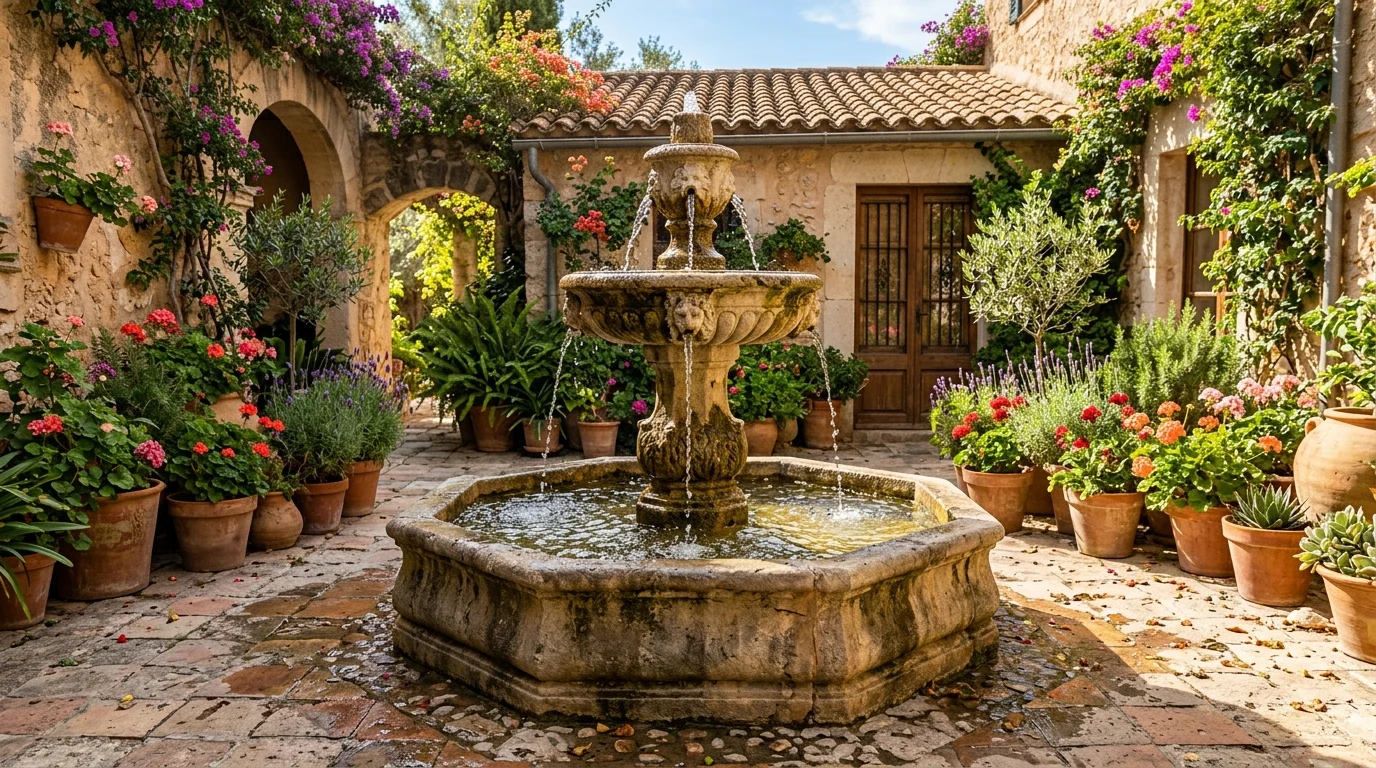
7. Add a fountain courtyard feature
Fountains bring movement and sound.
They also cool the air on hot days.
Choose a simple stone or ceramic design.
Keep the water flow gentle and steady.
Place it where it can be seen from seating.
This makes the garden feel calm and restorative.
The sound masks background noise.
A fountain adds a classic Mediterranean touch.
It works in large or small courtyards.
This is a timeless design element.
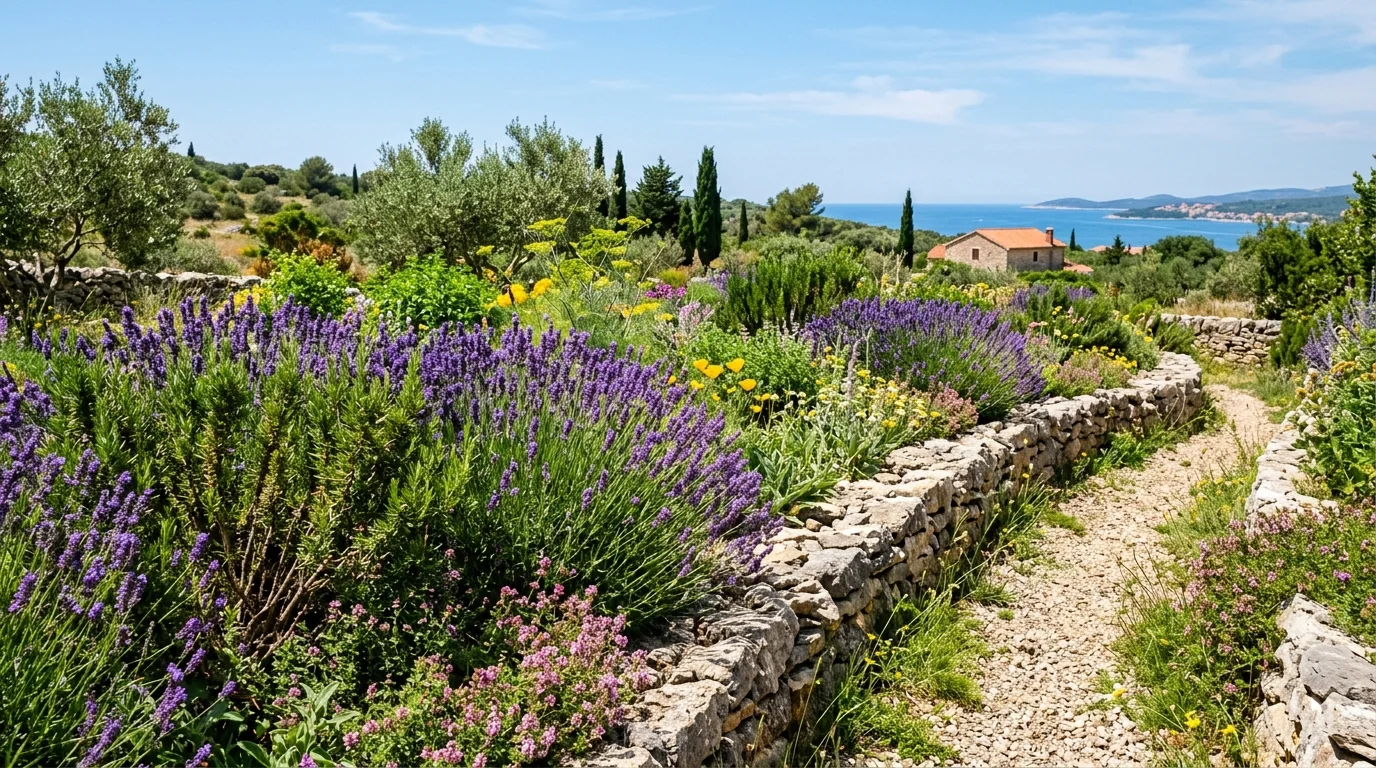
8. Plant lavender and herb borders
Lavender and herbs define the Mediterranean palette.
They add fragrance, color, and texture.
Use them along paths and walls.
Keep the planting dense for a lush look.
These plants are drought tolerant and hardy.
They also attract pollinators to the garden.
Herb borders soften stone edges.
The scent adds an immersive quality.
This planting feels practical and beautiful.
It is a signature Mediterranean feature.
9. Use a pergola with climbing vines
Pergolas add shade and structure.
Climbing vines soften the beams and create dappled light.
This is perfect for seating or dining zones.
Use grapevine, jasmine, or bougainvillea.
The greenery creates a living ceiling effect.
It adds romance and texture to the space.
Pergolas also define outdoor rooms.
They feel both practical and decorative.
This is a classic Mediterranean feature.
It adds height without heaviness.
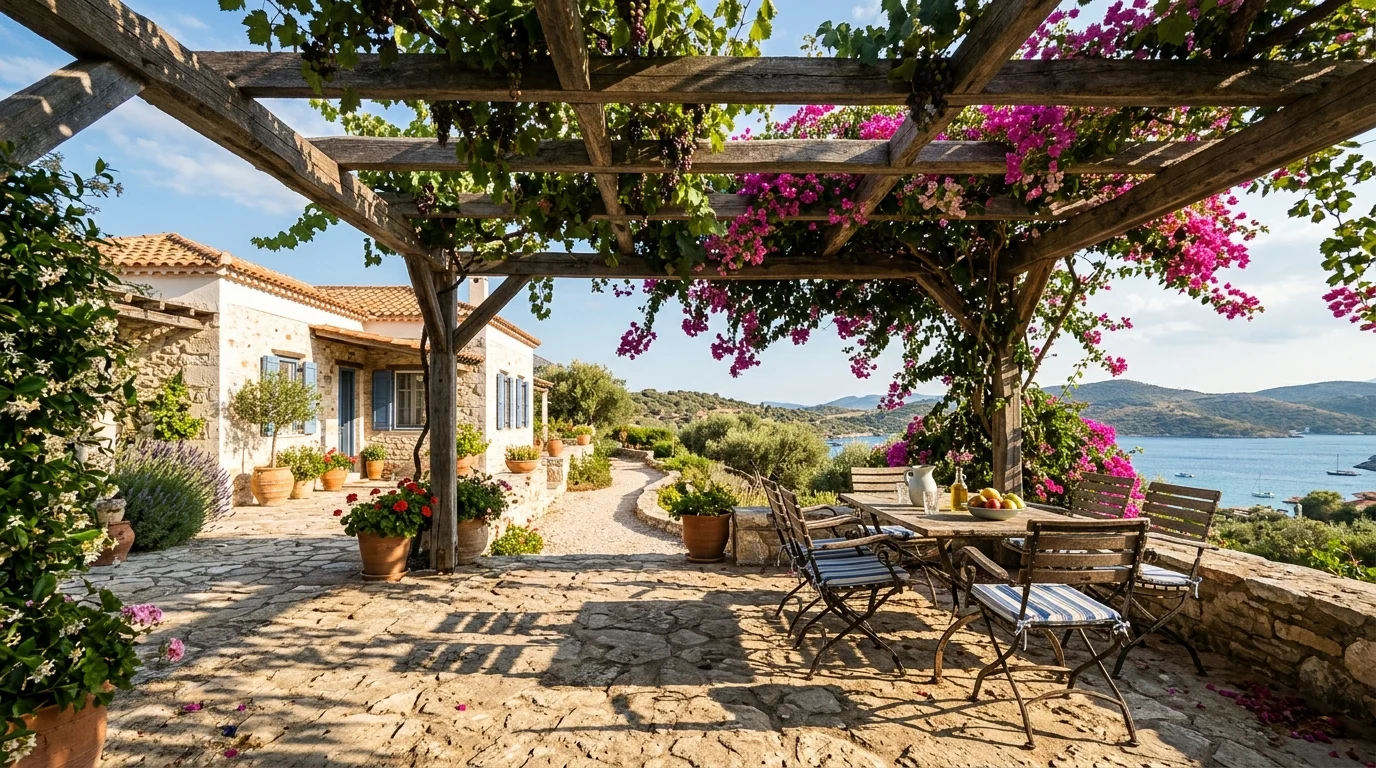
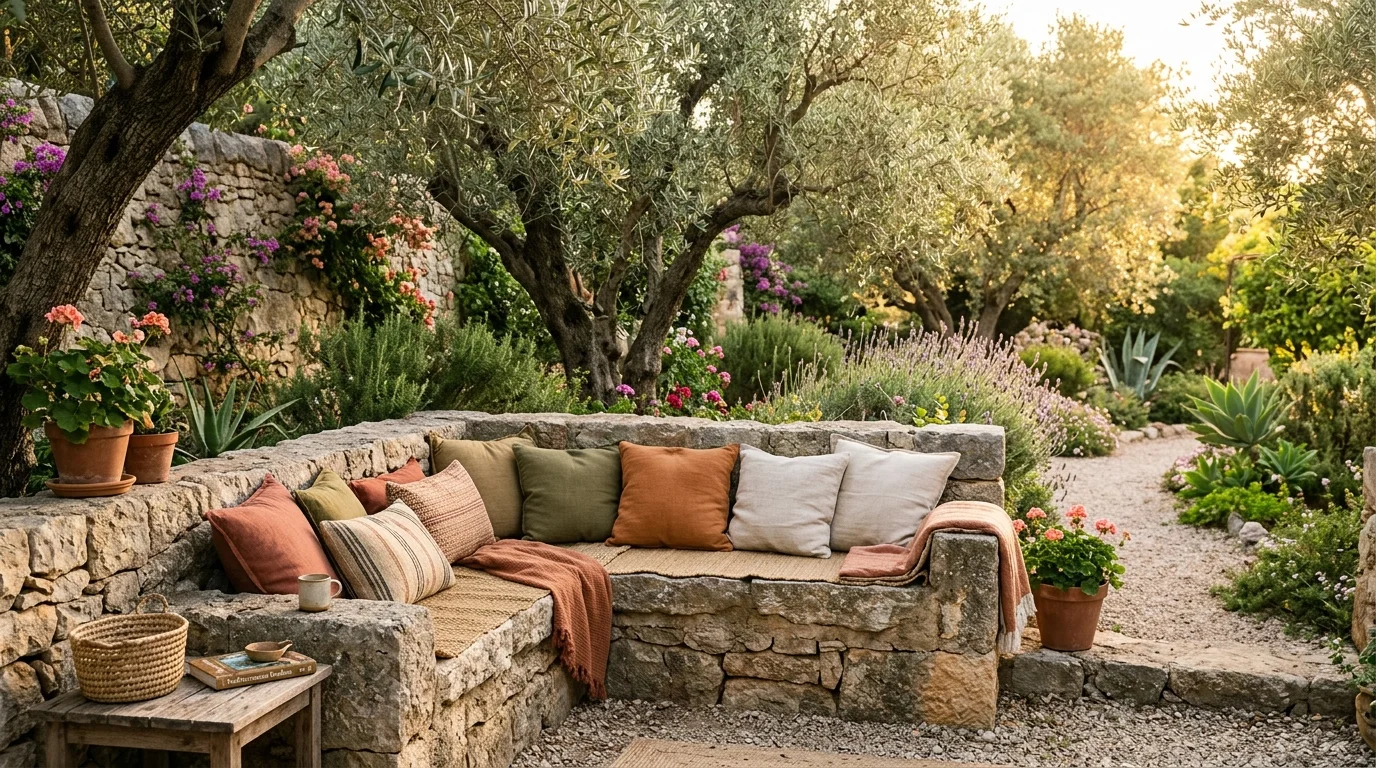
10. Build a rustic stone seating area
Stone seating feels grounded and timeless.
It blends naturally with Mediterranean materials.
Use cushions to add softness and comfort.
Place it near a wall or tree for shade.
This creates a calm place to rest.
Stone keeps the area cool in warm weather.
It also adds architectural interest.
Keep the lines simple and classic.
This works well in both large and small gardens.
It becomes a quiet retreat within the space.
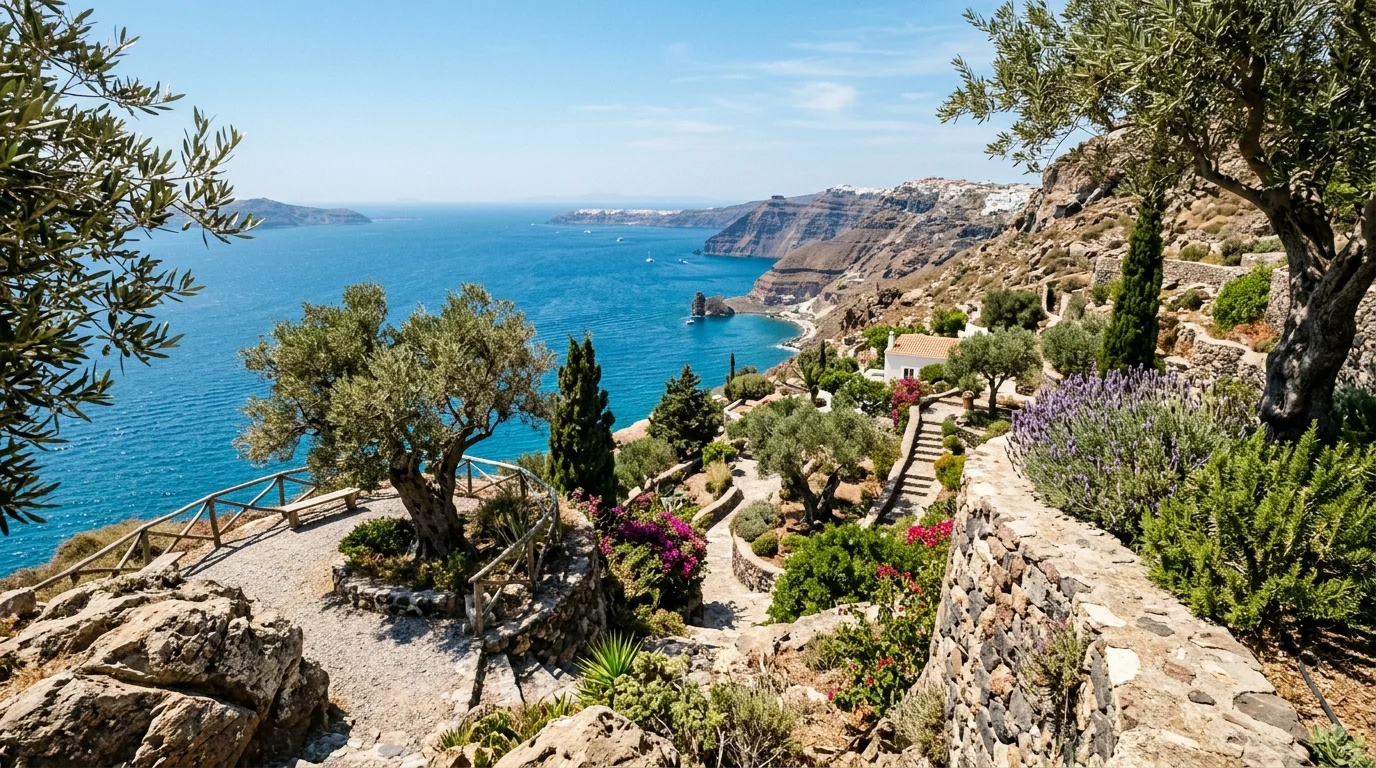
11. Embrace a coastal Mediterranean palette
Coastal Mediterranean gardens feel airy and light.
Use whites, sandy tones, and soft blues.
Pair the palette with silvery foliage.
This creates a breezy, relaxed mood.
Choose plants that handle salt and sun.
Keep the layout open and uncluttered.
Natural wood works well with this style.
The overall effect feels calm and fresh.
It is perfect for seaside-inspired homes.
This palette makes small gardens feel expansive.
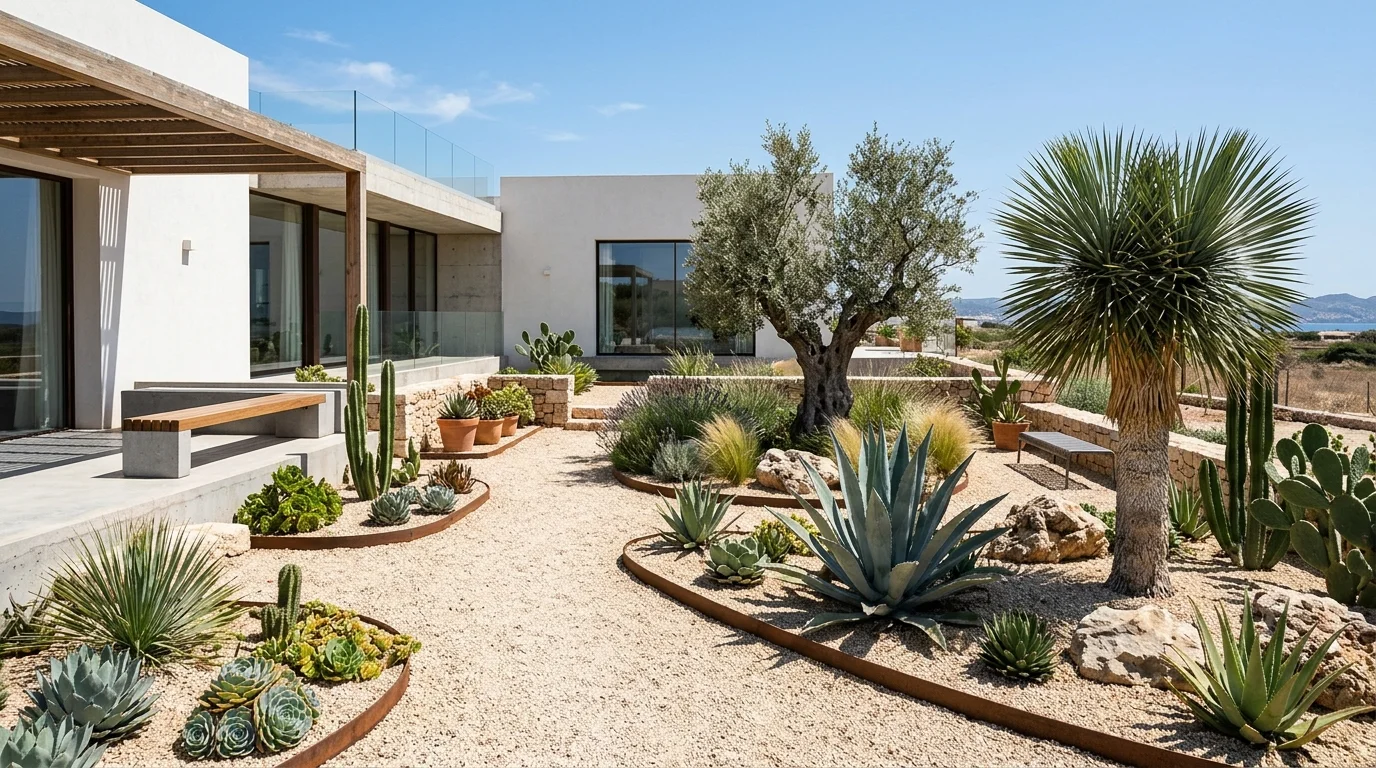
12. Try a minimal dry garden style
Dry gardens use gravel, stones, and hardy plants.
They are low maintenance and water wise.
Keep the planting palette simple and repetitive.
Use succulents or drought tolerant shrubs.
This creates a calm, structured look.
Dry gardens are ideal for hot climates.
They also look beautiful year round.
The focus is on texture rather than flowers.
This style feels modern and timeless.
It is a smart choice for easy upkeep.
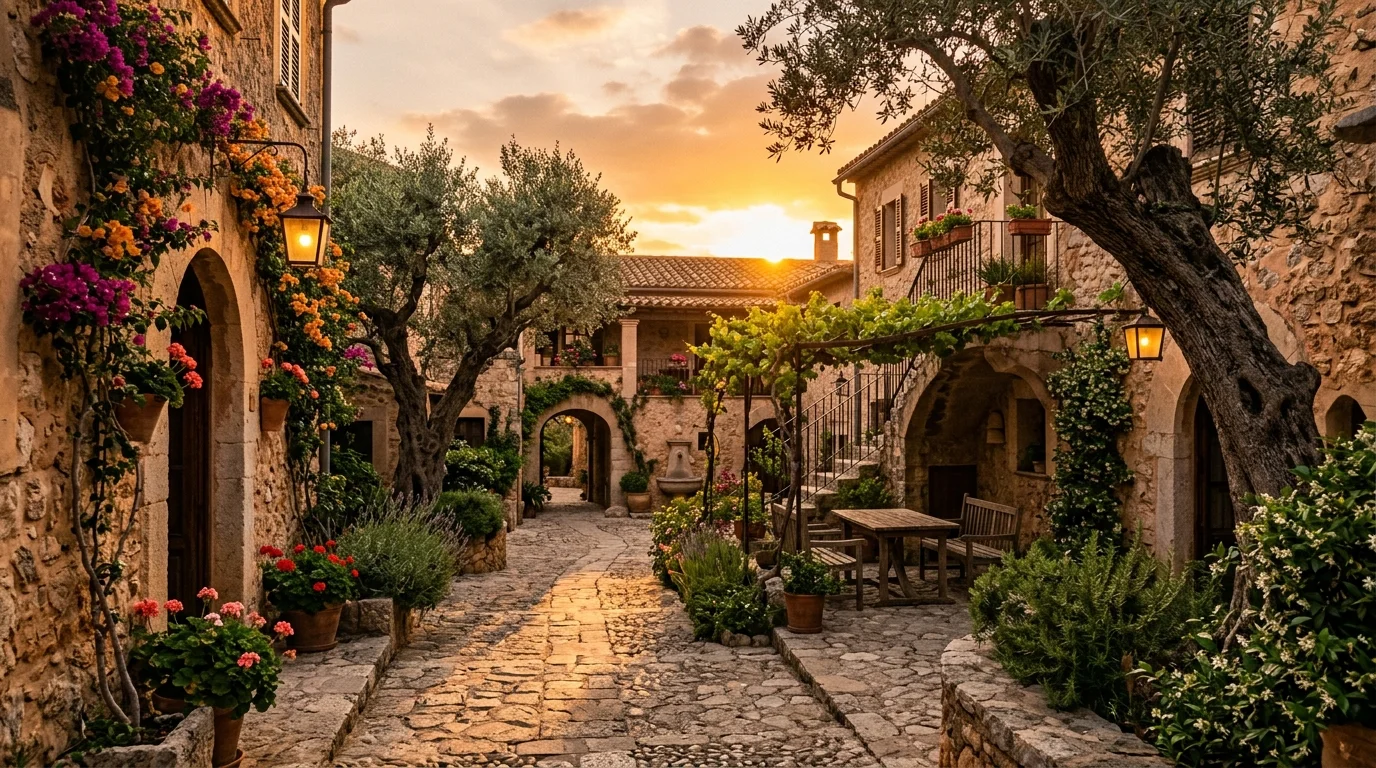
13. Capture a sunset courtyard mood
Evening light is part of the Mediterranean feel.
Use warm tones and soft lighting to enhance it.
Place seating where the light falls naturally.
Add lanterns or candles for glow.
The space should feel calm and welcoming at dusk.
Plants with soft textures catch the light beautifully.
This creates a romantic, timeless atmosphere.
It is perfect for slow evenings outdoors.
The mood makes the garden feel truly special.
This is the finishing touch for a Mediterranean courtyard.
Final thoughts on Mediterranean garden design
Mediterranean gardens are simple, warm, and timeless.
Focus on texture, light, and strong focal points.
With the right materials, the style feels effortless.