Winter heating does not have to mean high energy bills. With the right mix of insulation, heat storage, and smart layout choices, you can keep a greenhouse comfortable while using fewer resources.
Think of the greenhouse as a system. A small upgrade to reduce heat loss often makes every other solution more effective.
These ideas focus on practical ways to hold warmth, reduce heat loss, and use the greenhouse itself as a thermal system.
What makes winter greenhouse heating work
- Reduce drafts and air leaks first
- Store heat during the day and release it overnight
- Protect plants with internal microclimates
- Use layers instead of a single heavy solution
1. Build a compost heat system
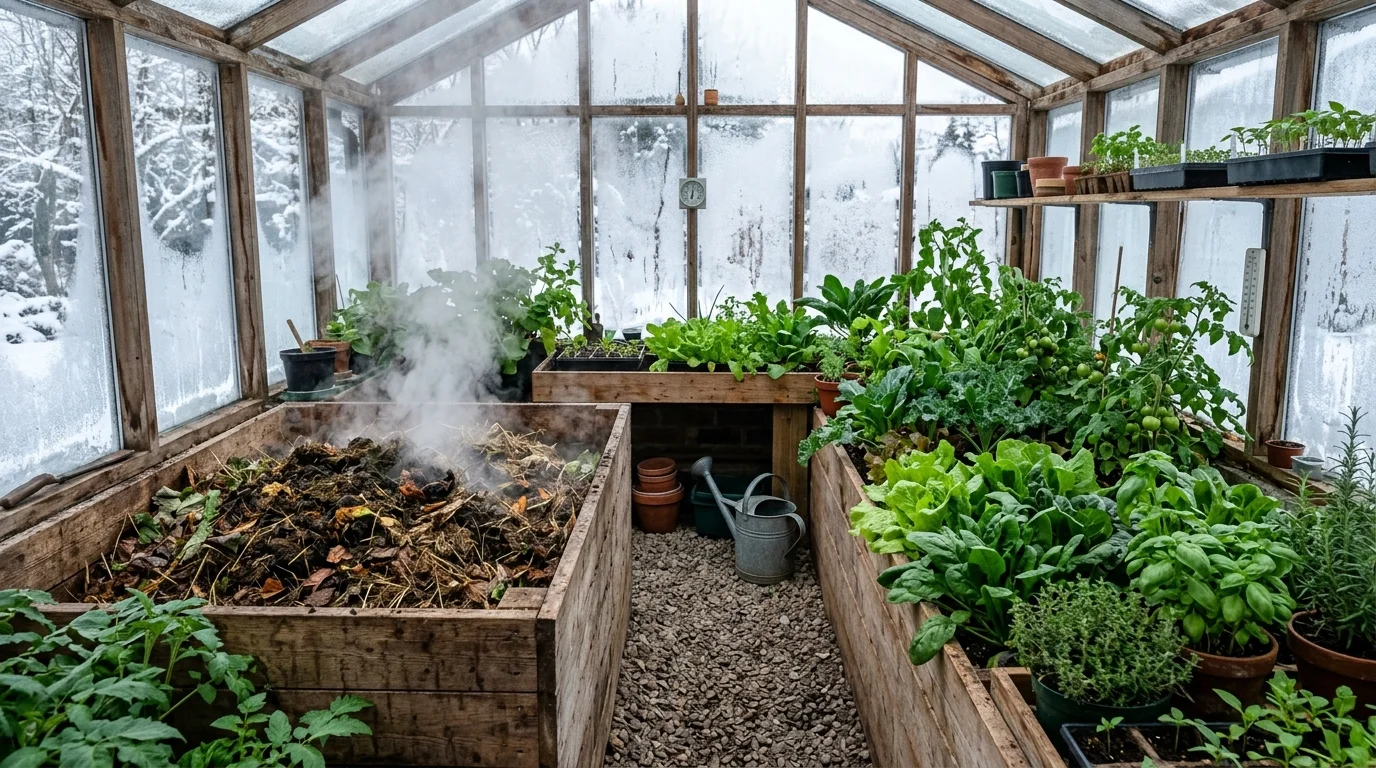
Compost piles generate steady heat as they break down. Placed near a greenhouse wall or under benches, they add gentle warmth.
Keep the pile active with a good mix of greens and browns, and it will continue producing heat for weeks.
2. Maximize passive solar gain
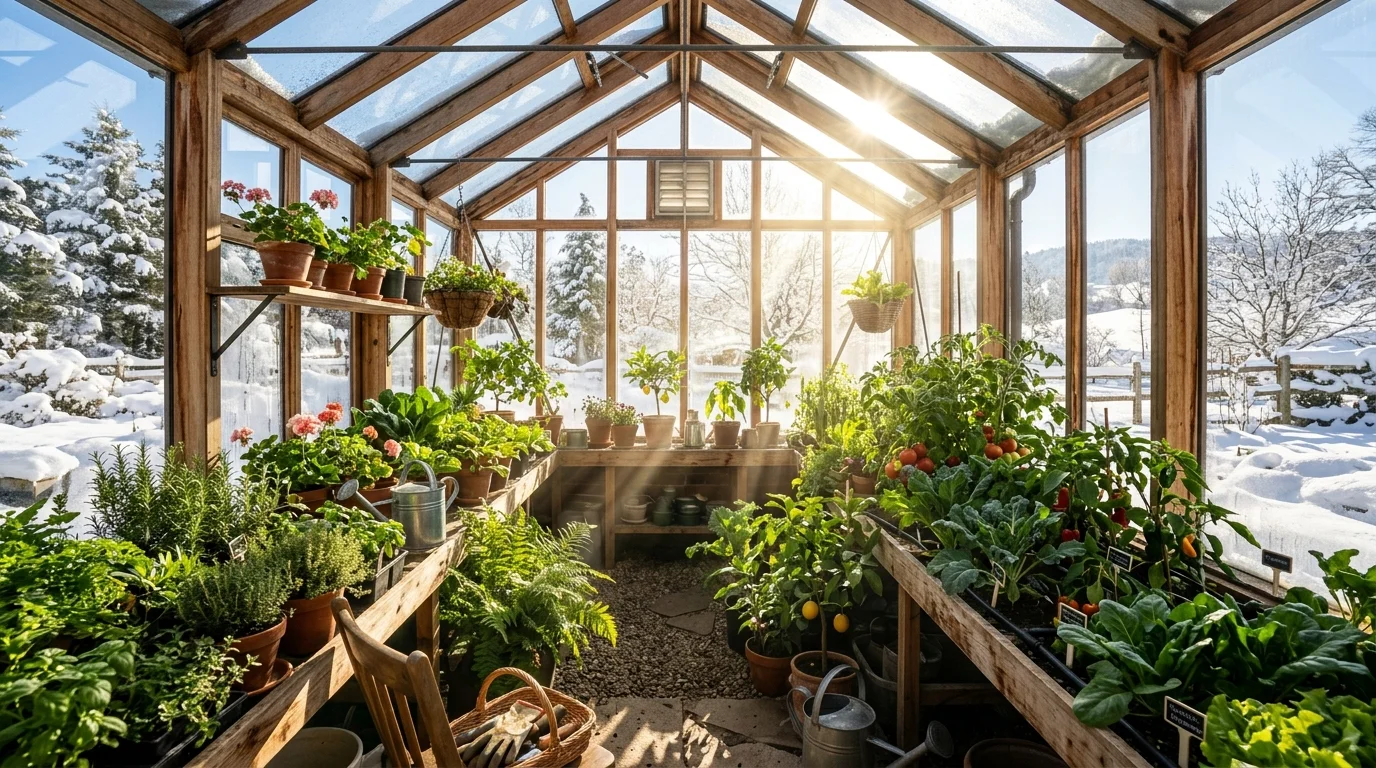
Orienting the greenhouse for sun and keeping glazing clean makes a big difference. Passive solar design is the foundation of efficient winter heat.
Use dark surfaces inside to absorb heat, and avoid shading the south-facing side during winter months.
3. Add thermal mass with water barrels
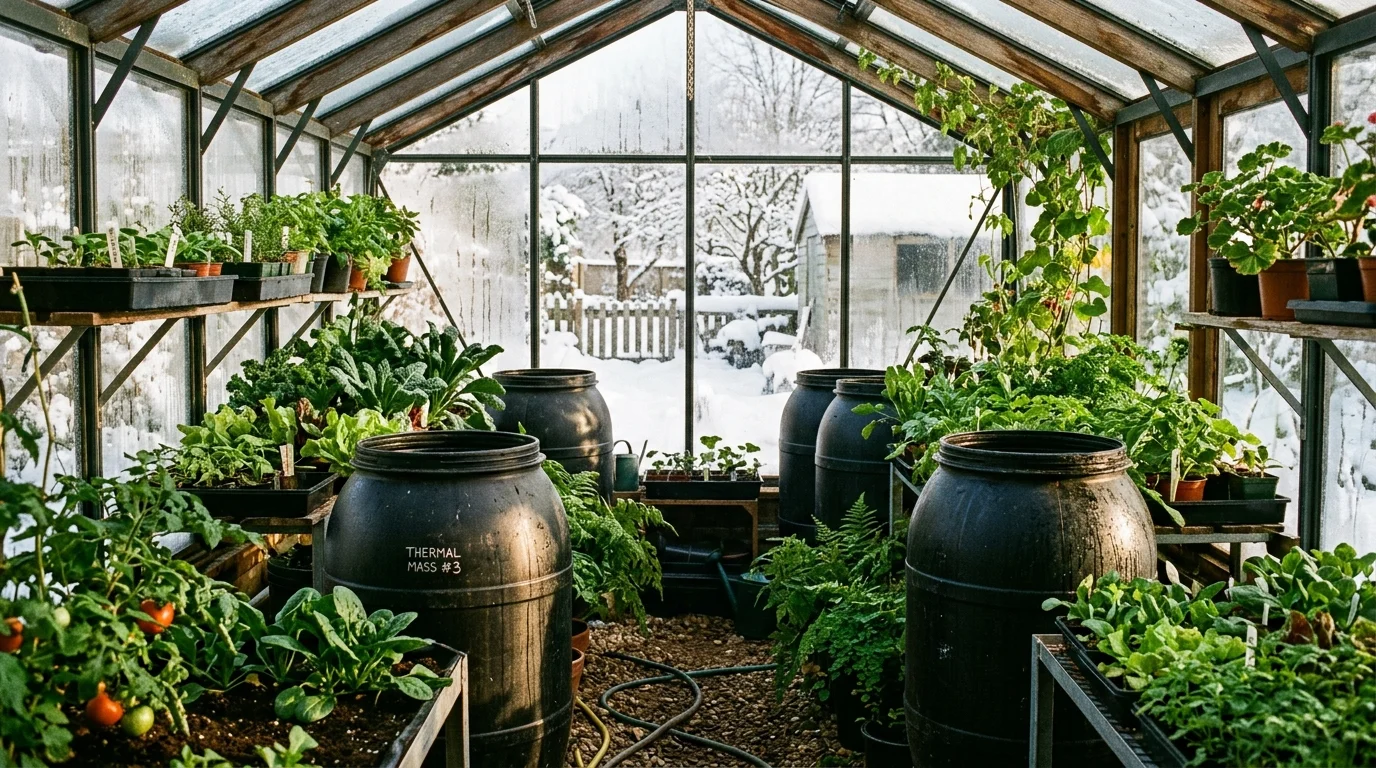
Water holds heat well. Dark barrels absorb warmth during the day and release it slowly at night.
Place barrels along the north wall so they do not block light but still act as a steady heat reservoir.
4. Use a stone thermal mass wall
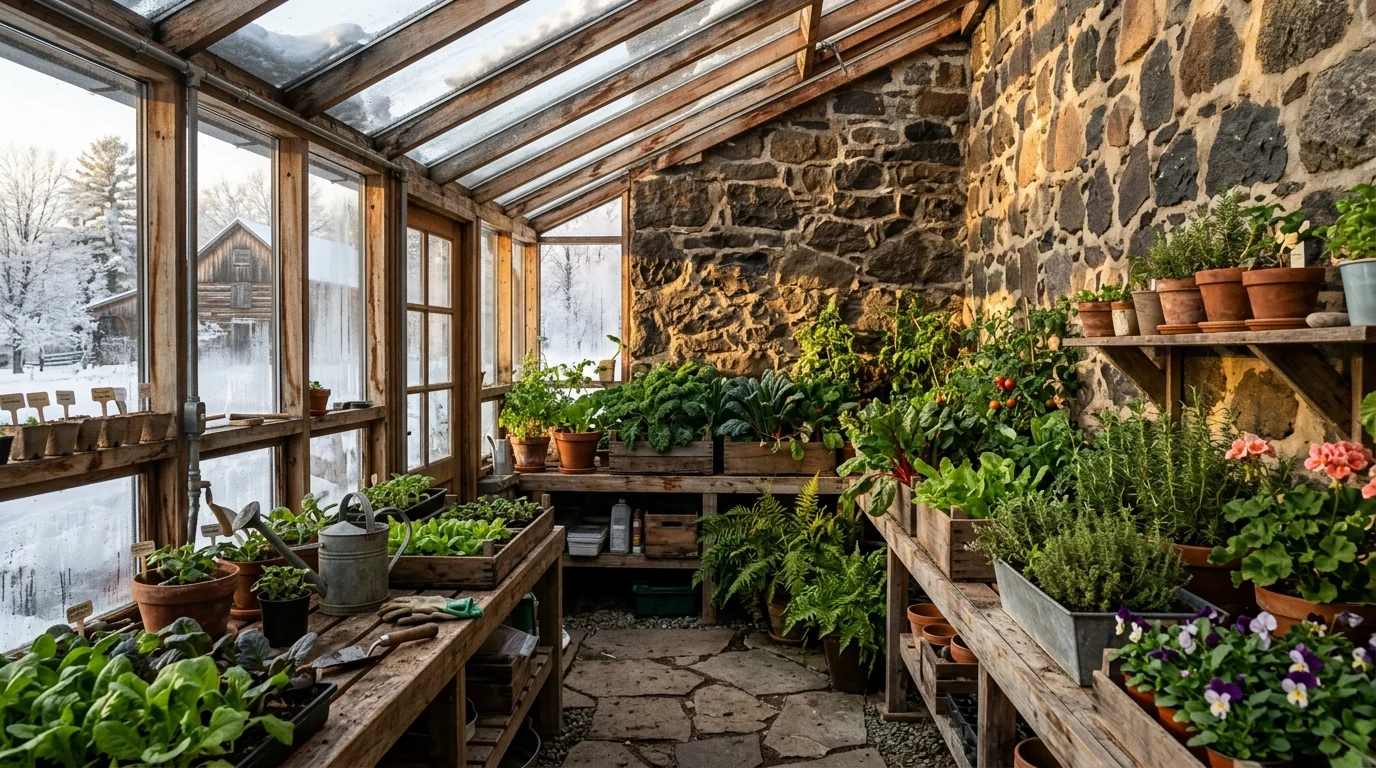
Stone or brick walls act like heat batteries. They stabilize temperature swings and help the greenhouse feel more consistent.
Even a low stone wall under benches can help moderate the cold at ground level.
5. Insulate with straw bales
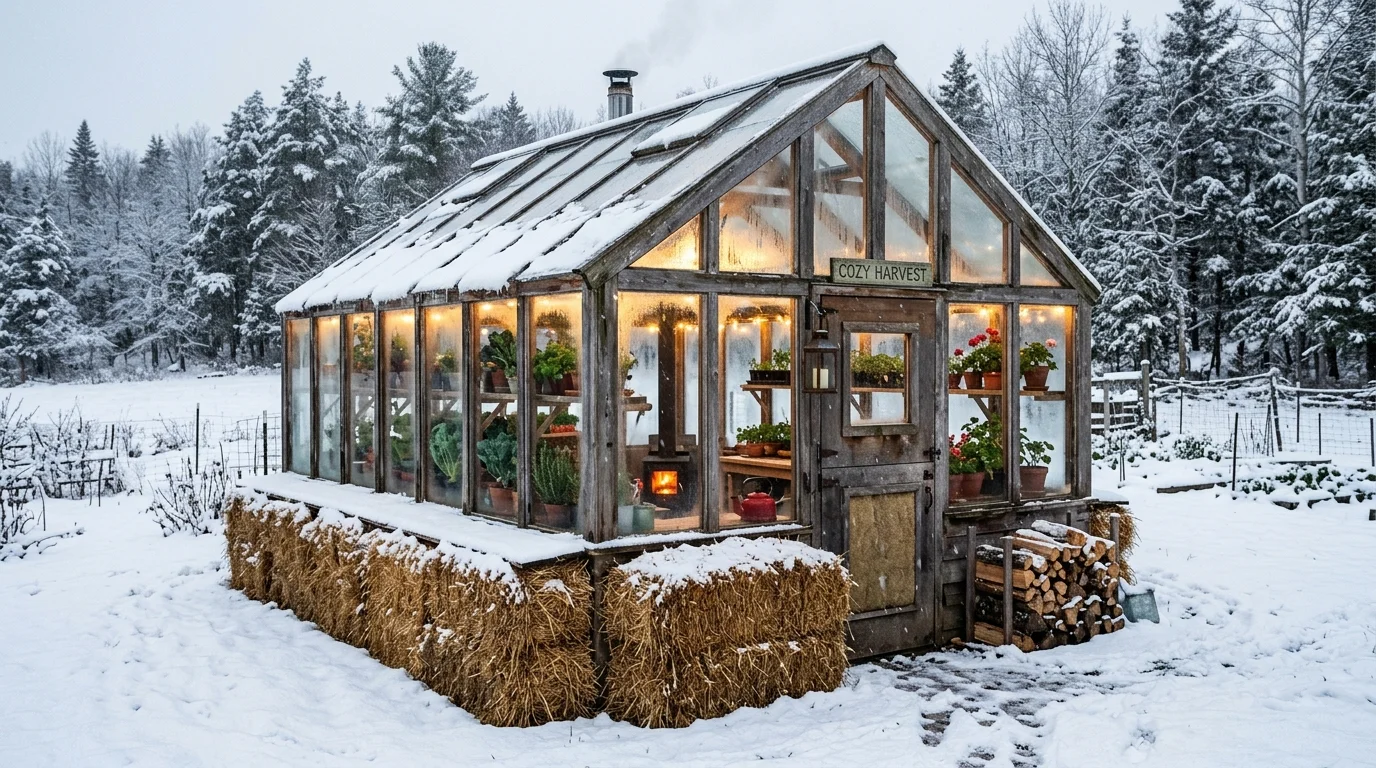
Straw bales are a classic low-cost insulator. Place them along the base walls to block cold drafts.
Cover them with a tarp if they are exposed to moisture so they keep their insulating value.
6. Add double layer plastic covering
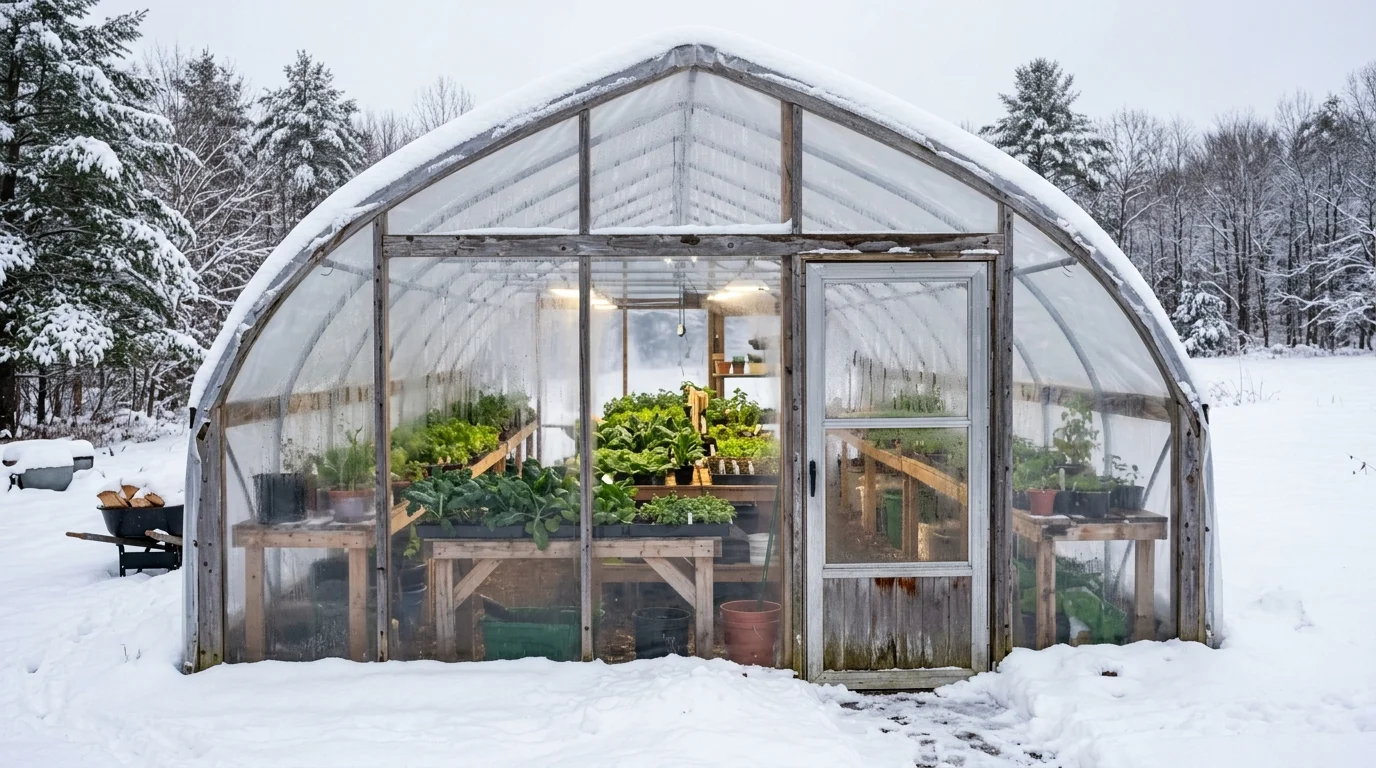
Two layers of plastic with an air gap greatly reduce heat loss. It is one of the quickest upgrades you can make.
For small structures, even a temporary winter layer can boost heat retention significantly.
7. Use a small wood stove
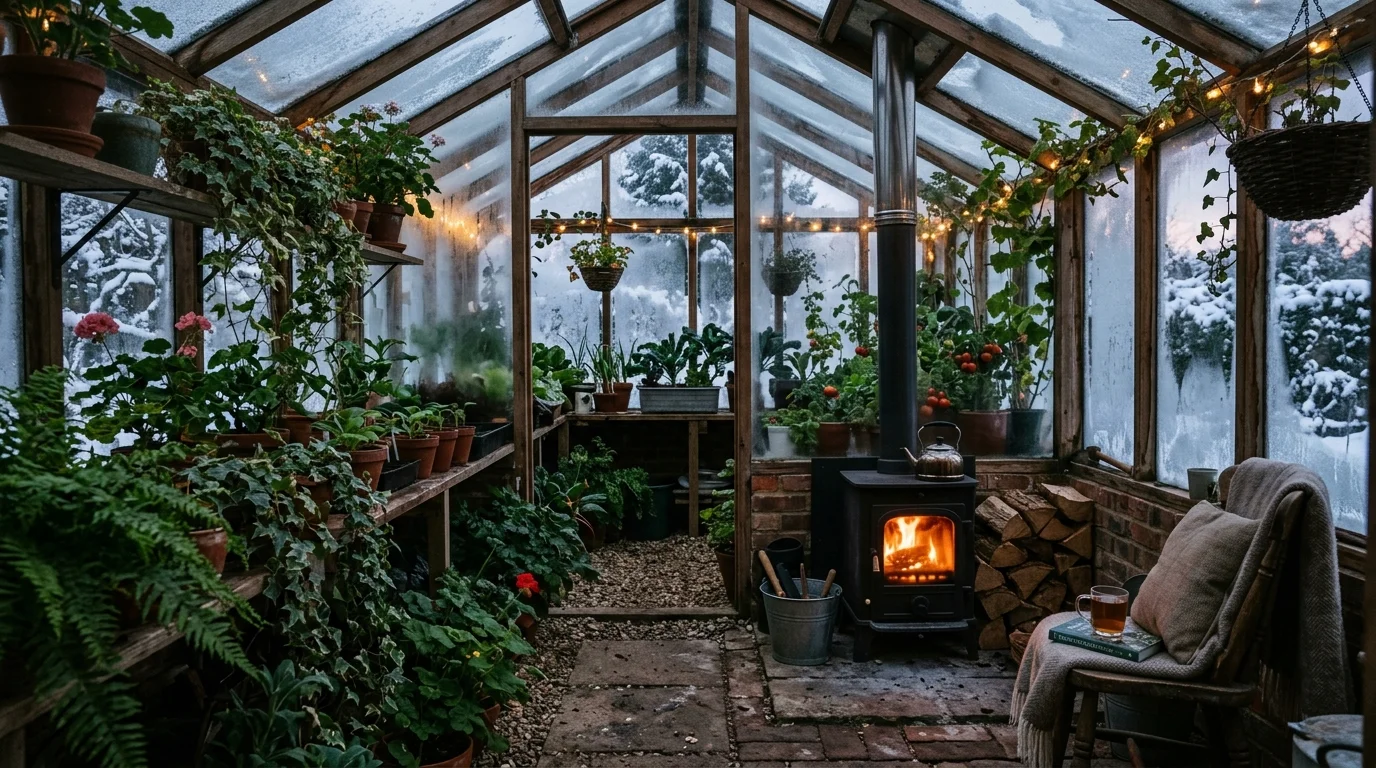
Wood stoves provide strong heat for cold nights. They work best when paired with thermal mass that spreads the warmth.
Make sure ventilation is correct and keep plants at a safe distance from direct heat.
8. Add thermal blanket covers
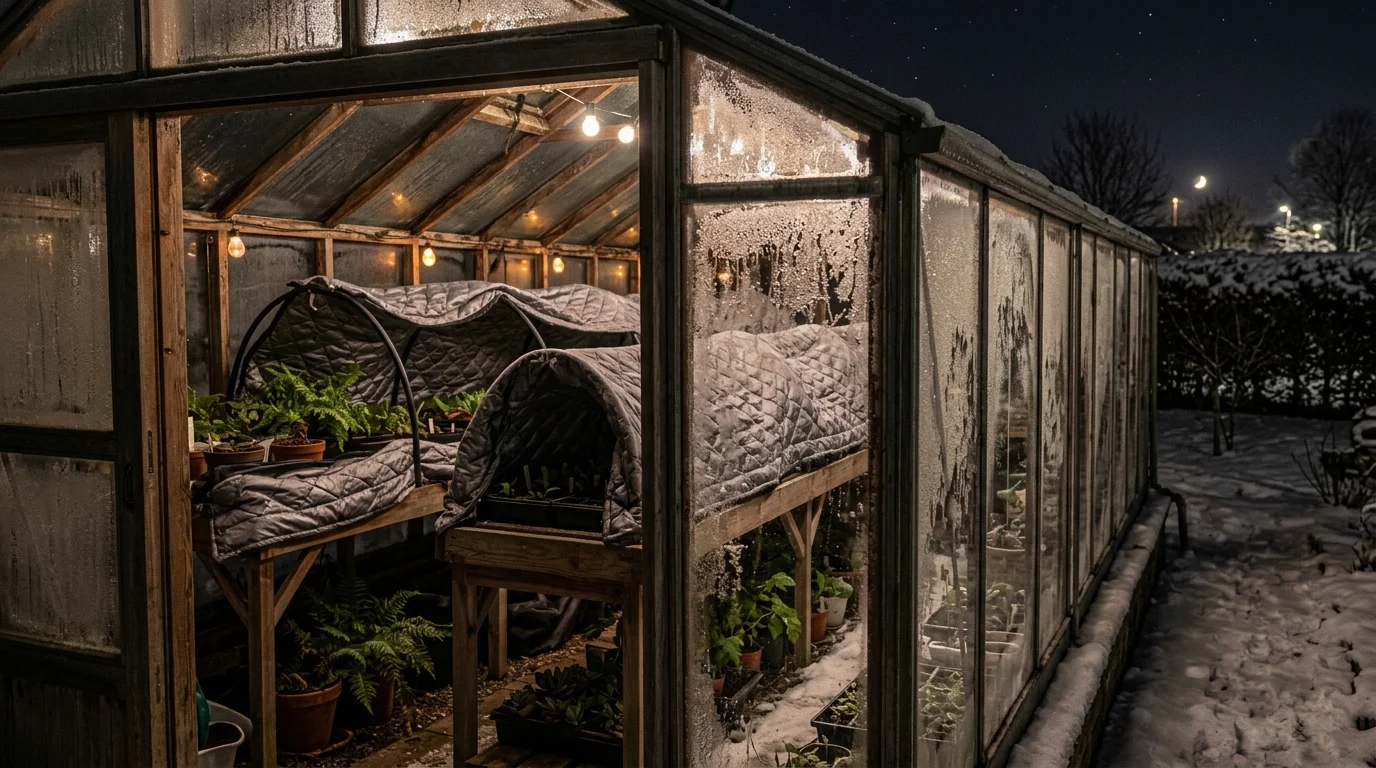
Thermal blankets protect plants and reduce overnight heat loss. They are especially useful for tender seedlings.
Use them over benches or hoops so the blanket does not crush plants as it settles overnight.
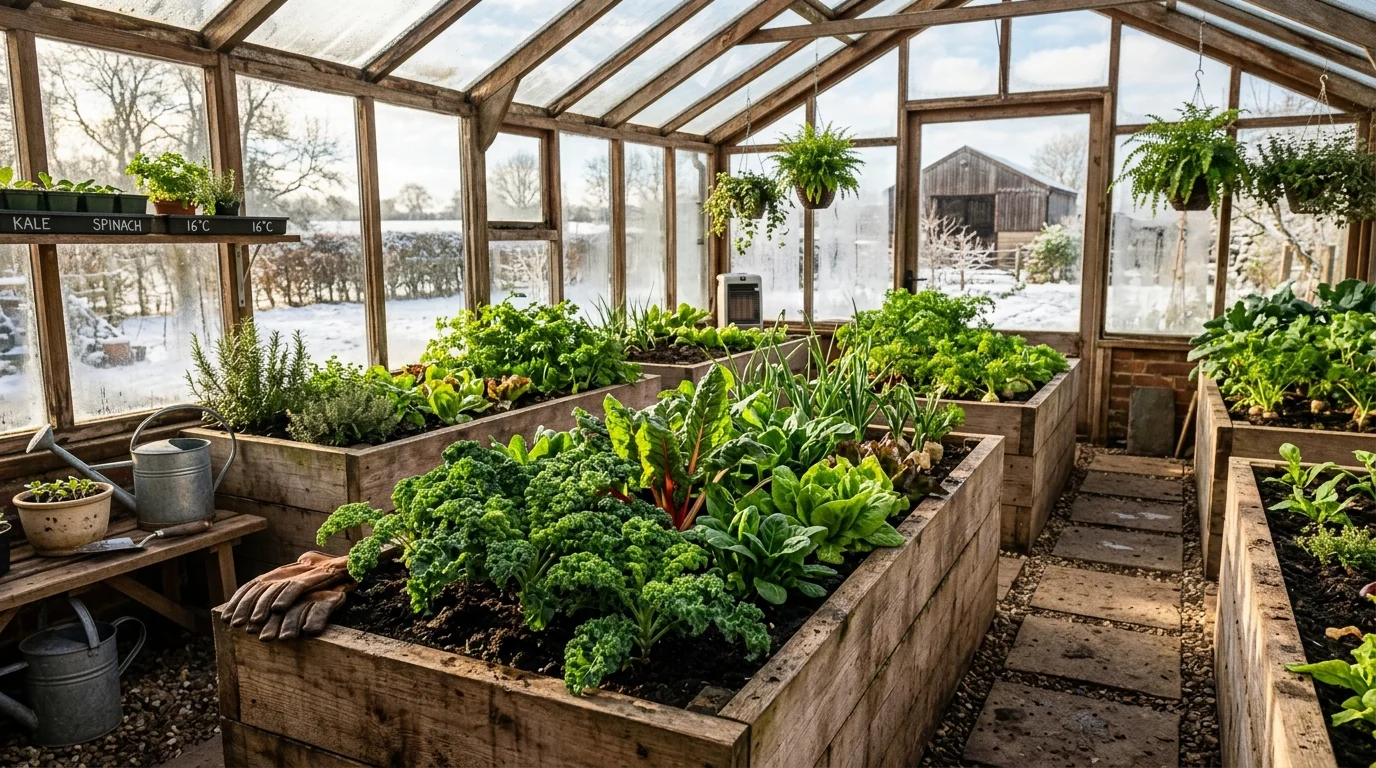
9. Raise beds for better heat retention
Raised beds warm faster and drain better. They also make it easier to add insulation underneath.
Adding a layer of insulation under the bed base helps prevent cold from creeping in from the ground.
10. Store heat underground
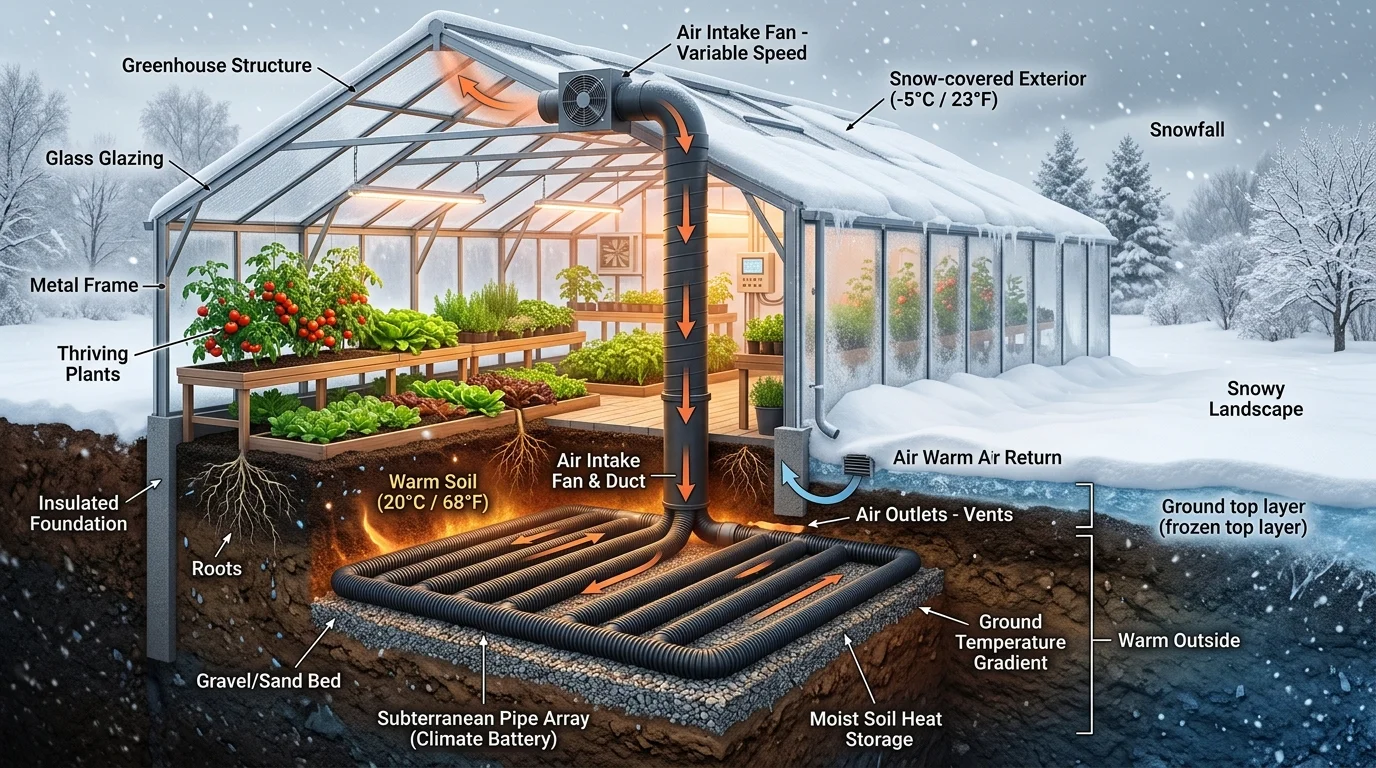
Underground heat storage systems capture warmth during the day and release it at night. Even simple versions can help smooth temperature swings.
If you cannot build a full system, even buried containers of water can help stabilize temperature.
11. Add a cold frame inside the greenhouse
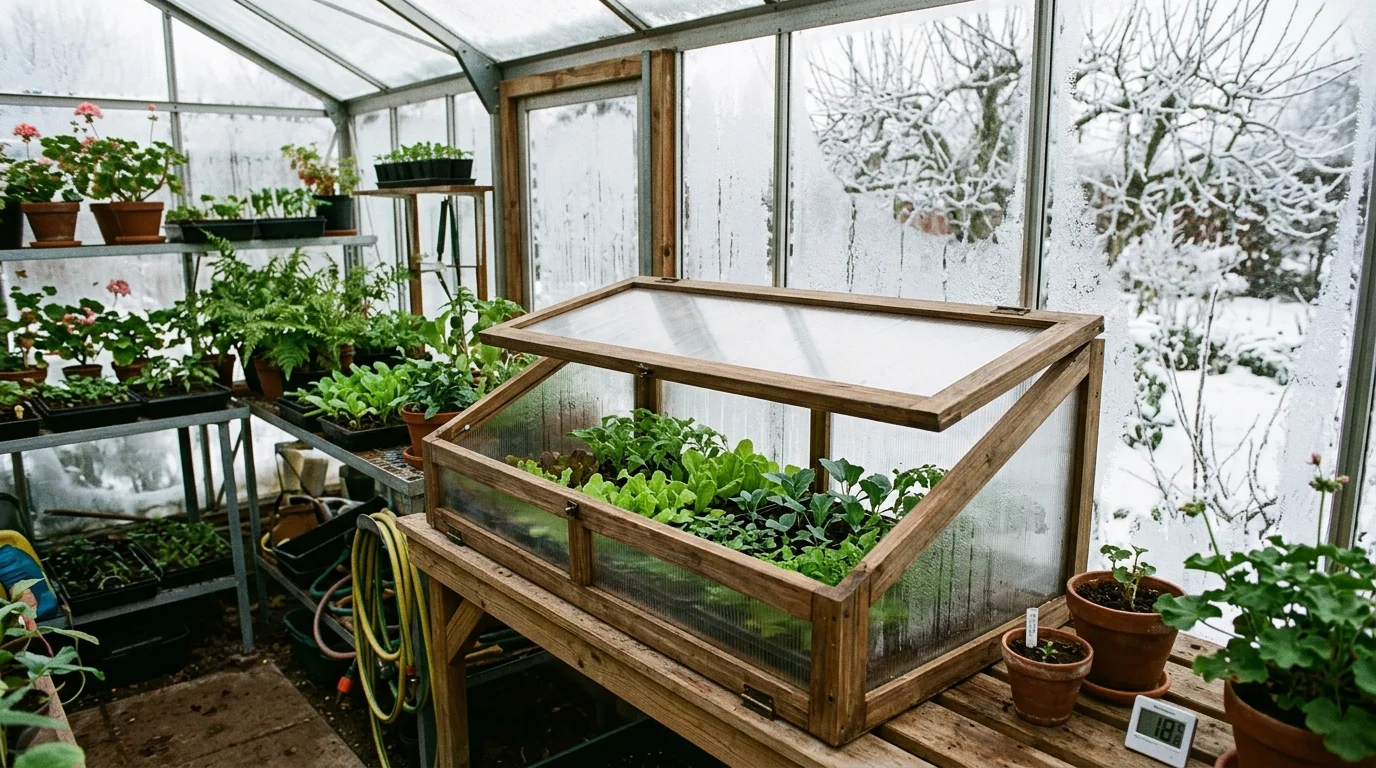
A cold frame within the greenhouse creates a protected microclimate. This is perfect for seedlings or sensitive crops.
It is also a great way to separate tender plants from the main greenhouse air during extreme cold.
12. Hang insulated curtain dividers
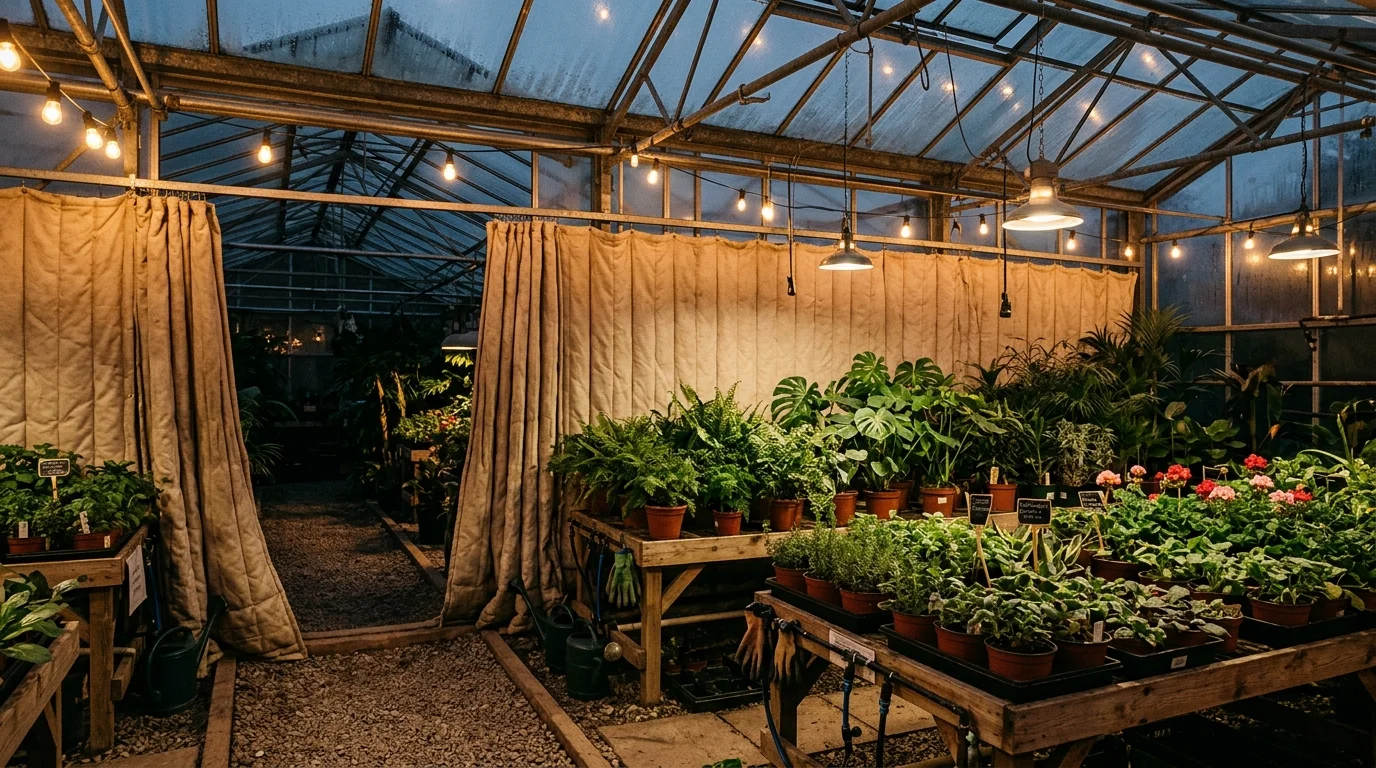
Curtains reduce the volume you need to heat. Closing them at night keeps warmth around the plants.
Even a simple clear plastic curtain can create a warmer inner zone without blocking light.
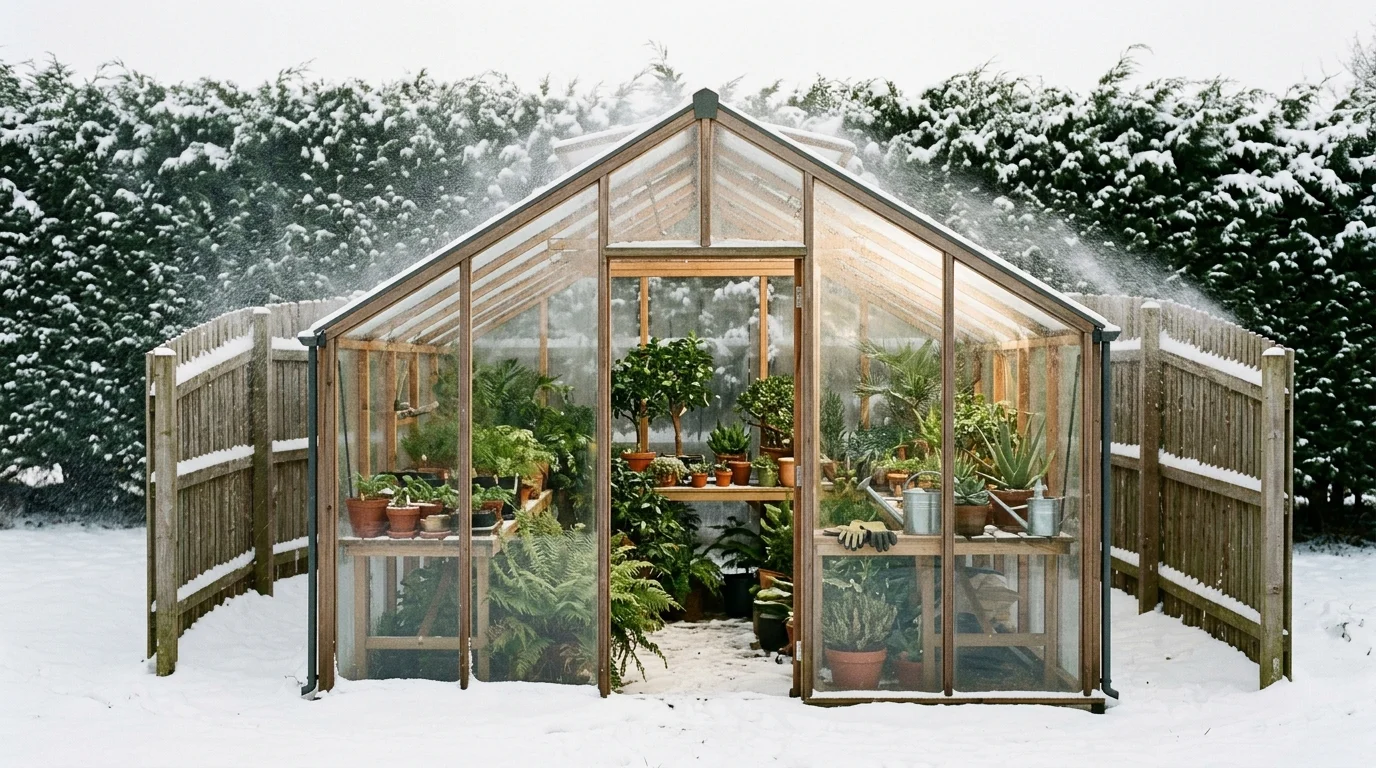
13. Build wind protection barriers
Blocking wind outside the greenhouse reduces heat loss. Fences, hedges, or panels make a big difference.
Place barriers a short distance away so wind pressure is reduced before it hits the greenhouse walls.
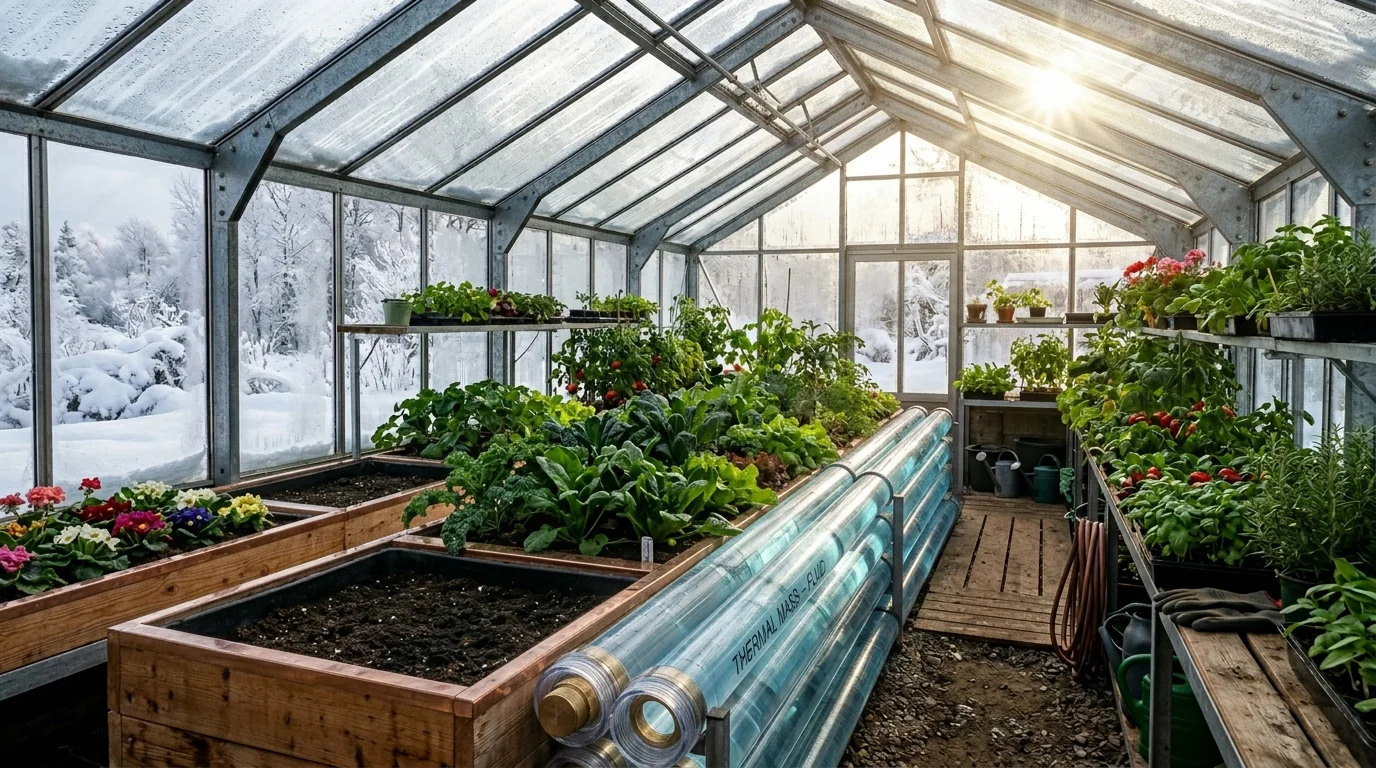
14. Use water-based heat storage beds
Water-based beds combine planting space and heat storage. They absorb warmth during the day and release it at night.
This works well for greenhouse vegetables that need steady nighttime temperatures.
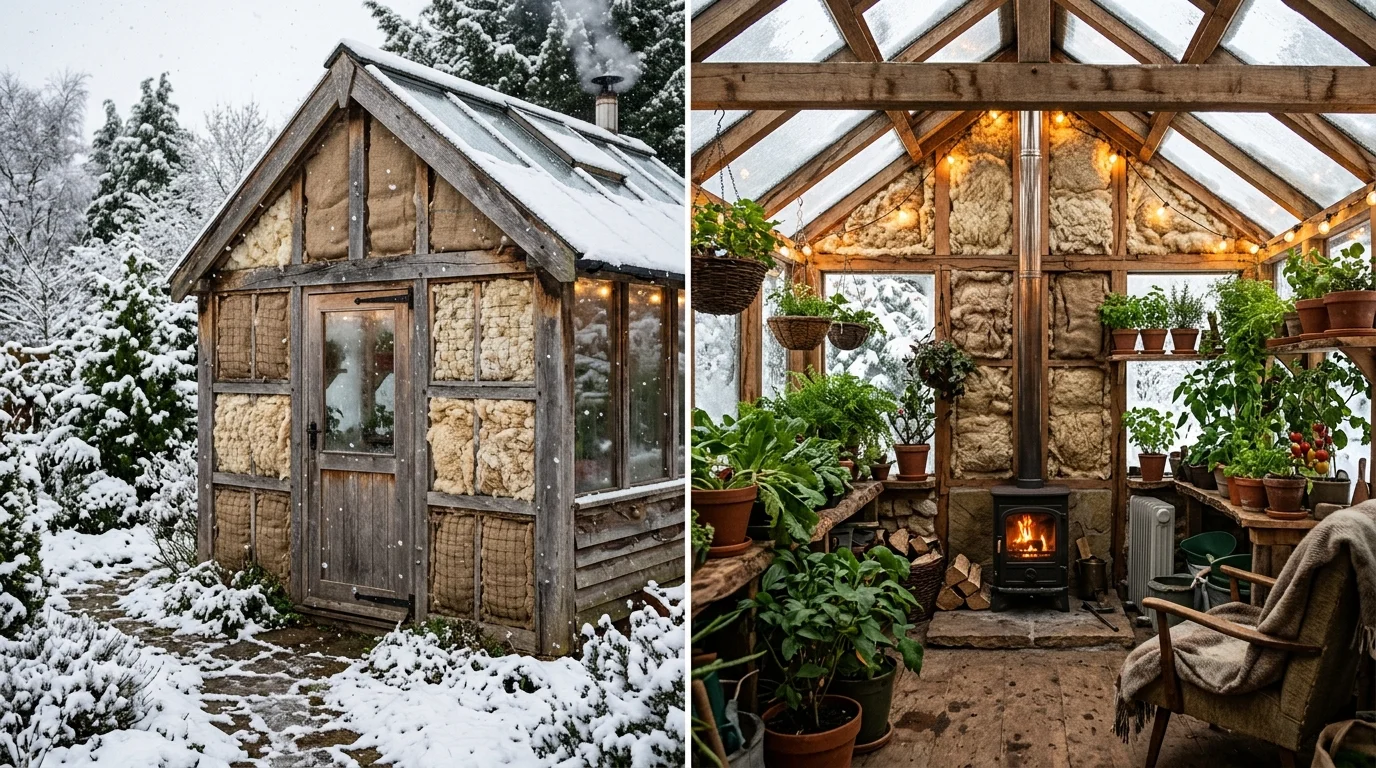
15. Try natural fiber insulation
Natural fiber mats or rolls are breathable and effective. Use them in areas where you need flexibility and easy removal.
Because they are easy to roll up, you can remove them in warmer spells and reuse them the following season.
Final thoughts on heating a greenhouse in winter
You rarely need one big solution. A mix of insulation, thermal mass, and smart layout choices keeps a greenhouse warm while staying efficient. Start with the easiest upgrades, then layer in the more advanced systems as needed.
Focus on reducing heat loss first, then add heat storage. That combination delivers the biggest results with the least effort.