Vertical pallet planters are one of the smartest ways to turn scrap wood into something both useful and beautiful. They make small spaces work harder, bring greenery up to eye level, and can transform a plain wall or fence into a living feature. The appeal is not just that they are affordable. It is that they can look genuinely creative and well-designed when done properly.
That is what makes a pallet planter such a satisfying DIY project. It takes a practical recycled material and turns it into a statement piece that can hold herbs, flowers, succulents, or even compact vegetables. These ideas show how a simple pallet can become a living wall that adds structure, color, and personality to an outdoor space.
Why vertical pallet planters work so well
- They use wall space instead of taking over the ground
- Reclaimed wood gives the project texture and character
- They suit balconies, patios, fences, and small backyards
- A vertical format makes planting feel more decorative and intentional
1. Start with a classic vertical pallet planter
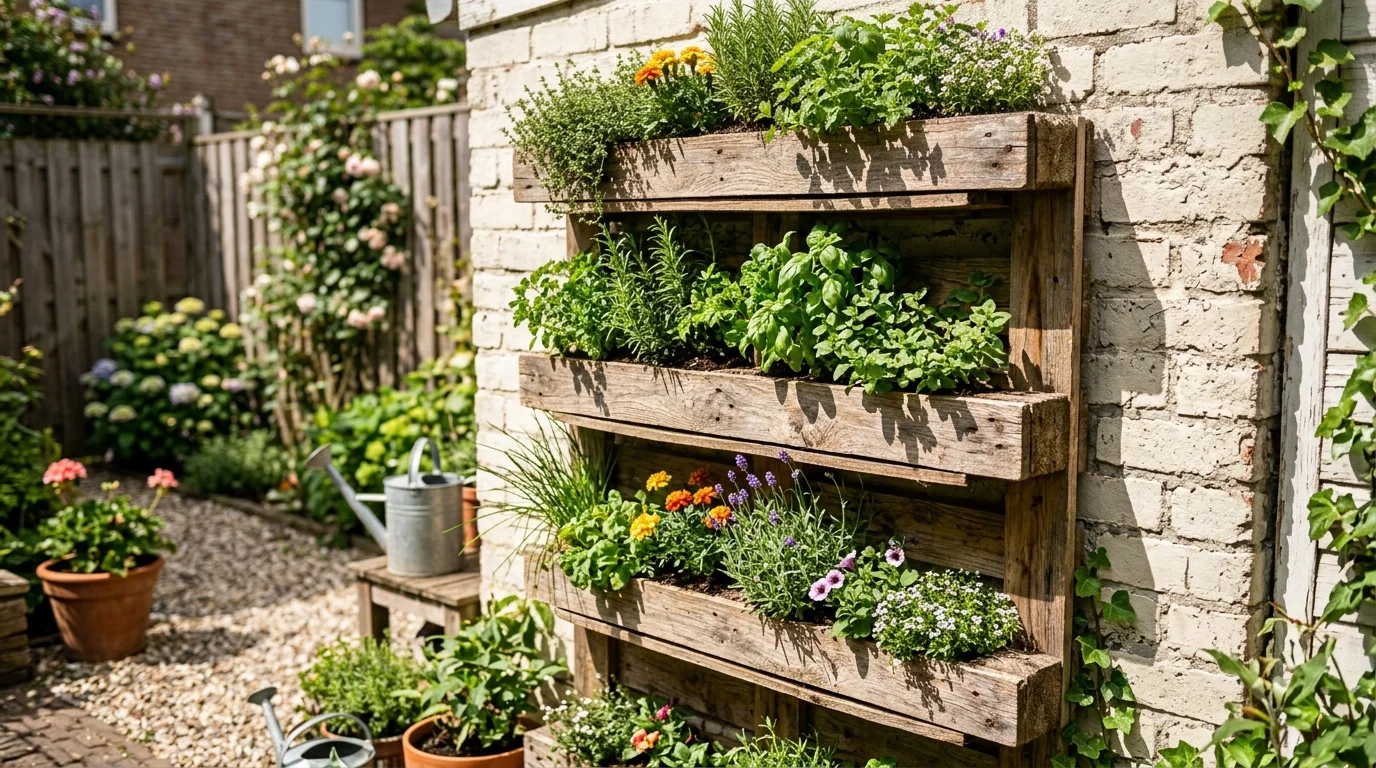
A classic upright pallet planter is the easiest way to understand why this idea works so well. The structure is simple, the impact is immediate, and the result turns a basic wall into a planted feature with real presence.
This is a strong starting point because it gives you the full living-wall effect without overcomplicating the design. If you want something versatile, this is the format to begin with.
2. Hang a pallet wall garden for a lighter look
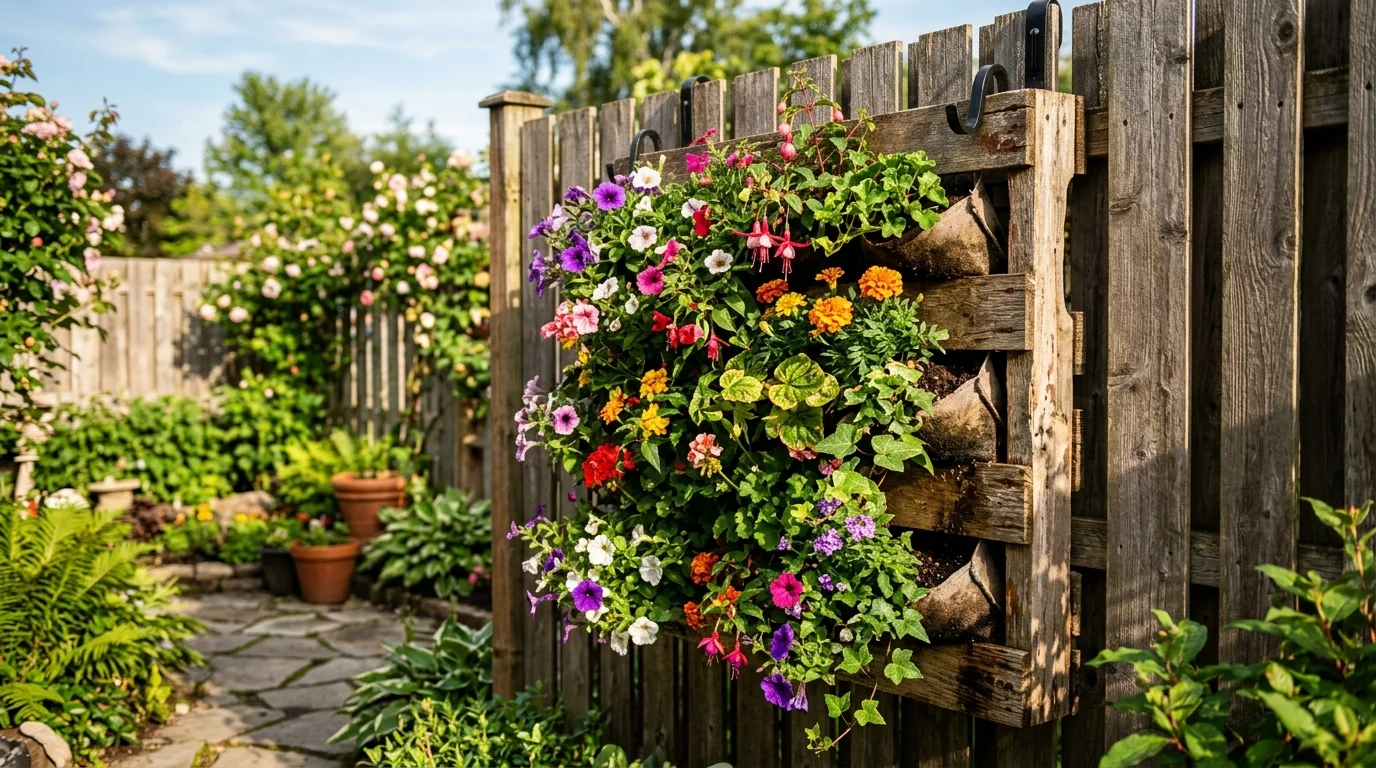
A hanging pallet planter can feel a little airier than a heavier ground-based design. It lifts the planting off the surface and makes the whole arrangement feel more decorative, especially on patios, fences, or smaller outdoor walls.
This is especially useful when you want greenery to feel layered without blocking precious floor space. It is a practical and attractive solution for tighter areas.
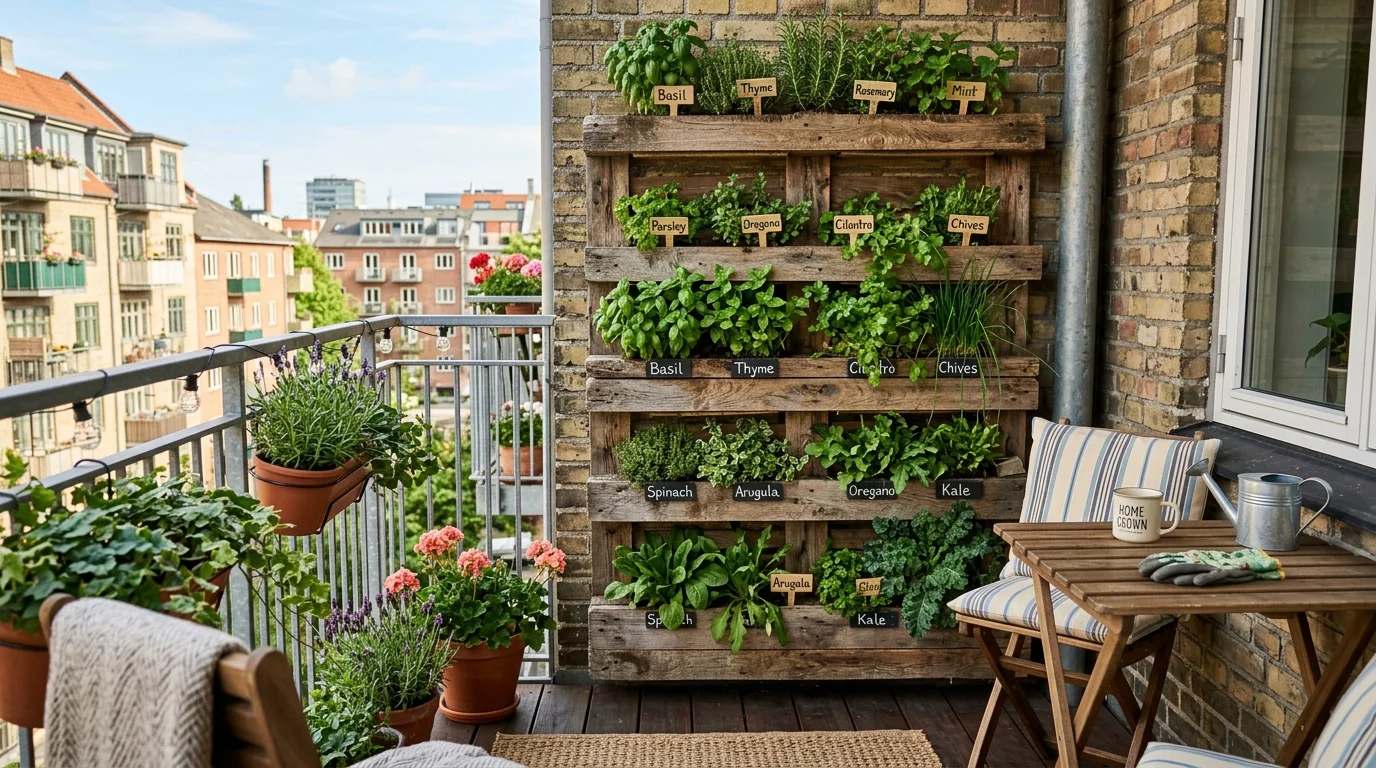
3. Use a pallet planter for fresh herbs
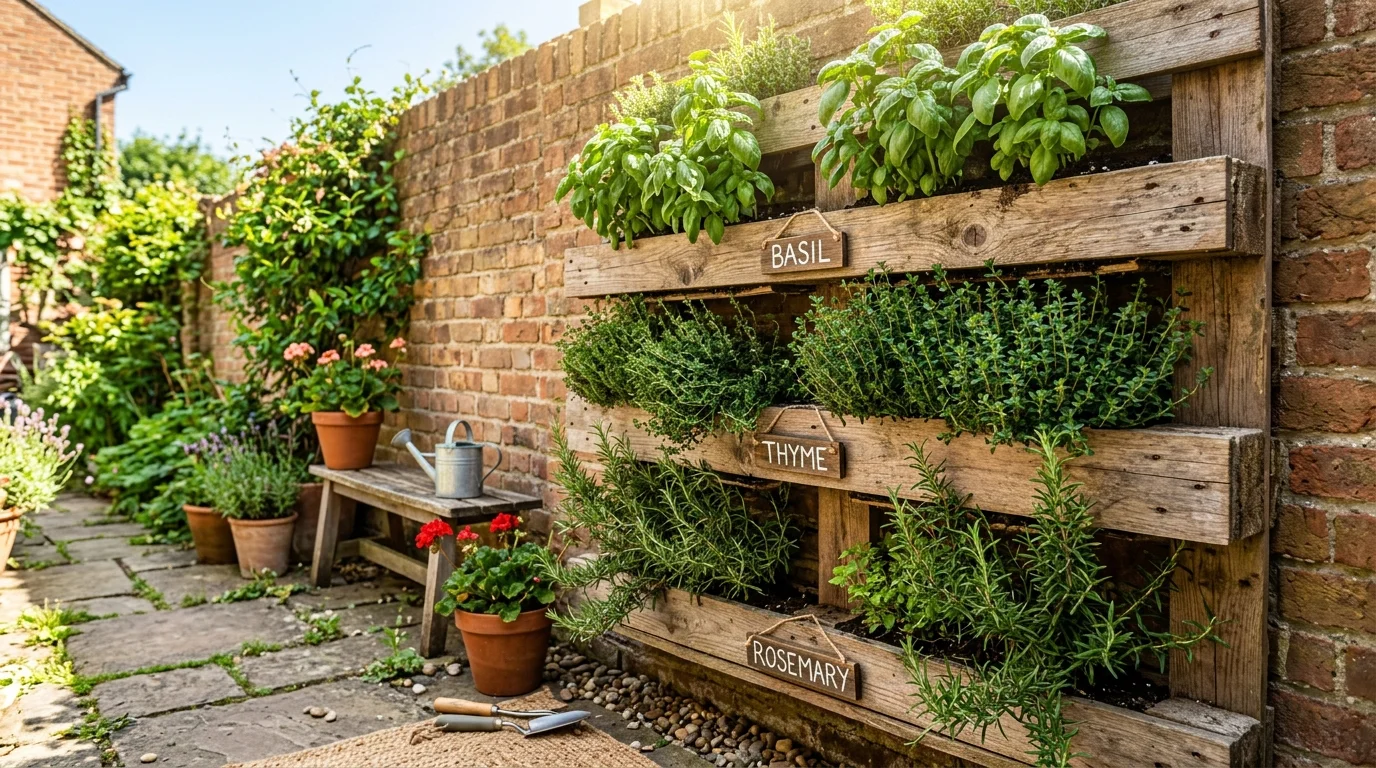
Herbs are one of the best crops for vertical pallet planters because they stay relatively compact, are easy to harvest, and make the whole project feel useful every day. Basil, thyme, parsley, mint, and oregano can all work beautifully in a narrow planting setup.
This kind of planter is ideal near a patio, back door, or outdoor dining area where you can snip fresh herbs easily. It combines beauty with everyday practicality.
4. Fill the pallet with flowers for maximum color
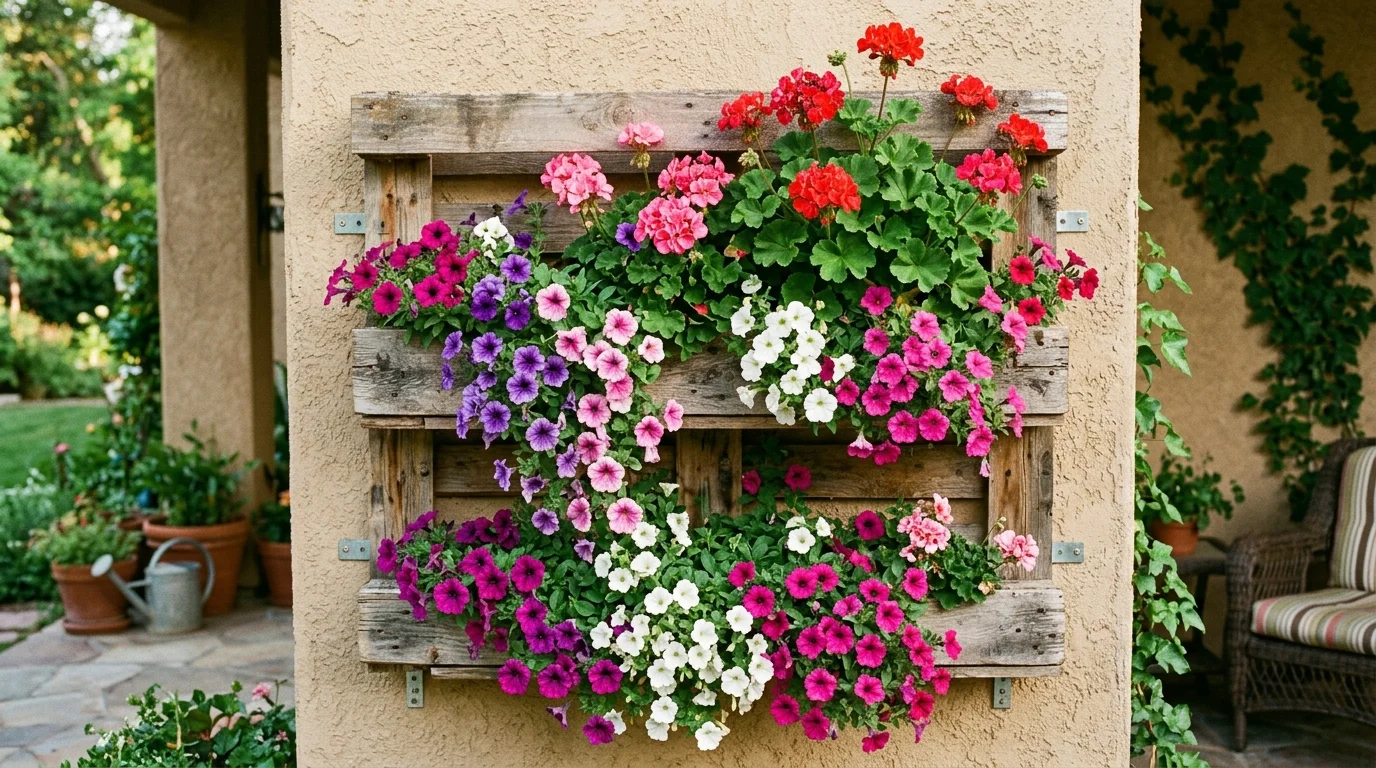
If your goal is visual impact, a flower-filled pallet planter can transform the mood of a wall almost instantly. Bright blooms soften the wood and make the structure feel much more like garden decor than a recycled project.
This is a great option if you want the pallet to act as a focal point rather than a purely functional planter. The more generous the planting, the stronger the effect.
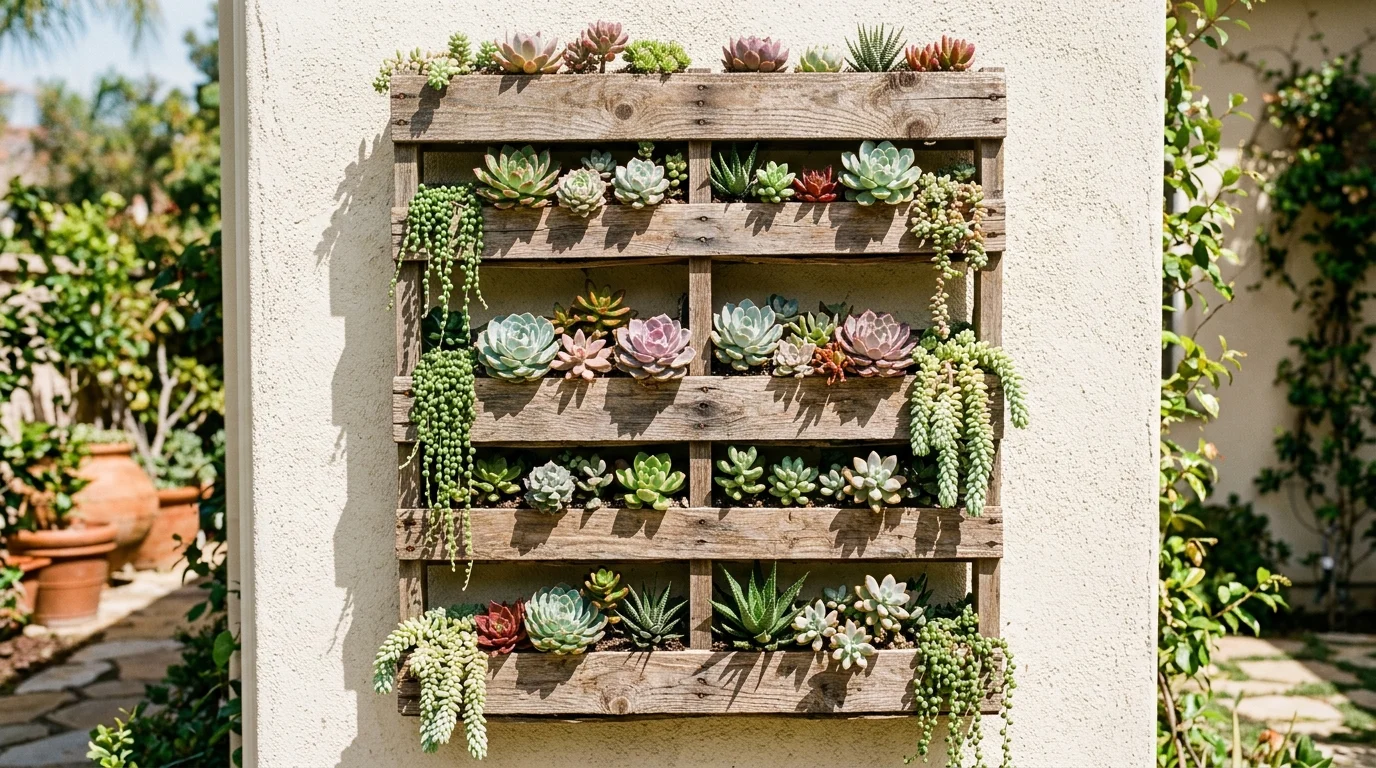
5. Try succulents for a low-maintenance living wall
Succulents work beautifully in vertical pallet planters because they bring strong shapes, interesting texture, and a more sculptural feel. They are especially effective if you want the project to look modern, artistic, and relatively easy to maintain.
This approach suits patios and sun-filled walls where the planter can double as outdoor decor. The contrast between rough wood and sculptural succulents can look especially good.
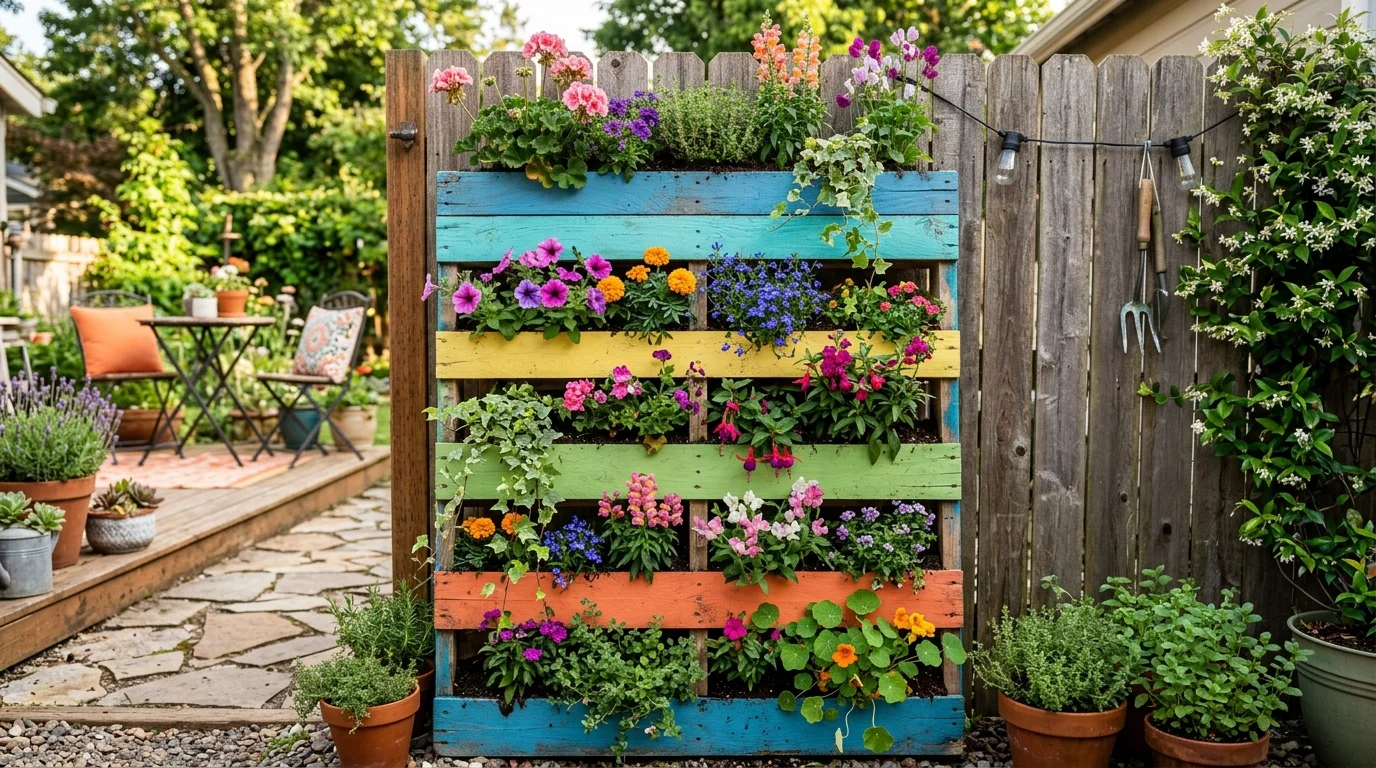
6. Paint the pallet for a more finished look
Paint can completely change the feel of a pallet planter. It helps the structure look more intentional, ties it into the rest of the space, and can push the design toward rustic, playful, modern, or cottage depending on the color choice.
This is a smart move if you want the DIY project to feel more polished. Even a simple painted finish can make a big visual difference.
7. Use one on a small balcony
Balconies are one of the best places for vertical pallet planters because the project adds planting without sacrificing valuable walking space. It lets you grow upward, which is exactly what small-space gardening often needs.
A well-placed pallet planter can make a balcony feel greener, softer, and much more personal. It is one of the easiest ways to create a lush effect in a compact urban setting.
8. Keep it clean with a modern minimalist version
A minimalist pallet planter proves that recycled wood projects do not have to feel rustic or busy. Clean planting, restrained color, and simple lines can turn the pallet into a contemporary wall feature instead.
This style works especially well in modern outdoor spaces where the goal is calm structure rather than a heavily decorative look. Fewer plant types often make the strongest statement here.
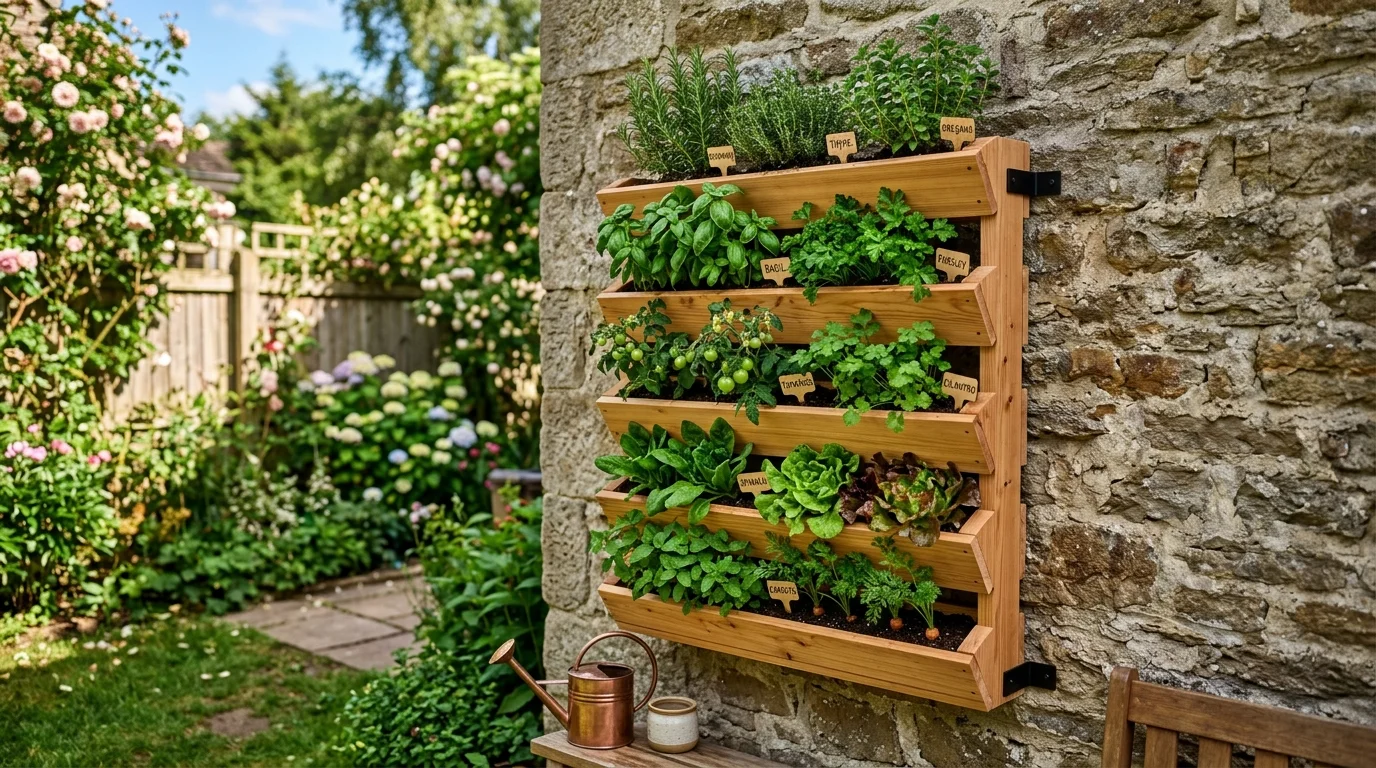
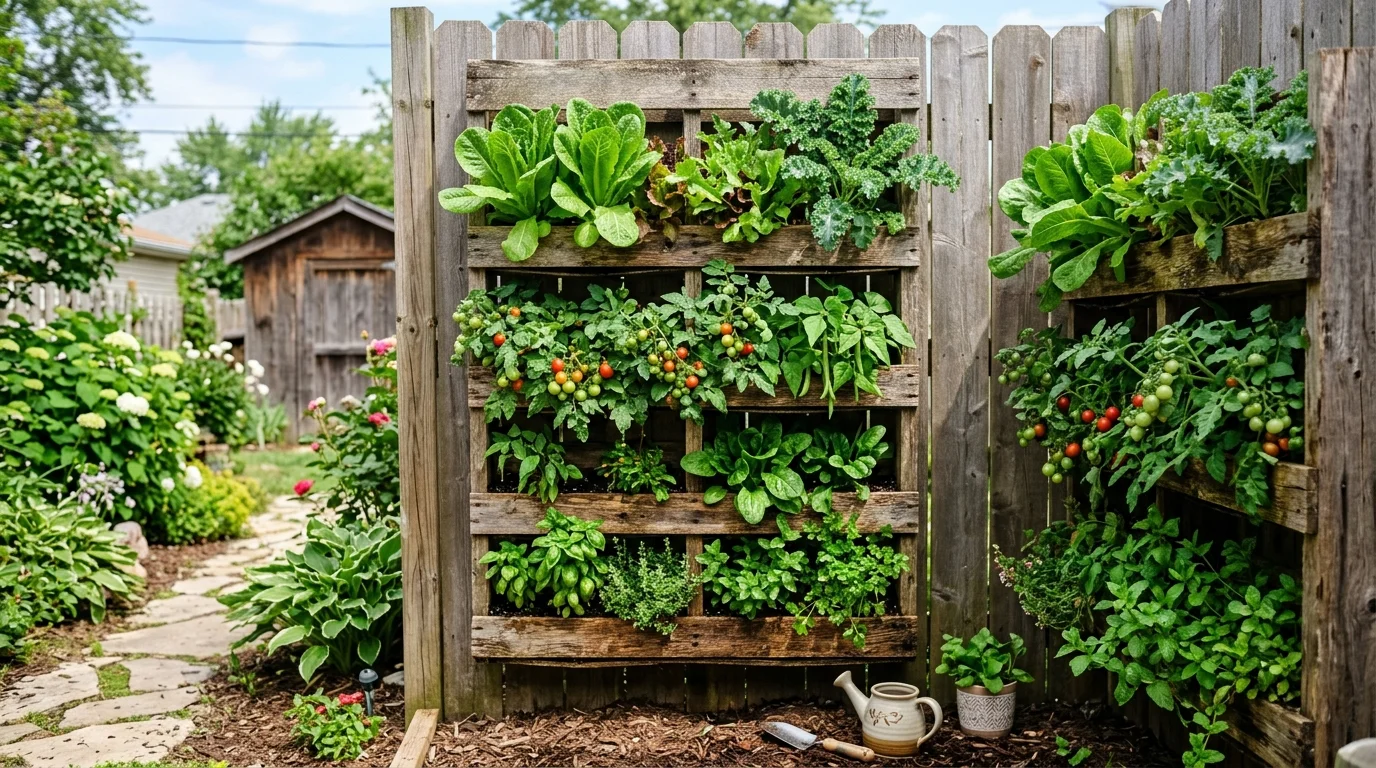
9. Grow vegetables in a layered vertical setup
Pallet planters can also support compact edibles when planted thoughtfully. Leafy greens, herbs, strawberries, and other smaller crops can all work in a layered vertical format, especially where space is tight.
This is a useful option if you want a project that does more than decorate. A living wall can also become part of a productive small-space garden.
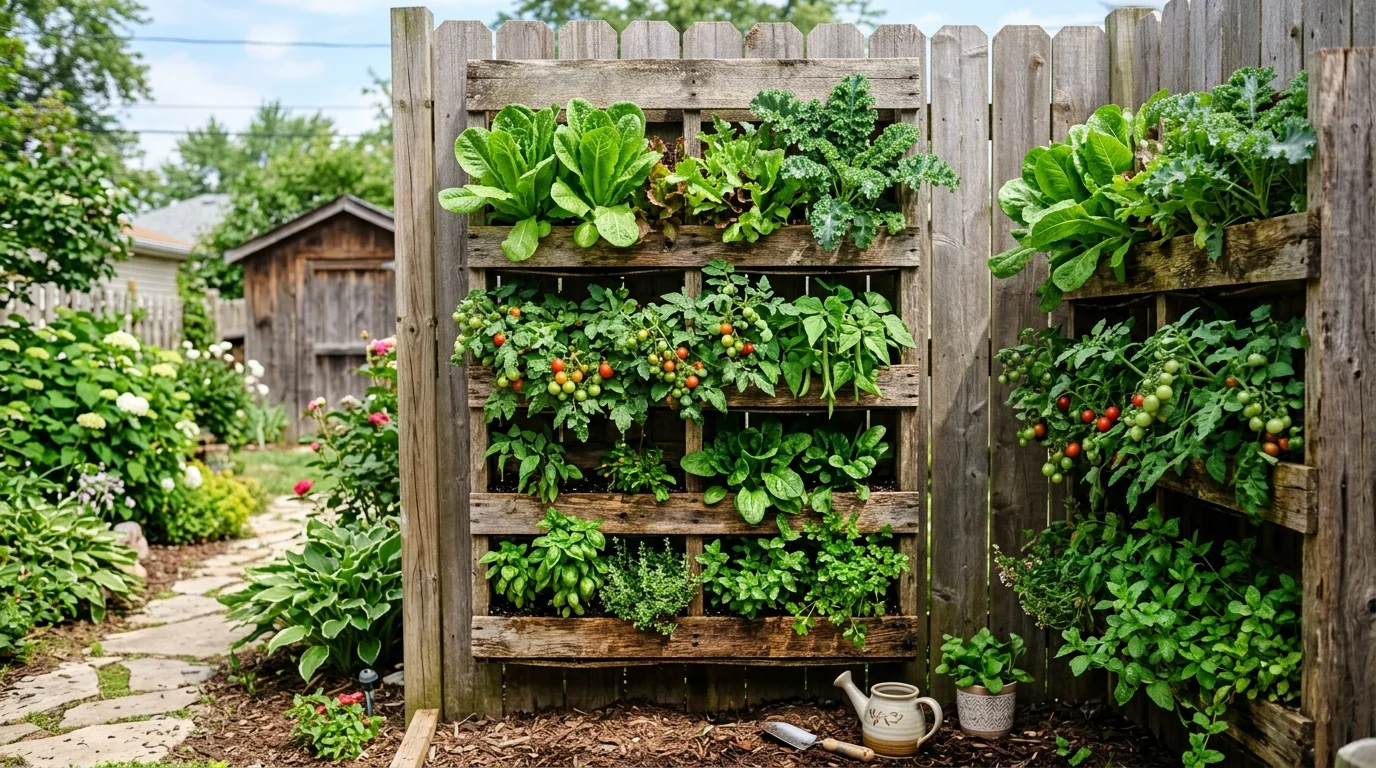
10. Mix plants for a fuller living wall effect
One of the best ways to make a vertical pallet planter feel rich and established is to mix plant types. Combining foliage, flowers, herbs, or trailing elements creates more depth and makes the whole wall feel abundant.
This works especially well when you want the final project to feel lush from the start. Variety adds interest, but it works best when the palette still feels coordinated.
Final thoughts on DIY vertical pallet planters
The best vertical pallet planters succeed because they combine practical small-space gardening with strong visual payoff. They take an inexpensive material and turn it into something that feels decorative, useful, and genuinely space-saving.
If you are planning one, think first about what you want it to do. Herbs, flowers, succulents, or vegetables all create a different mood. Once that purpose is clear, the right pallet planter design becomes much easier to build and style well.