The best bird feeder gardens do more than hang a feeder from a hook and hope for the best. They create a setting that feels safe, layered, and inviting to wildlife, with food, shelter, water, and planting all working together. When those elements come together, the space feels more alive almost immediately.
That is what makes bird-friendly garden design so rewarding. A single feeder can bring activity, but a thoughtfully designed feeding area turns the whole yard into a place birds want to return to. These bird feeder garden ideas show different ways to do that, whether you have a full backyard, a small patio, or even a balcony.
What helps a bird feeder garden attract more wildlife
- Place feeders near shrubs or small trees so birds have quick cover nearby
- Keep feeding areas clean to make the space healthier and more inviting
- Add a water source such as a bird bath to increase daily visits
- Use a mix of seeds, fruit, and nectar-style options to attract more species
- Include layered planting so the garden feels protective and natural
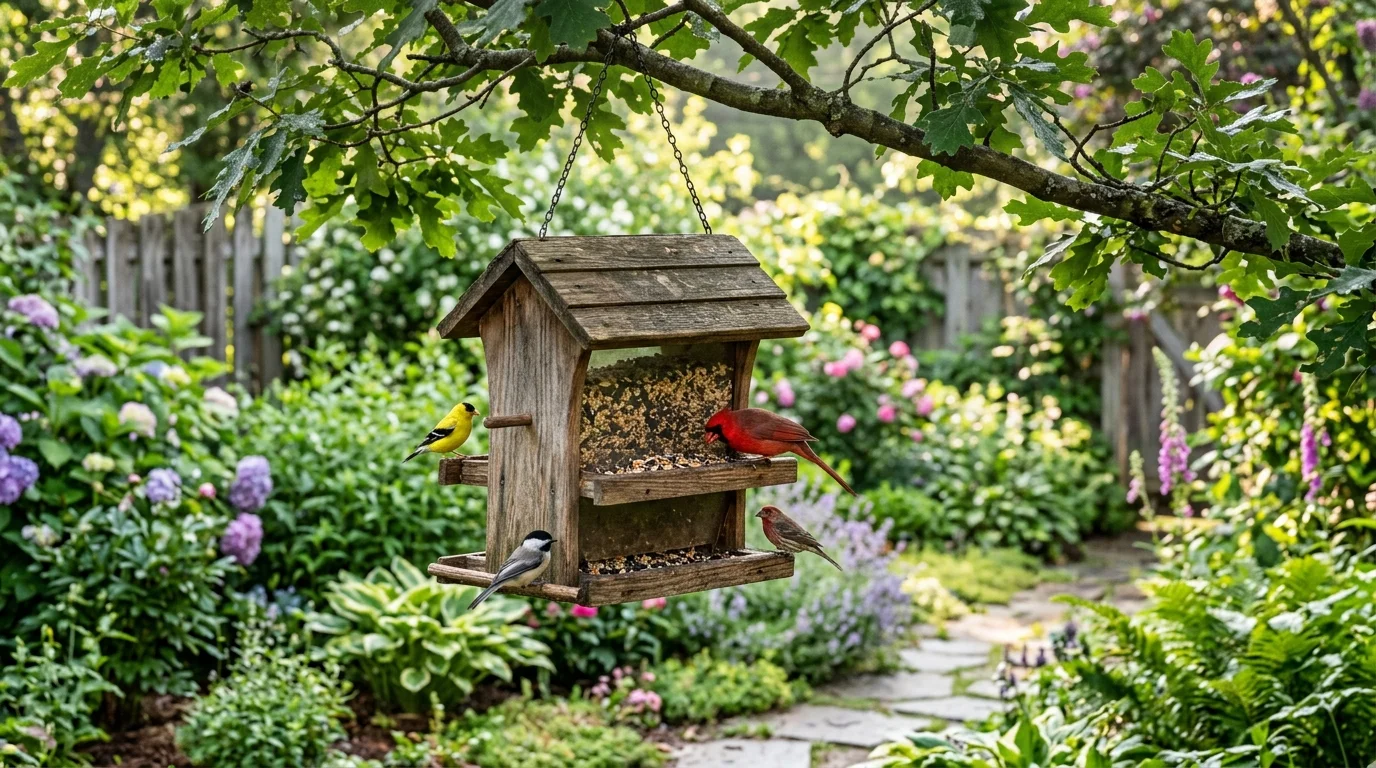
1. Start with a classic wooden bird feeder garden
A classic wooden bird feeder has a timeless look that suits almost any yard. It feels warm, familiar, and easy to blend into cottage gardens, naturalistic borders, or traditional backyard planting. This kind of setup works especially well when the feeder is surrounded by soft greenery and flowering plants that make the space feel settled.
It is often the simplest starting point, but that does not make it basic. When the feeder is positioned thoughtfully, it creates an immediate focal point and encourages birds to treat the surrounding garden as part of their feeding territory.
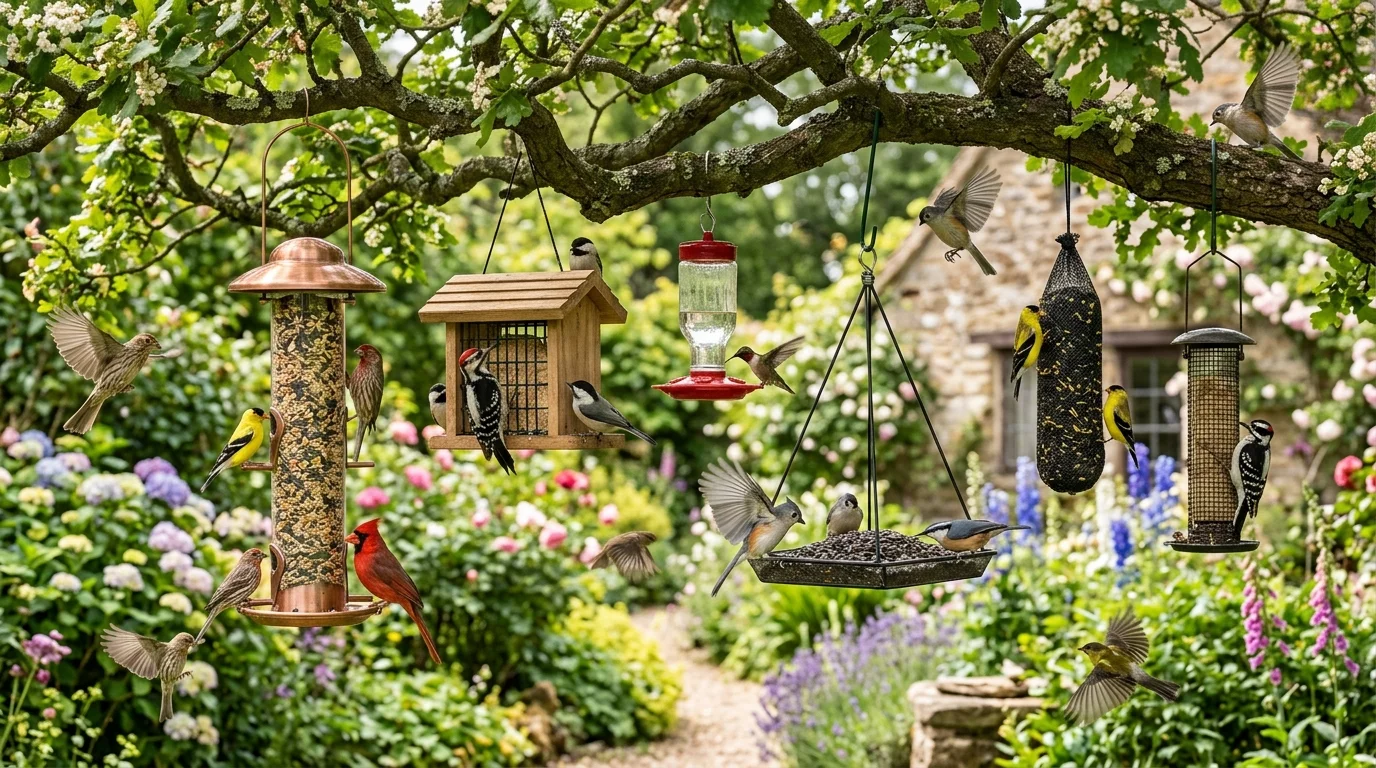
2. Hang a multi-feeder setup for more variety
If you want to attract more than one kind of bird, a hanging multi-feeder station is one of the best upgrades you can make. Different feeders can hold sunflower hearts, mixed seed, suet, or nyjer, which helps widen the range of species likely to visit.
The visual effect can be beautiful too. Grouping feeders at different heights creates movement and turns one corner of the garden into an active wildlife zone. Just keep enough spacing between them so birds can move comfortably.
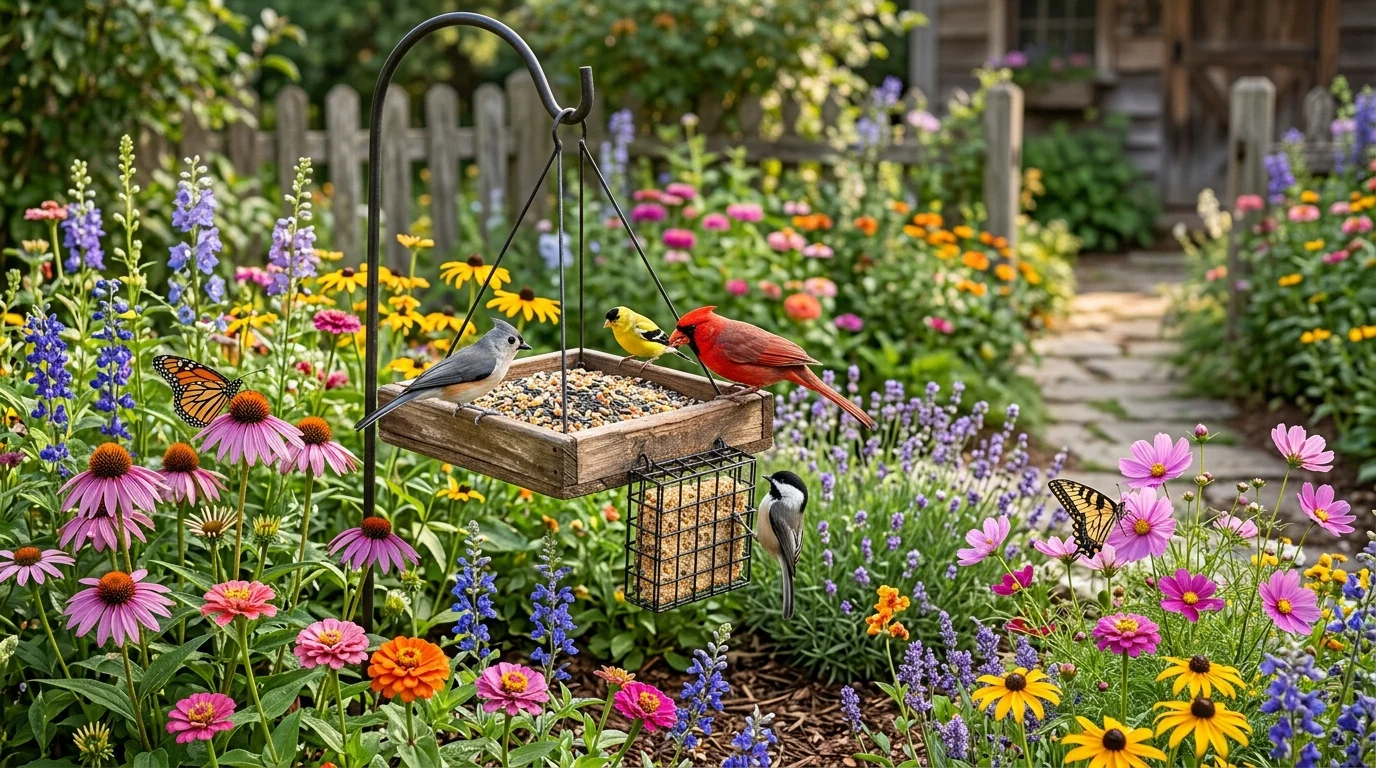
3. Pair bird feeders with a flower garden
Bird feeders look especially good when they sit among flowers rather than in isolation. Blooming plants soften the setup, bring in pollinators, and make the whole area feel richer and more connected to the rest of the garden.
This is a strong choice if you want a feeding area that feels ornamental as well as functional. Choose flowers with staggered bloom times so the space keeps offering color and shelter through more of the year.
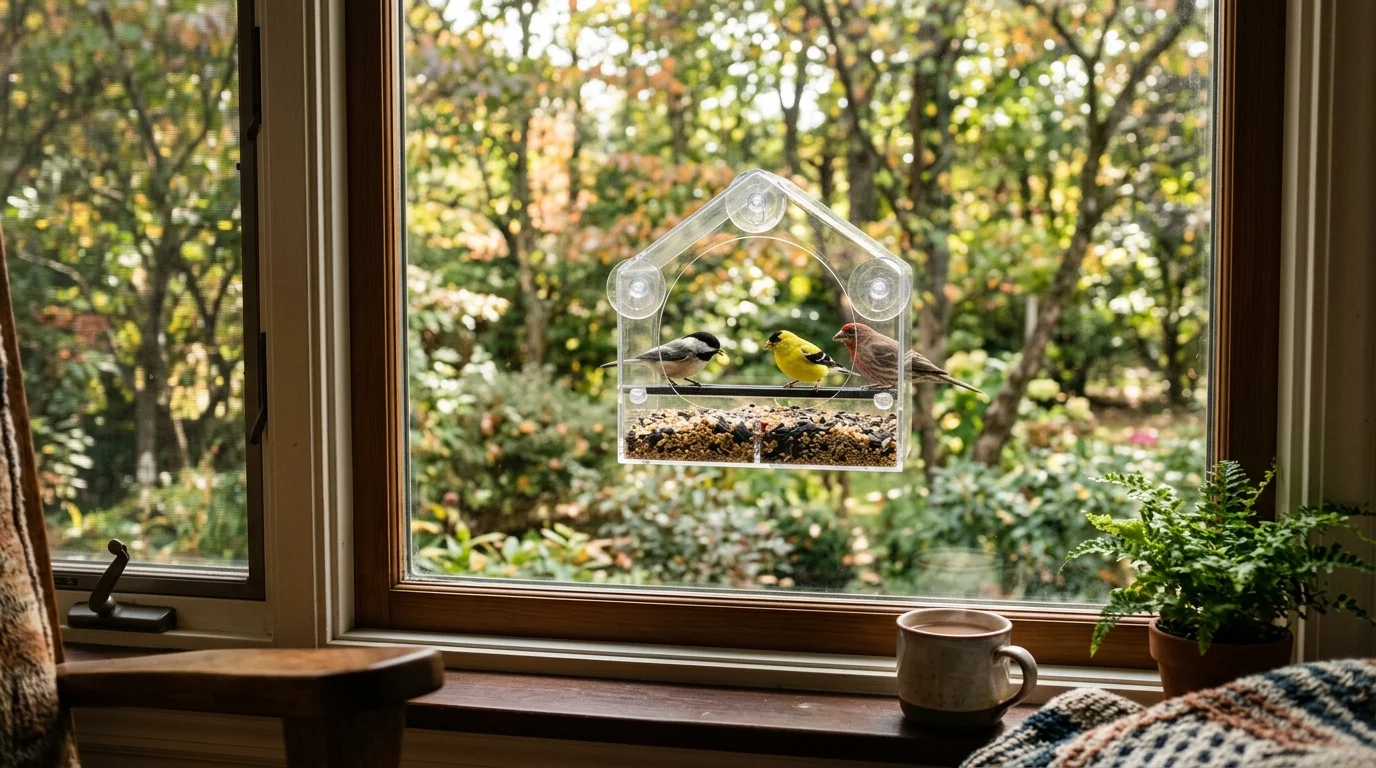
4. Try a window bird feeder for close-up views
A window feeder is perfect if you want to enjoy birds up close from inside the house. It turns feeding into something more immersive and gives even small homes or apartments a way to connect with local wildlife.
This kind of setup works best when the glass stays clean and the feeder is refilled regularly. It is especially enjoyable in kitchens, breakfast nooks, or home offices where you can appreciate short, frequent visits throughout the day.
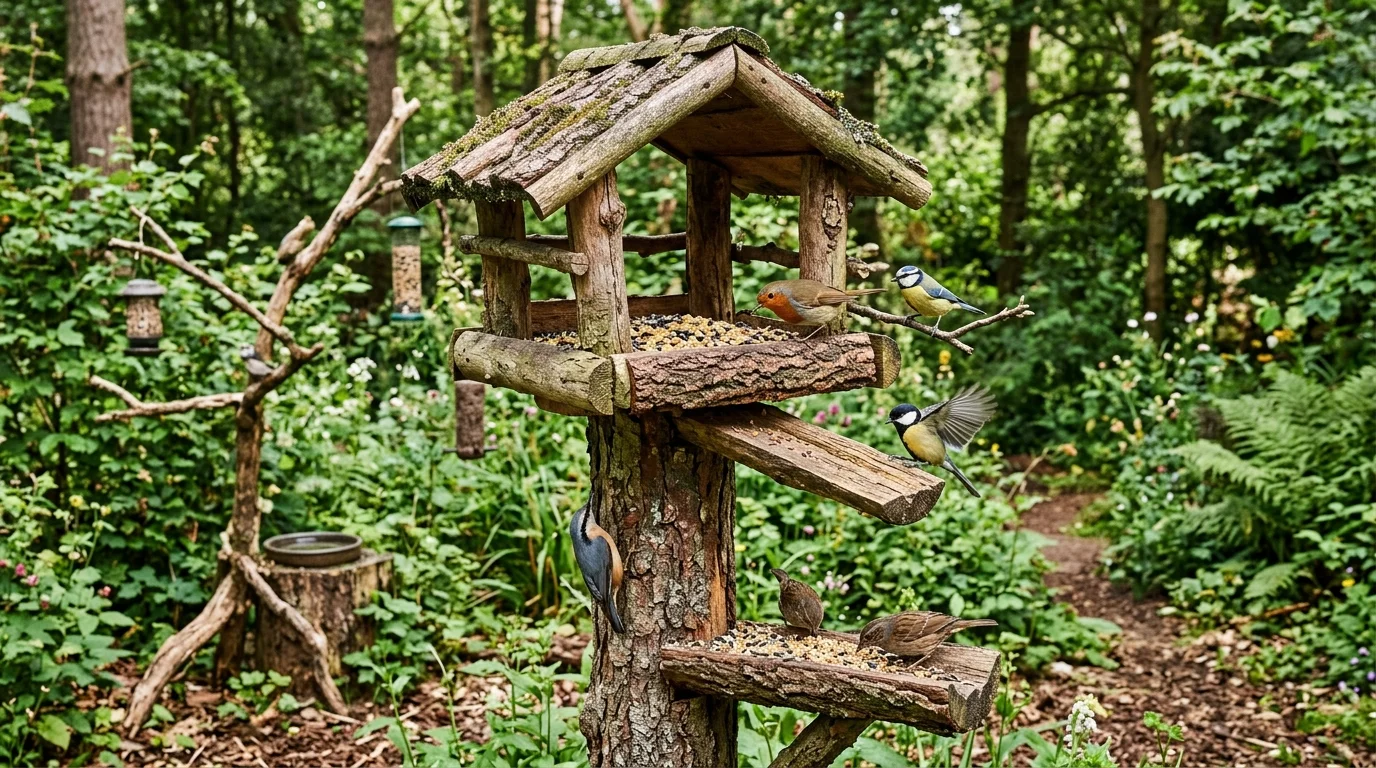
5. Add a rustic log feeding station
A rustic log feeding station feels more natural than many store-bought stands. It blends beautifully into woodland-style gardens, cottage borders, and more relaxed backyard settings where a polished metal pole might feel too stark.
This idea works well if you want your bird feeder garden to feel a little more organic. Natural textures help the feeding area feel established, which often makes the whole garden more welcoming visually.
6. Make a DIY recycled bottle bird feeder
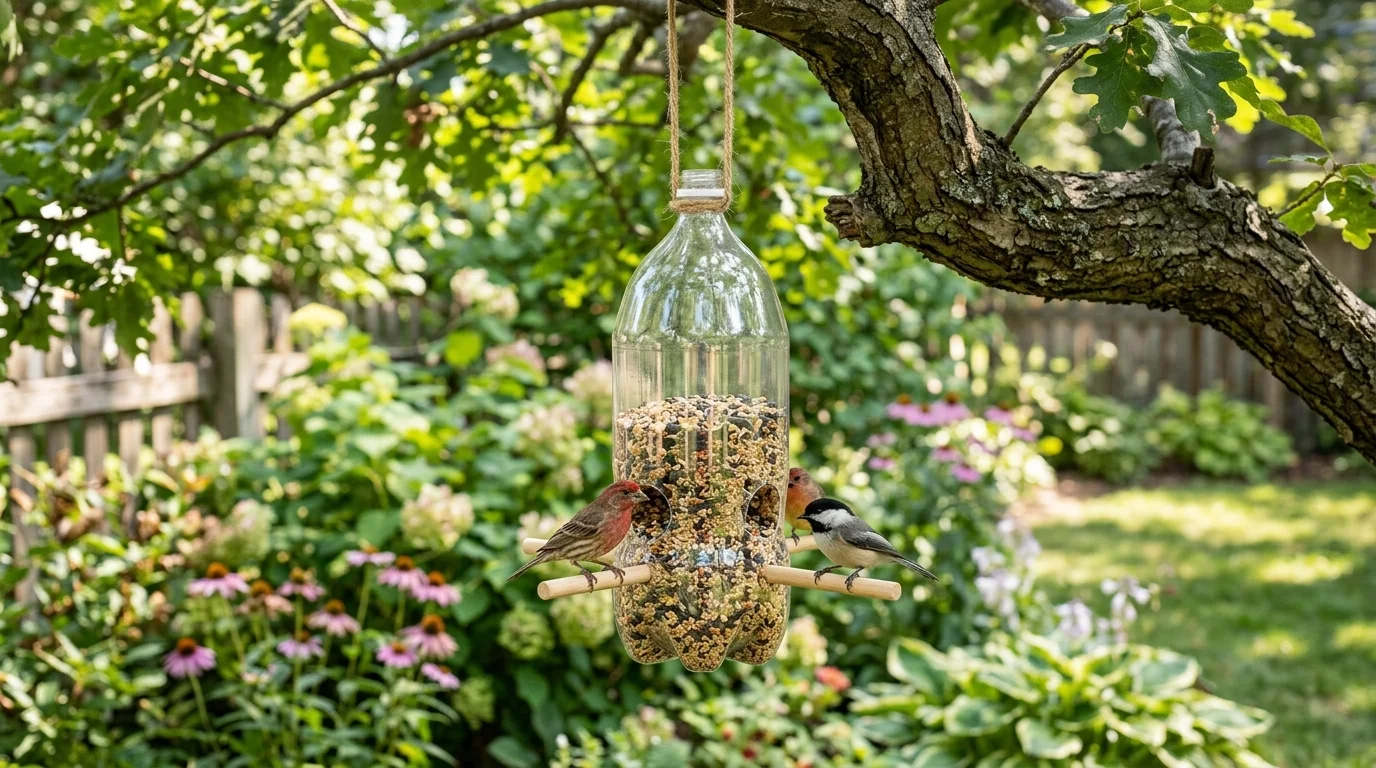
A recycled bottle feeder is a smart option if you want something affordable, practical, and easy to make. It is especially useful for casual wildlife corners, family garden projects, or beginner gardeners who want to start simple.
The key is to keep it sturdy, clean, and easy for birds to perch on. A DIY feeder can still look charming when it is placed with intention and surrounded by thoughtful planting.
7. Combine a bird bath and feeder in one zone
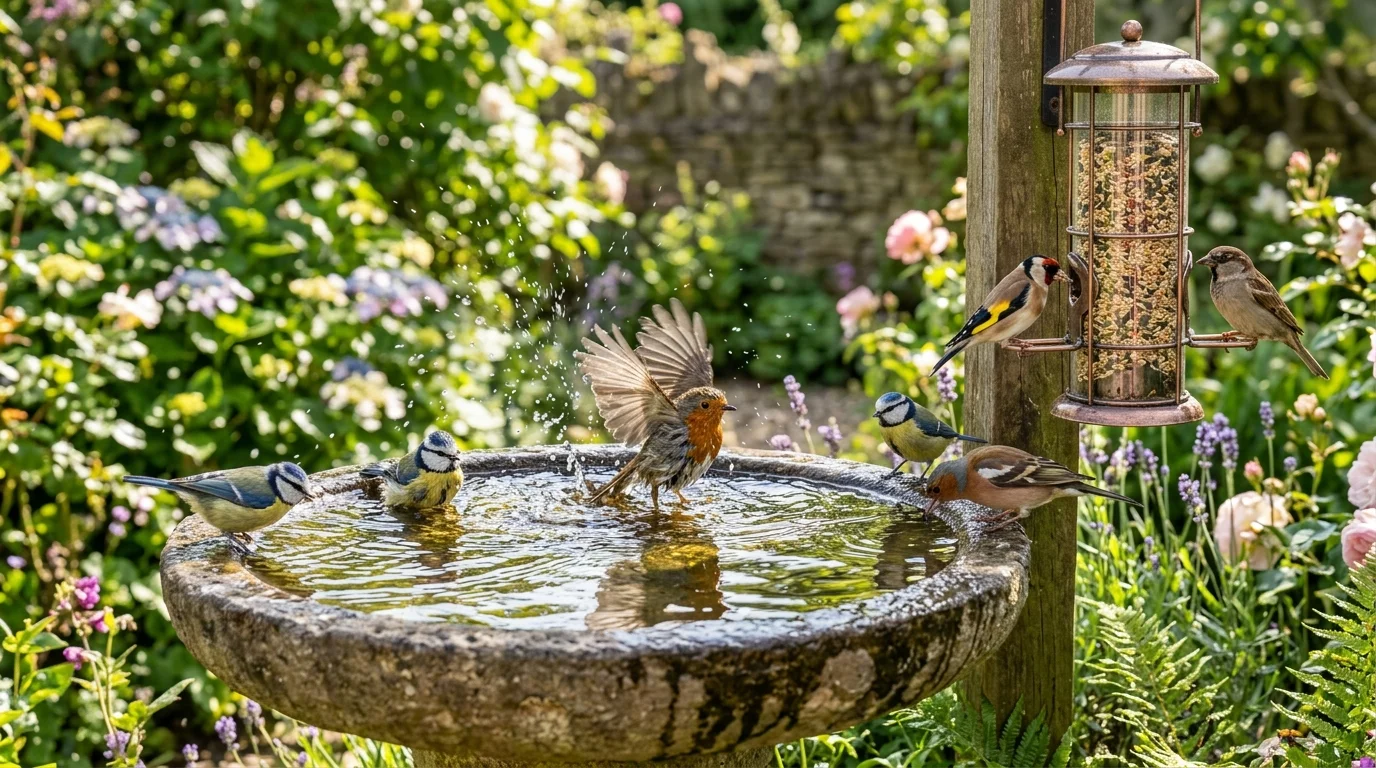
Birds are often drawn to water just as much as food, which is why pairing a bird bath with a feeder is such a strong design move. The setup supports more natural bird behavior and makes the area feel more complete from a wildlife point of view.
It also creates a nicer garden composition. Instead of a single feeder hanging alone, the garden gains a fuller destination with more movement and more reasons for birds to stay longer.
8. Keep birds coming with a winter feeding garden
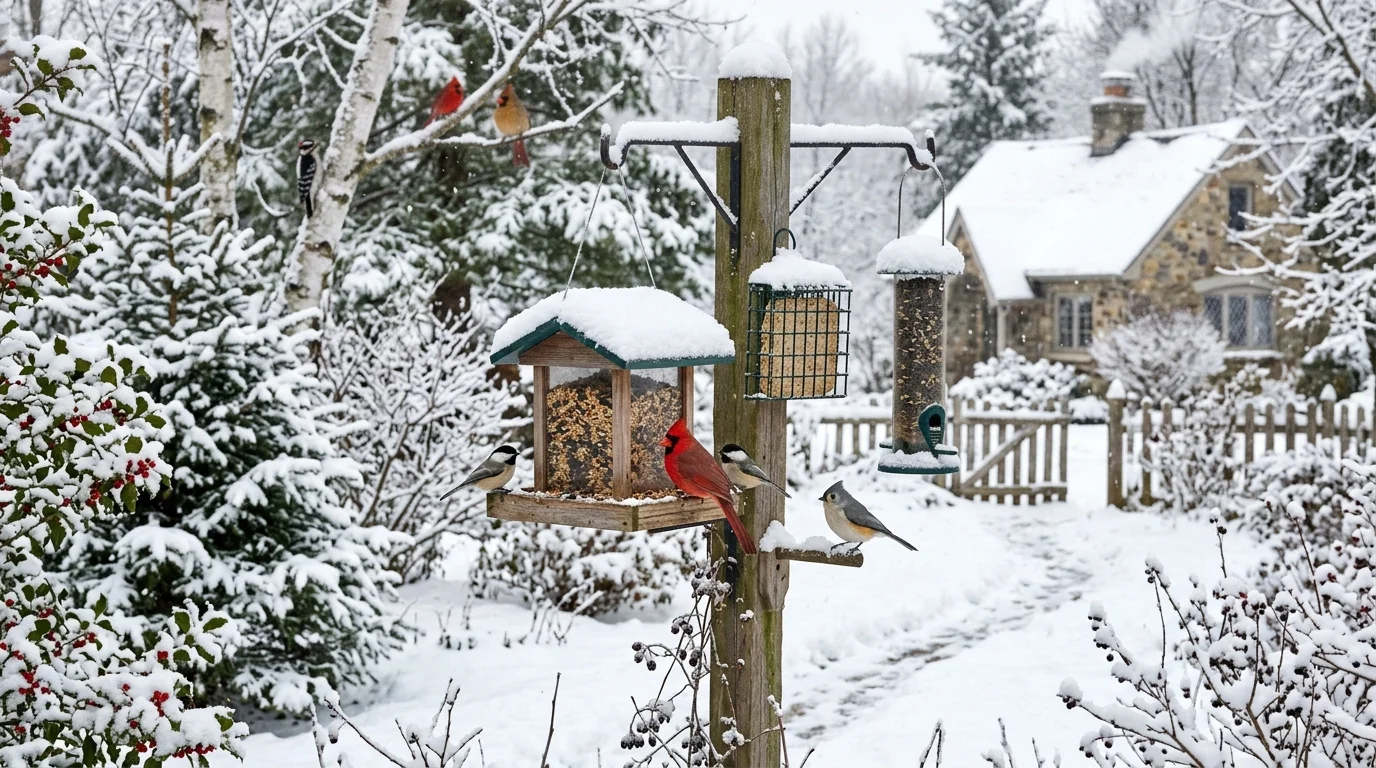
Winter is one of the most important times to offer food, and it is also when a bird feeder garden can feel especially rewarding. Bare branches make bird activity easier to see, and the contrast of birds against a frosty garden can be strikingly beautiful.
Use sheltered spots, reliable feeders, and energy-rich foods so the space stays useful during cold weather. Evergreen planting nearby helps make the area feel protective and seasonally strong.
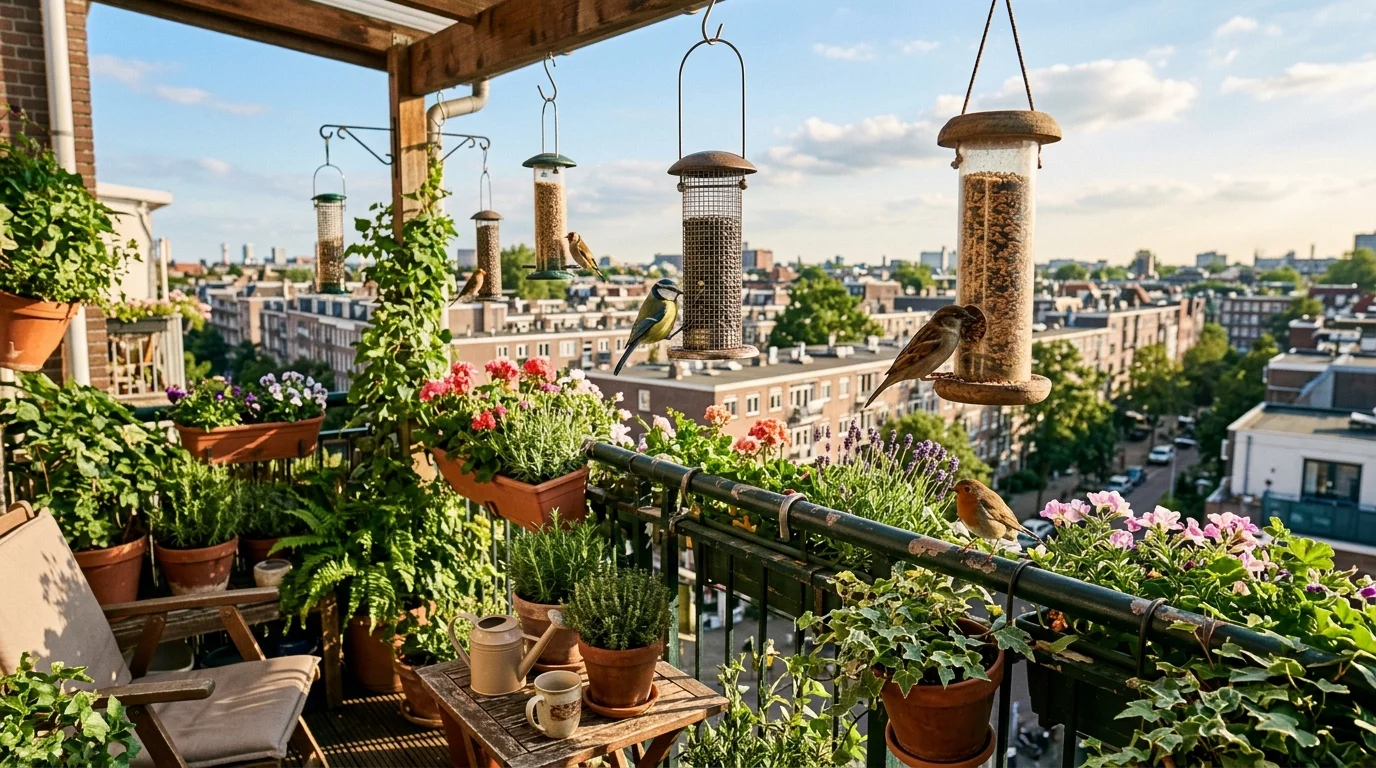
9. Create a balcony bird feeding garden
You do not need a full yard to attract birds. A balcony bird feeding setup can work surprisingly well when the space includes compact planters, a safe perch, and a feeder positioned where birds can approach comfortably.
This idea is especially good for small-space gardeners who still want wildlife presence. Even one thoughtful feeder plus a few layered pots can make a balcony feel far more alive.
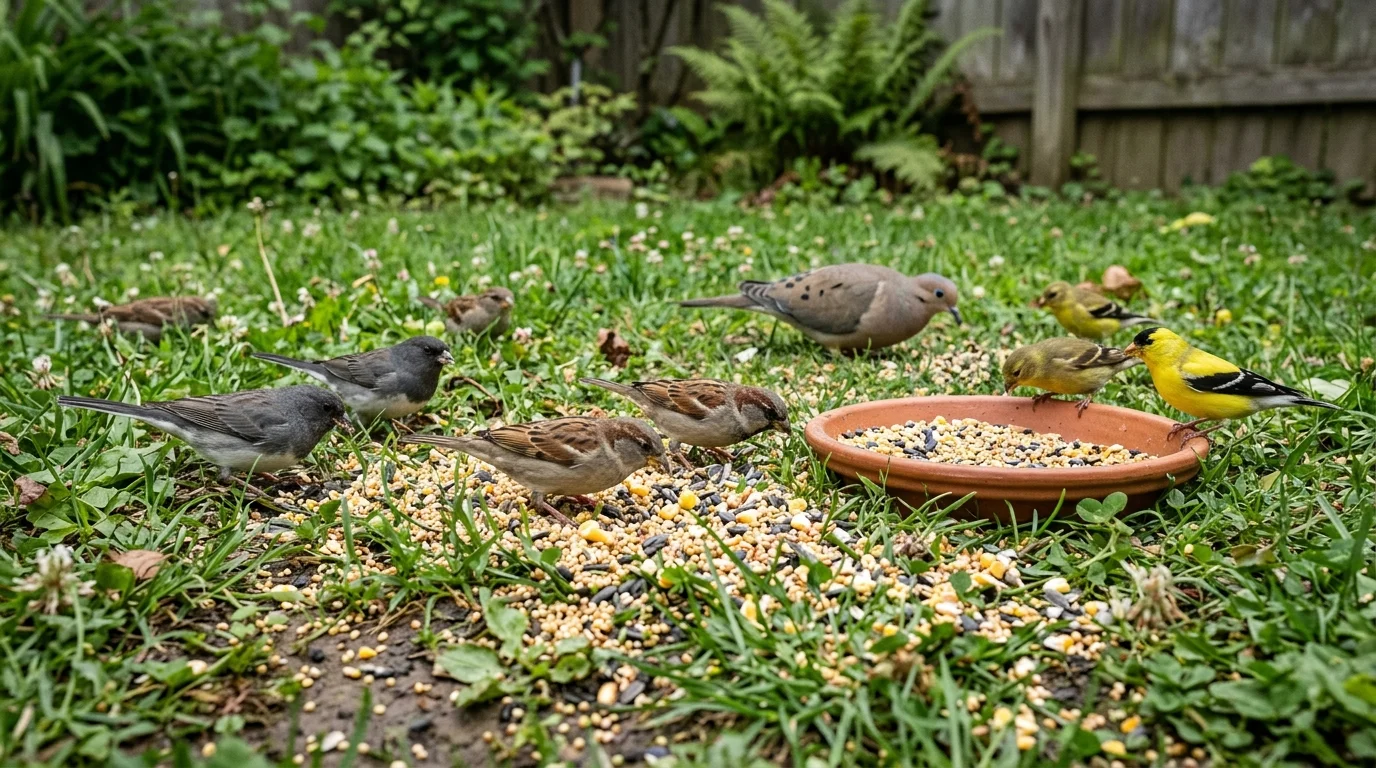
10. Add a ground feeding station for different species
Not every bird prefers to feed up high. A ground feeding station can attract species that are more comfortable foraging closer to the soil, especially when the area feels sheltered and calm.
This works best if you keep the food area tidy and avoid overfilling it. Positioned near low shrubs or edging plants, it can become a very active part of the garden.
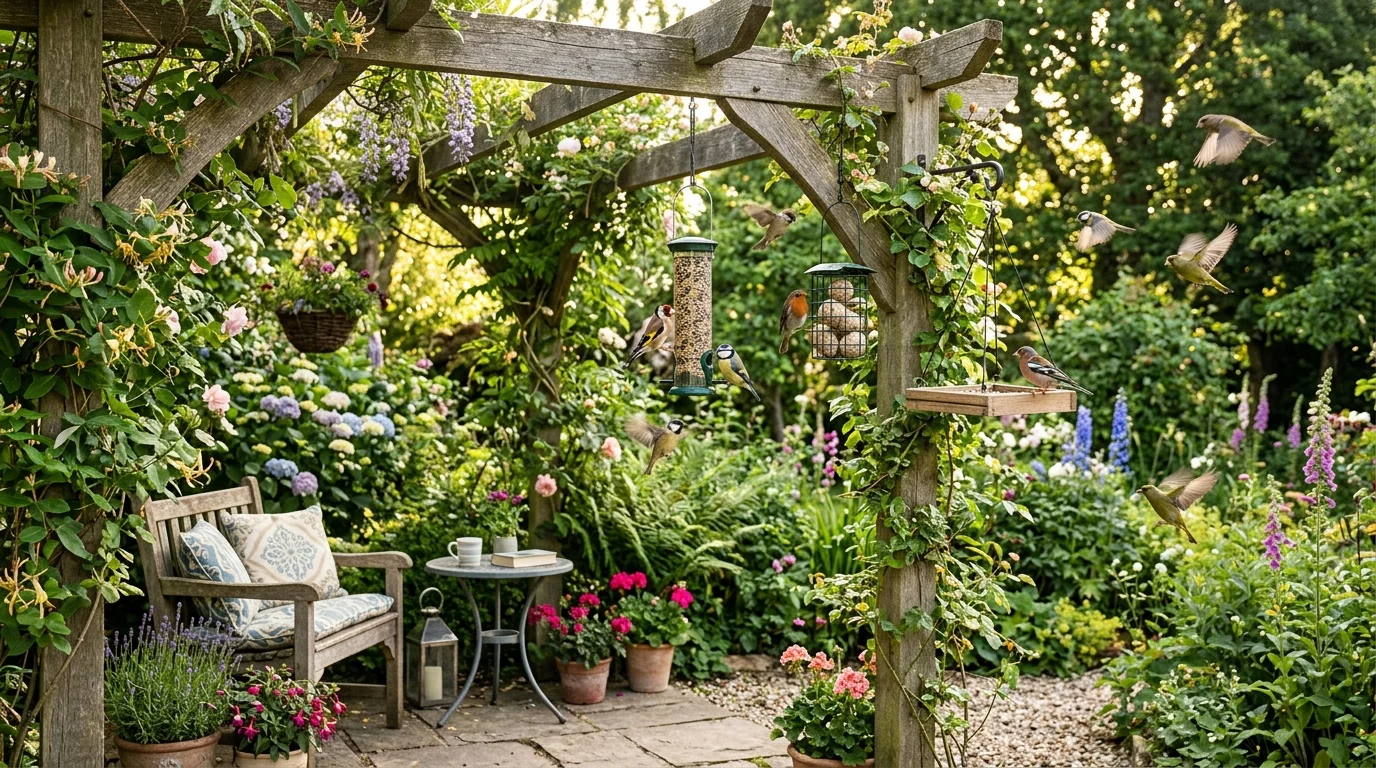
11. Tuck a feeding corner into a pergola or seating area
Bird feeders can be integrated into outdoor living spaces surprisingly well. A pergola bird feeding corner allows you to enjoy the activity from a patio or seating zone while making the garden feel more layered and lived in.
This approach works best when the feeder placement does not interfere with dining or circulation. Done well, it makes the backyard feel like a place shared with wildlife rather than one kept separate from it.
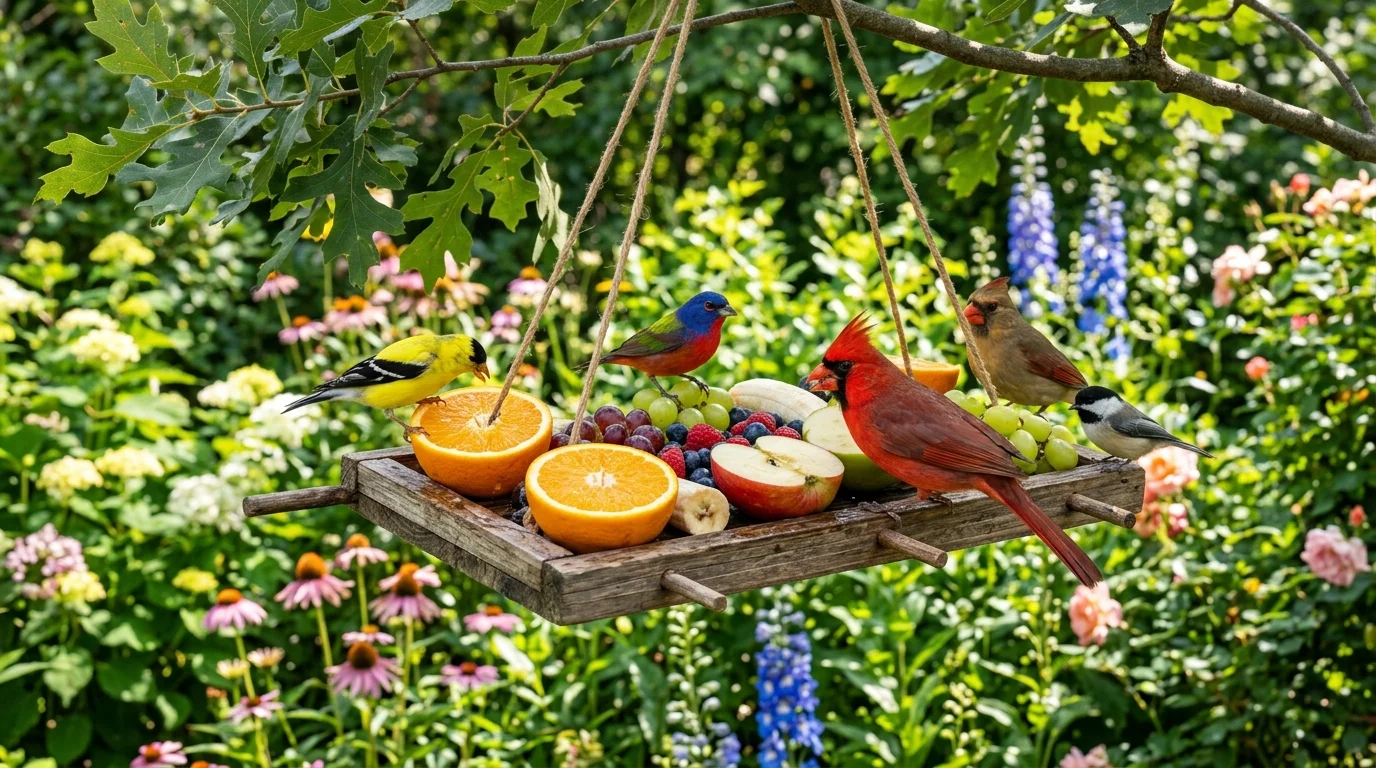
12. Offer fruit-based feeding for seasonal interest
Fruit-based feeding setups can attract birds that are less interested in standard seed feeders. Sliced apples, berries, or other bird-safe fruit options add seasonal variety and can make the feeding station feel more abundant.
This style works especially well in autumn and winter when natural food sources may be lower. It also adds a softer, more garden-like quality to the feeding area.
13. Build the whole space around native planting
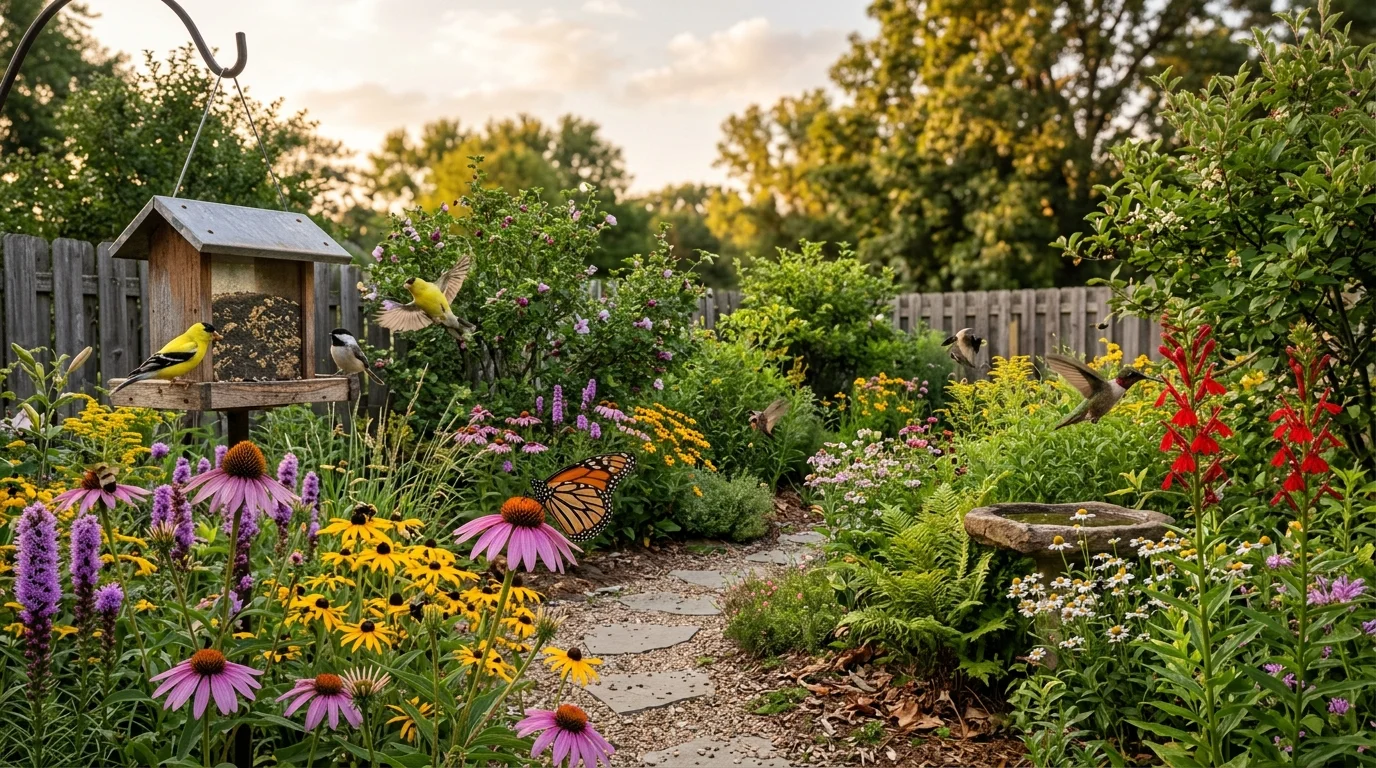
One of the best long-term bird feeder garden ideas is to support the feeders with a native planting scheme. Native shrubs, grasses, and flowering plants help provide shelter, nesting support, and natural food sources, which makes the space much more valuable to wildlife.
This turns the feeder from a standalone feature into part of a larger habitat. The result is a garden that feels richer, healthier, and more likely to attract repeat bird activity through the seasons.
Final thoughts on bird feeder garden ideas
The most effective bird feeder gardens feel welcoming in more than one way. They feed birds, but they also give them cover, water, and a sense of safety. That is what turns occasional visits into a steady wildlife presence.
If you are just starting, begin with one good feeder and one nearby layer of planting. From there, you can add a bath, more food options, or more native structure over time. Small changes can make a surprisingly big difference when the goal is to attract more wildlife naturally.