A backyard meditation garden should feel like a pause from the rest of life. It does not need to be large or elaborate, but it should create a clear shift in mood the moment you step into it. That can come from softer sound, more thoughtful planting, quieter materials, or a layout that helps the mind slow down instead of speeding up.
The most effective meditation gardens are designed around atmosphere as much as appearance. They feel peaceful, uncluttered, and deeply intentional. Whether your style leans minimalist, tropical, spiritual, or modern, these ideas can help shape an outdoor space that feels calm, restorative, and beautifully personal.
What makes a backyard meditation garden truly calming
- A layout that feels sheltered, clear, and easy to move through
- Materials and planting chosen for softness, texture, and quiet mood
- One or two strong focal elements instead of too many distractions
- A feeling of separation from daily noise, even in a compact space
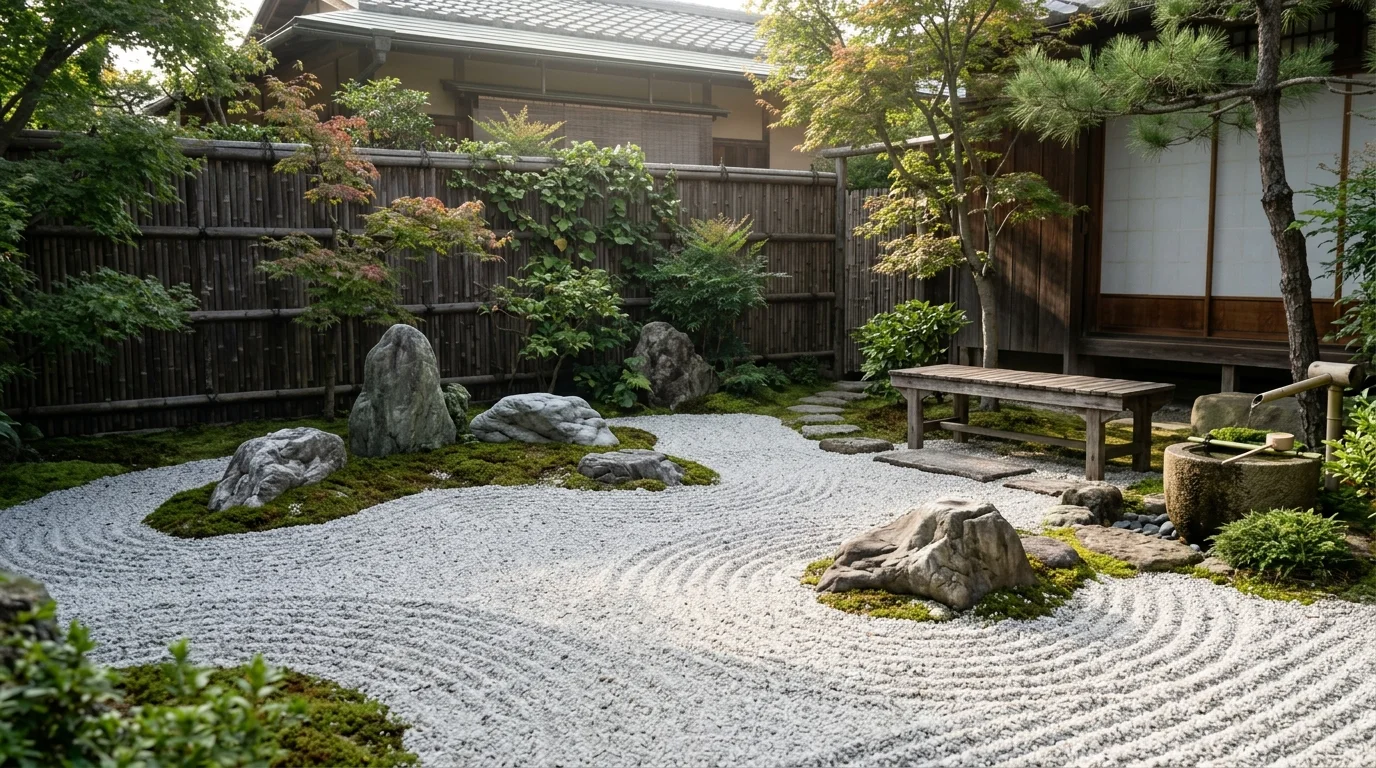
1. Create a zen minimalist meditation garden
A zen-inspired layout is one of the most timeless ways to design a meditation garden. Clean gravel, simple planting, restrained color, and a clear sense of order help the entire space feel quieter. Instead of drawing attention in many directions, everything works together to reduce visual noise.
This style is especially powerful in smaller yards because it does not rely on abundance to create beauty. With the right balance of line, texture, and open space, even a compact area can feel deeply restorative.
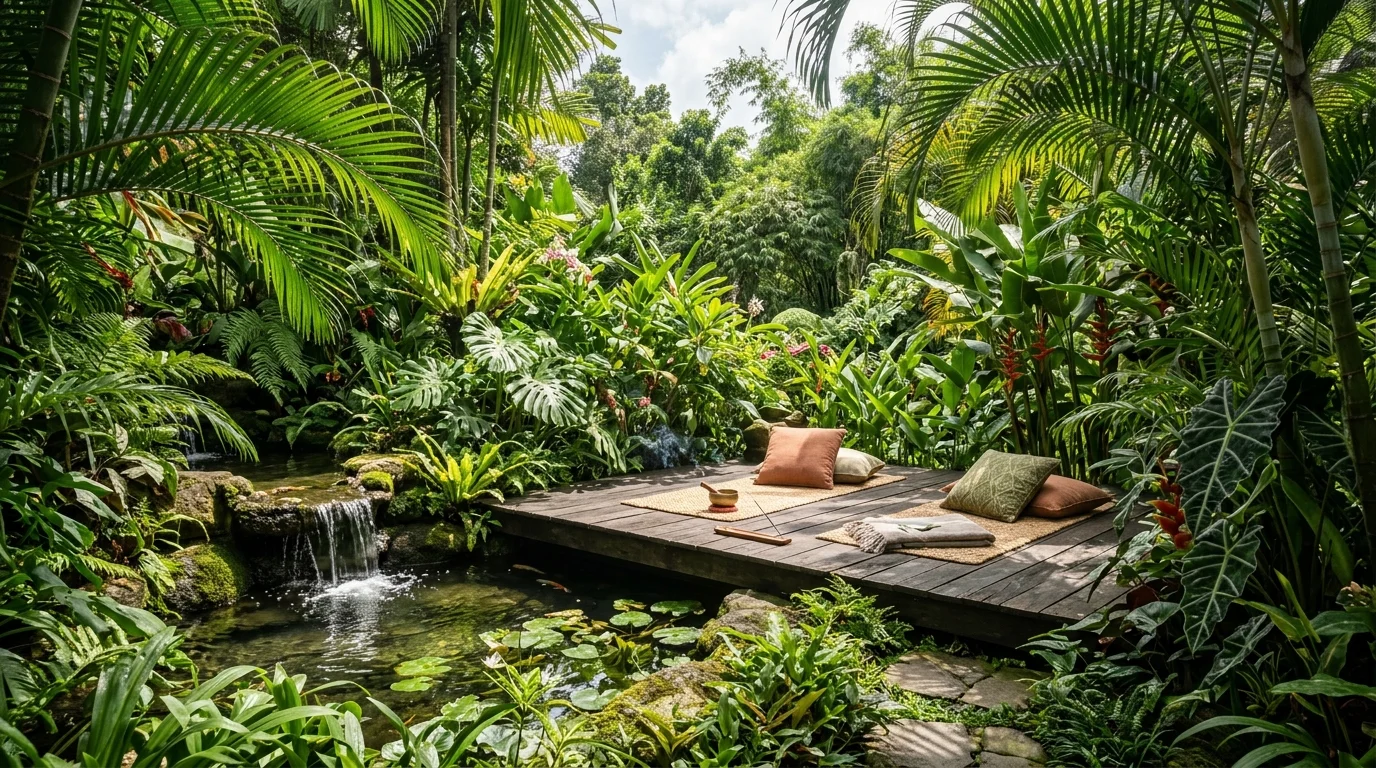
2. Use lush planting to create a tropical retreat
A tropical-style meditation garden feels immersive and protective. Layered foliage, rich greens, and soft enclosure can make a backyard feel like a private retreat, even when the surrounding space is ordinary. The mood here comes from abundance, but it should still feel intentional rather than overgrown.
The best version of this look combines larger leaves, filtered shade, and a sense of tucked-away calm. It works especially well for gardeners who want privacy and a more enveloping atmosphere.
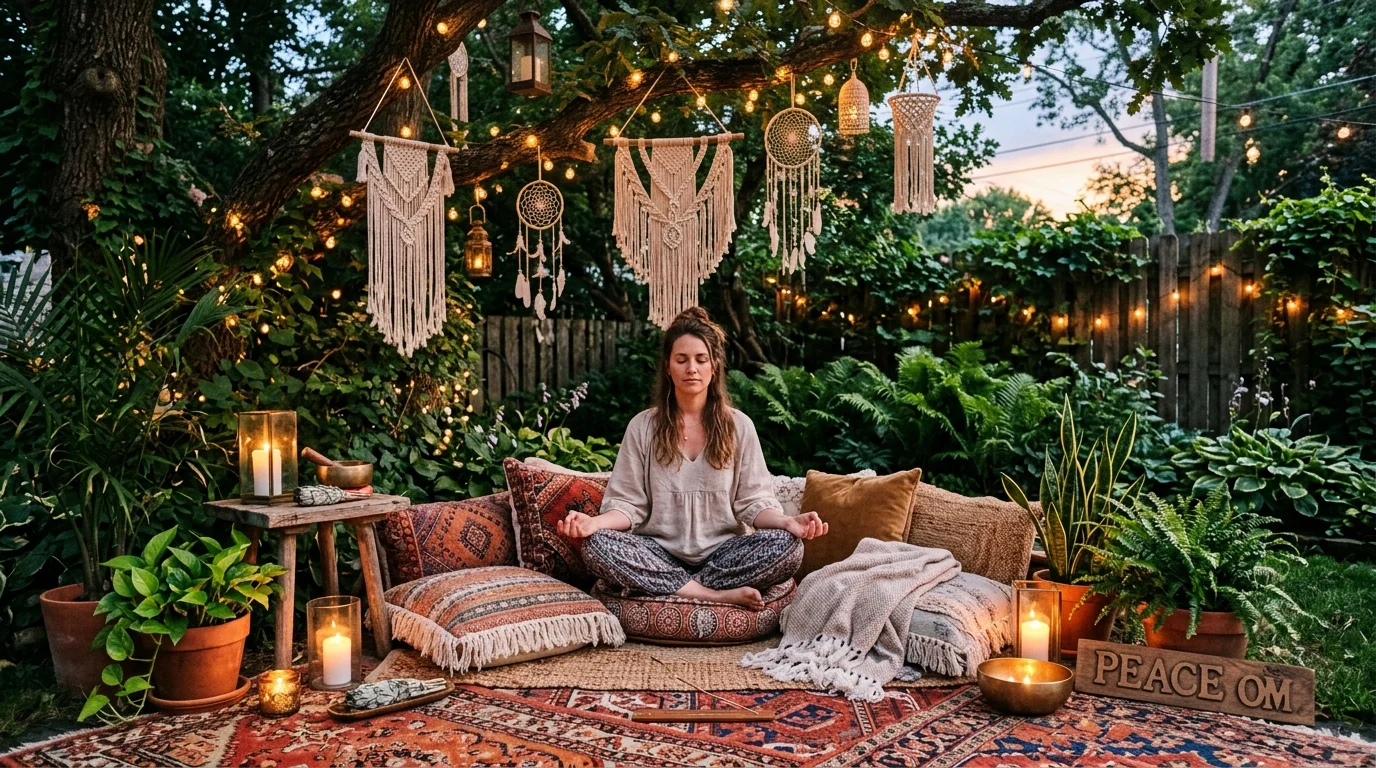
3. Bring in a bohemian layered atmosphere
A bohemian meditation garden can feel warm, expressive, and deeply personal. Soft textiles, natural materials, lanterns, and relaxed planting help create a space that feels soulful rather than formal. The key is to keep the mood grounded so it still supports rest and reflection instead of becoming visually busy.
This style works well for people who want their meditation space to feel creative as well as calming. It has personality, texture, and a sense of everyday ritual.
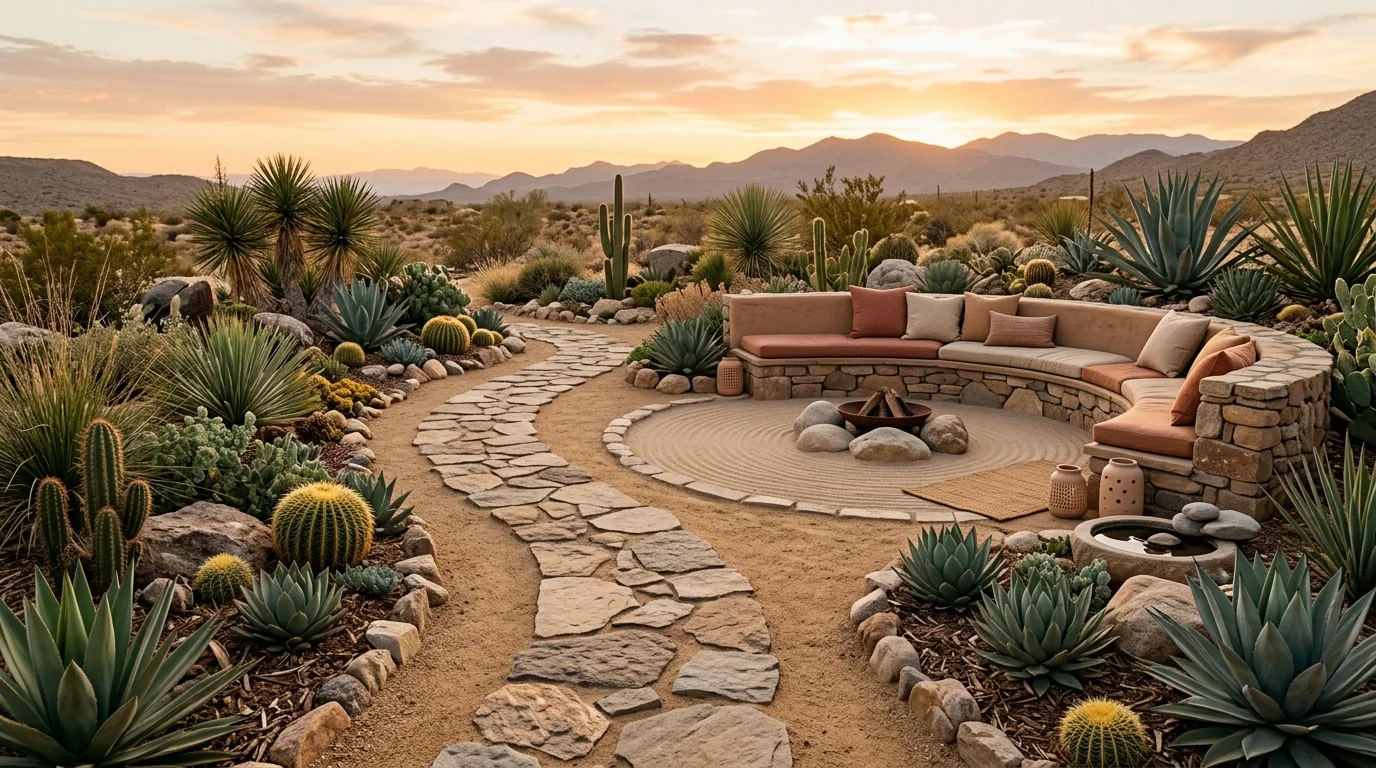
4. Try a desert-inspired design for quiet simplicity
Desert-inspired gardens often feel calm because they are built around restraint. Gravel, sculptural plants, warm stone tones, and open spacing create a slower visual rhythm that suits meditation beautifully. There is less softness than in a lush retreat, but a strong sense of stillness.
This approach is particularly good for sunny spaces and anyone who prefers a cleaner, more grounded kind of calm. It feels steady, warm, and easy to maintain.
5. Add a water feature for sound and movement
Sound plays a huge role in how peaceful a garden feels. A small fountain, basin, or other water feature can soften background noise and make the entire space feel more meditative. The movement of water also adds a gentle focal point that supports stillness without demanding too much attention.
This is often one of the most transformative additions to a meditation garden because it changes the atmosphere immediately, not just the look.
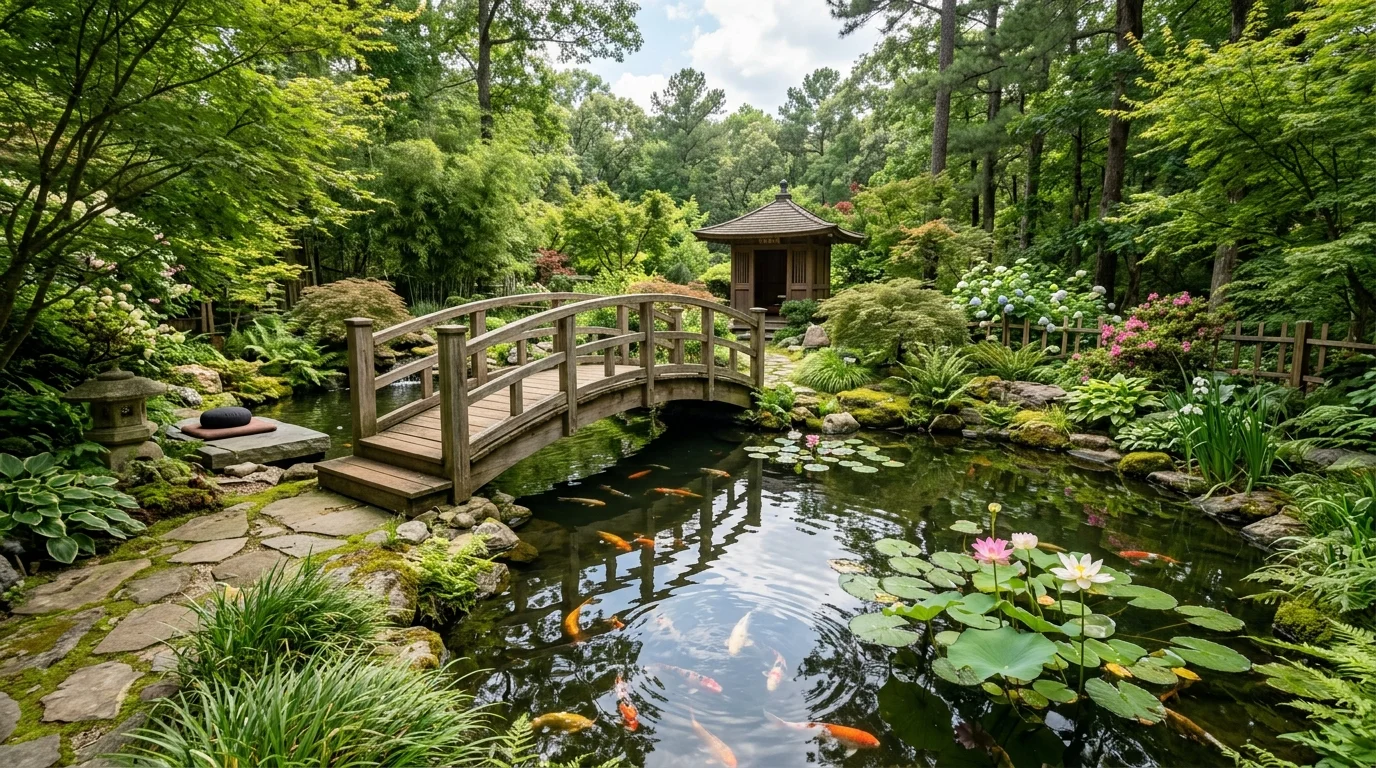
6. Tuck a meditation nook into a forest-inspired corner
Not every meditation garden needs to be open and symmetrical. A shaded nook surrounded by planting can feel even more peaceful because it creates a sense of quiet retreat. Forest-inspired spaces work beautifully when you want dappled light, layered greens, and a stronger sense of separation from the rest of the yard.
This kind of design feels especially intimate. It invites you in rather than presenting everything at once.
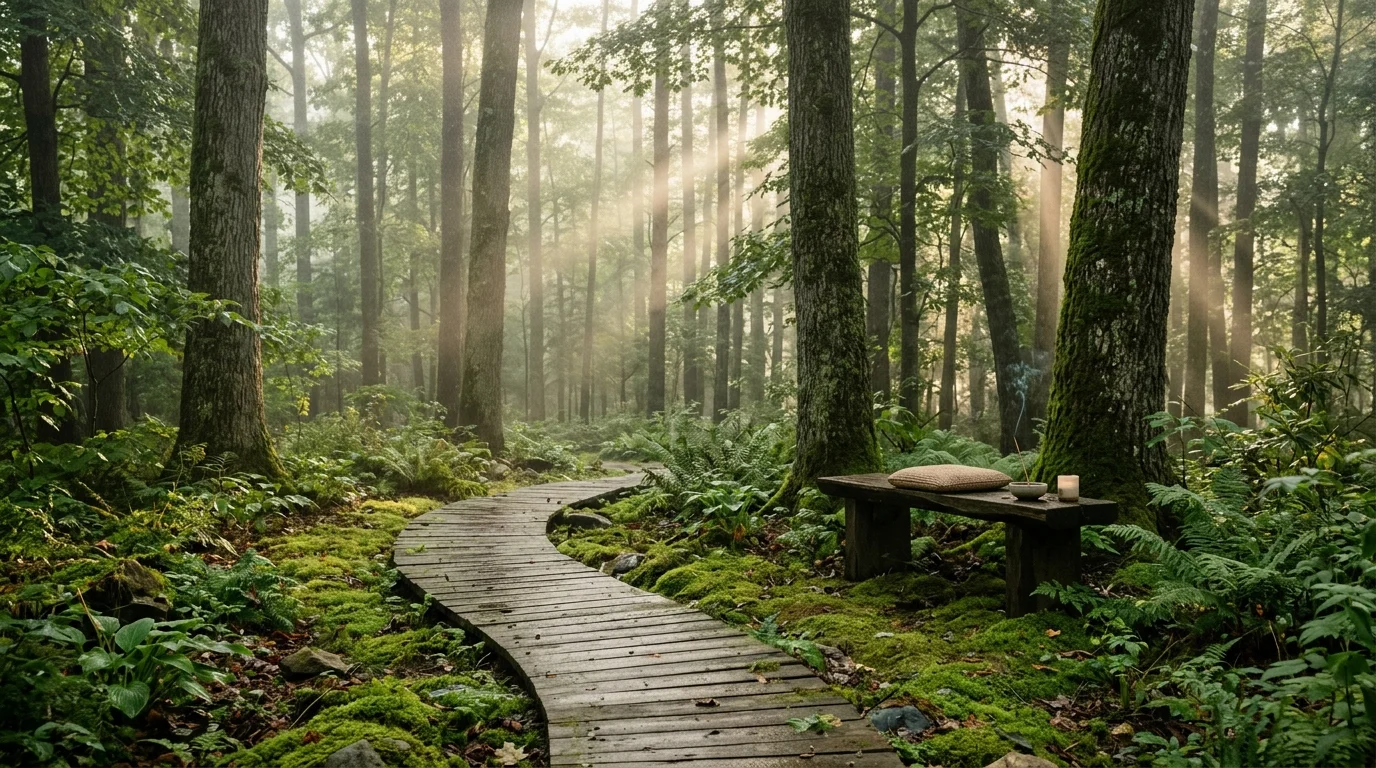
7. Keep it modern and minimal if you prefer visual clarity
A modern meditation garden relies on simplicity, proportion, and a very controlled palette. Clean paving, understated greenery, and edited furnishings can create a space that feels calm through order rather than softness. Done well, it feels elegant and mentally uncluttered.
This is a strong choice for contemporary homes or anyone who finds peace in clean lines and a more architectural mood.
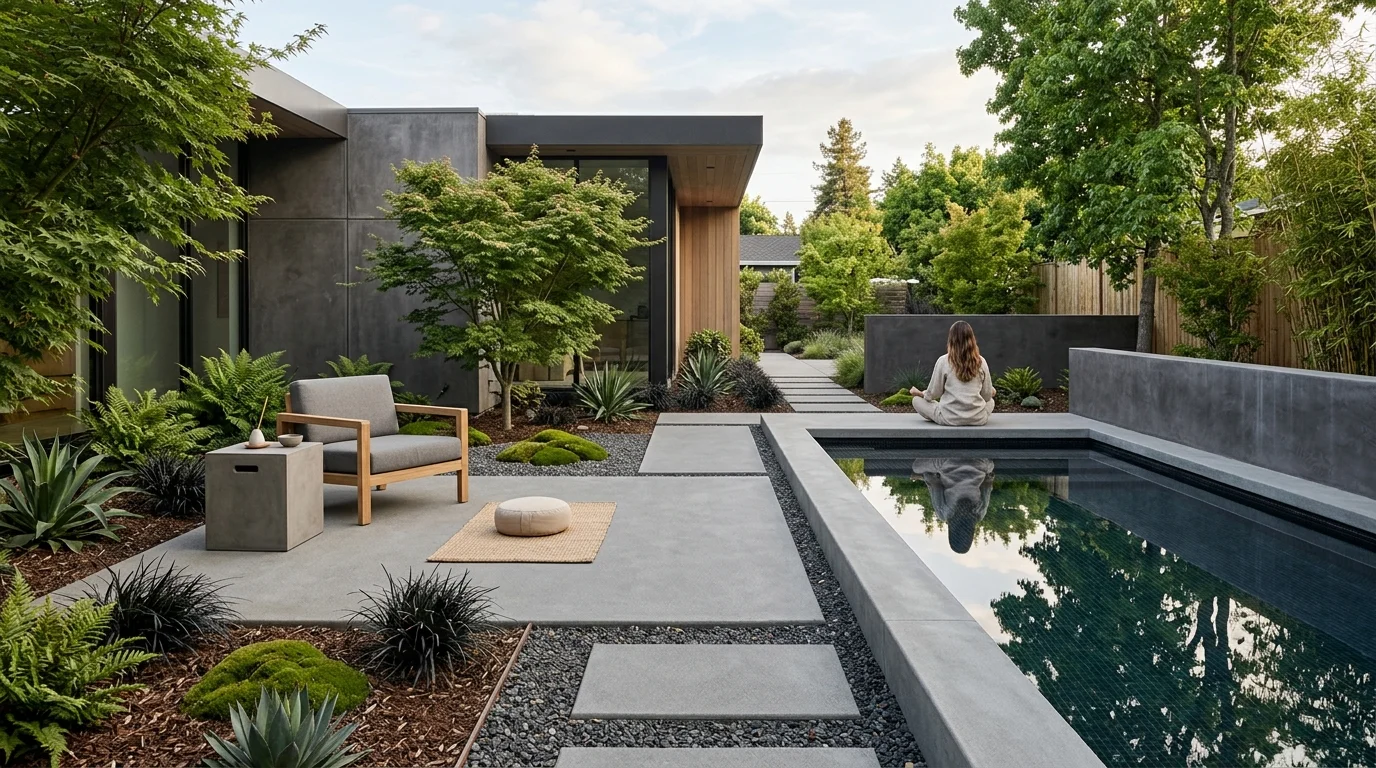
8. Use a stone circle as a spiritual focal point
If you want the space to feel more ceremonial or symbolic, a stone circle can become a powerful center point. It gives the garden a sense of intention and can help define a place for stillness, breathwork, journaling, or quiet reflection. Surrounding it with soft planting or gravel can help the feature feel grounded rather than theatrical.
This type of focal point works best when the surrounding design stays supportive and calm. The circle should feel meaningful, not overcomplicated.
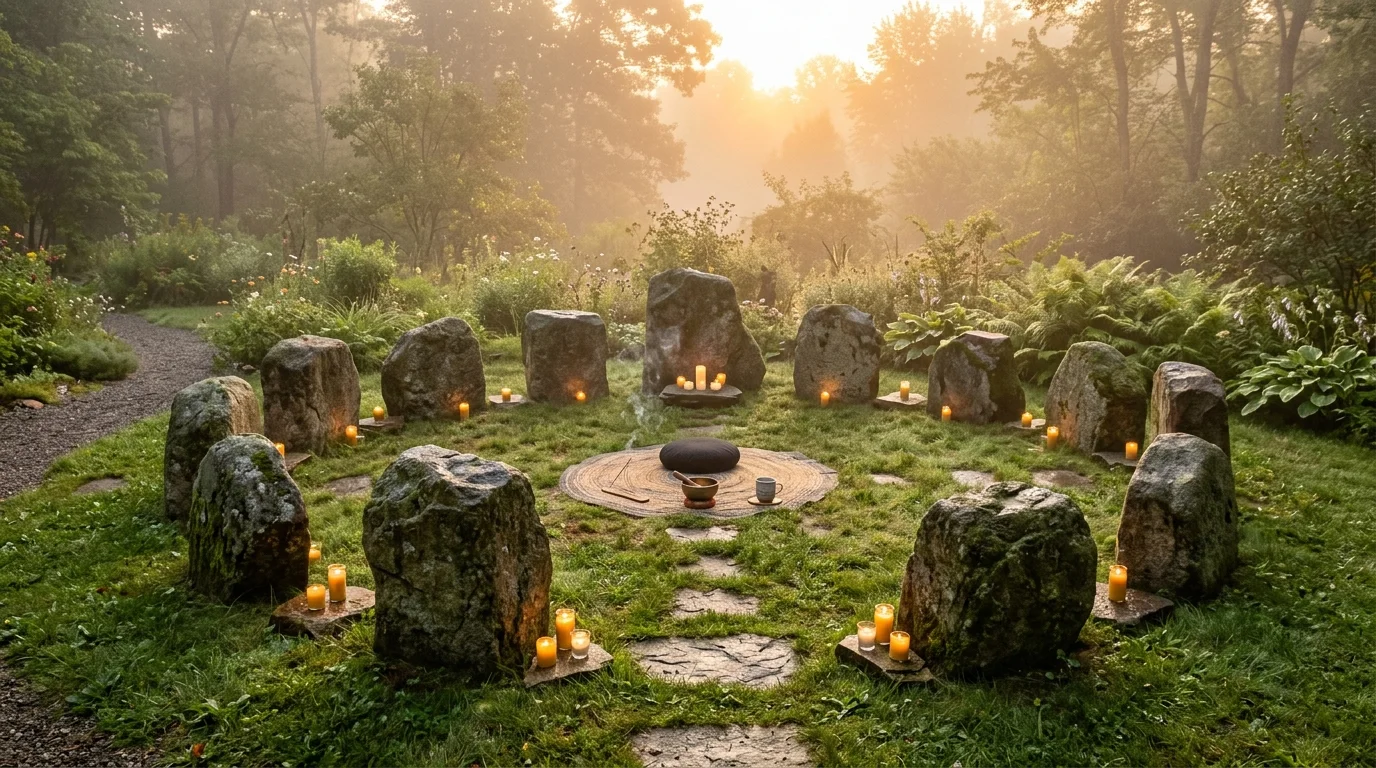
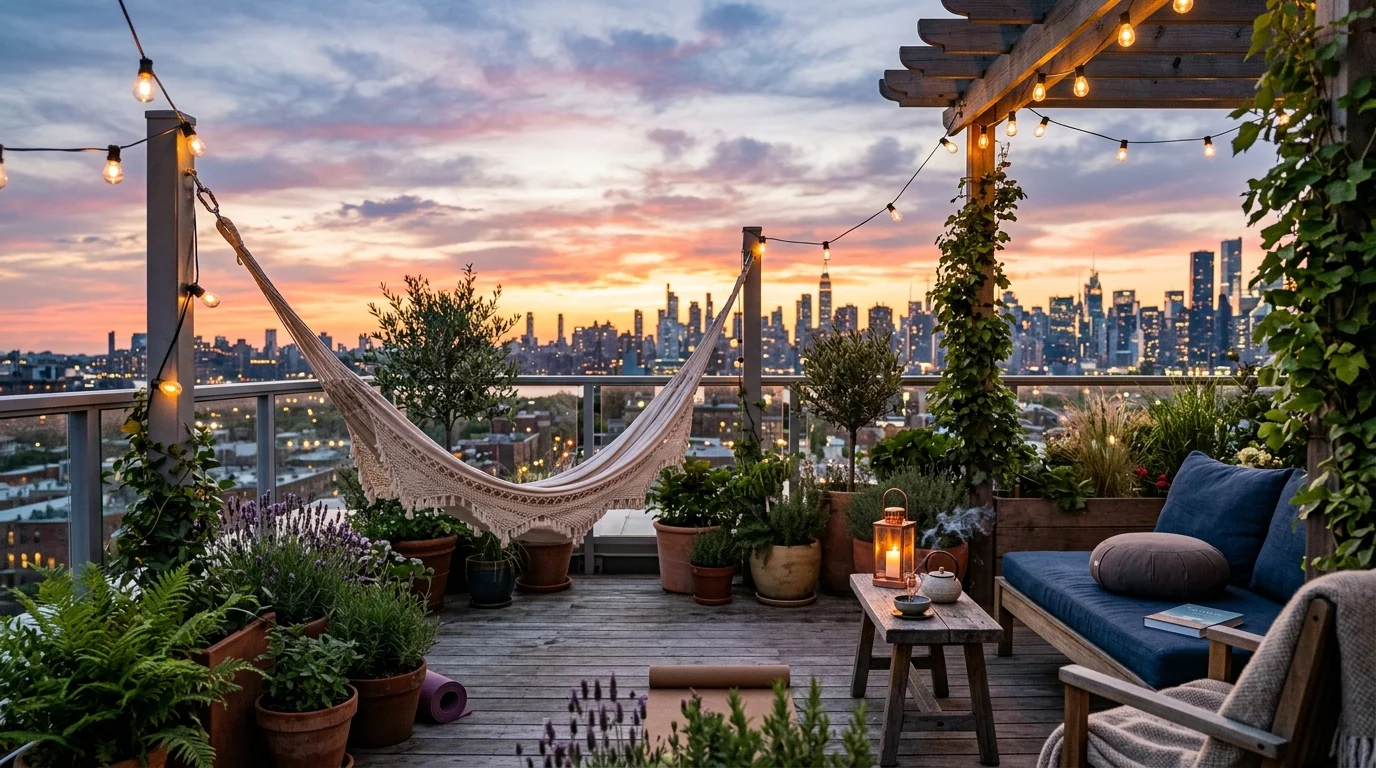
9. Design a rooftop or compact-space meditation garden
You do not need a large yard to create a meaningful meditation space. A rooftop, balcony, or compact backyard can still become a place of calm when the layout is thoughtful and the styling is restrained. Privacy screens, container planting, simple seating, and one grounding focal element can completely shift the feeling of a small outdoor area.
This is where intentional editing matters most. A compact meditation garden should feel light, not crowded, and every piece should support the overall mood.
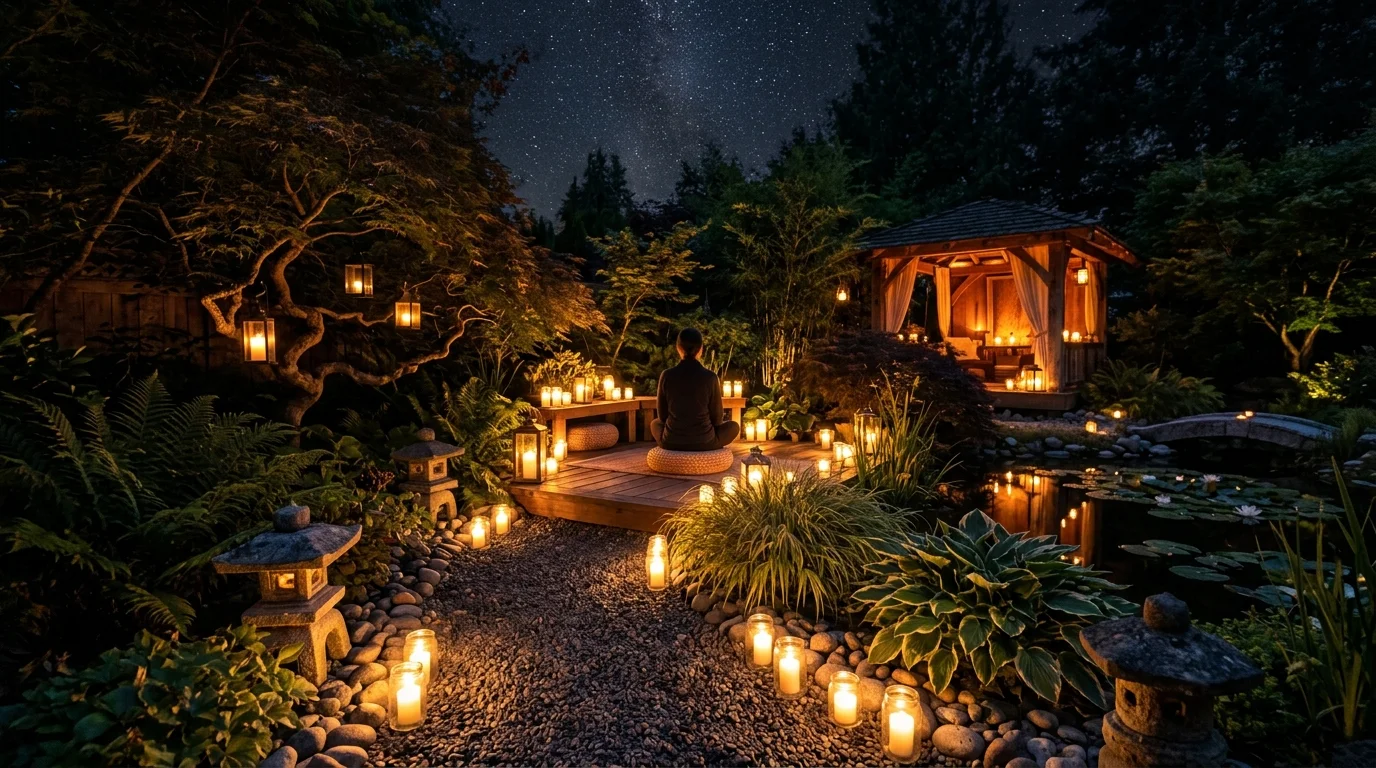
10. Make the garden usable after dark with candlelit atmosphere
Meditation gardens can become even more atmospheric in the evening. Soft candlelight, lanterns, or low-level warm lighting make the space feel slower and more reflective after sunset. Instead of harsh brightness, the goal is a gentle glow that supports quiet presence.
Even a simple night-time setup can turn the garden into a place you actually return to at the end of the day. That sense of ritual often makes the whole design feel more personal and complete.
Final thoughts on designing a backyard meditation garden
The best backyard meditation garden is the one that makes you want to slow down and stay a little longer. It does not have to follow one exact style. What matters is that the space feels intentional, sheltered, and emotionally restful.
Start with the kind of calm you want most, whether that is minimalist, lush, spiritual, or modern. Once the mood is clear, the materials, planting, and layout become much easier to shape into a garden that feels deeply personal and genuinely peaceful.