One square meter might not sound like enough room to grow food, but a compact balcony can be surprisingly productive when every layer has a purpose. The trick is to think like a designer as much as a gardener: use height, repeat practical containers, and choose crops that keep producing in a small footprint.
These edible balcony blueprints are built for real apartments, modest terraces, and small outdoor nooks where style still matters. Each setup turns a tight space into something useful, lush, and easy to maintain.
How to make a 1m² edible balcony work
- Focus on high-yield plants like herbs, salad greens, cherry tomatoes, strawberries, beans, and compact cucumbers.
- Use vertical surfaces first so your floor area stays open and your planting capacity grows upward.
- Repeat a simple container palette to keep the balcony feeling edited instead of cluttered.
- Group crops by watering needs so daily care stays quick and consistent.
1. Vertical Herb Garden Wall
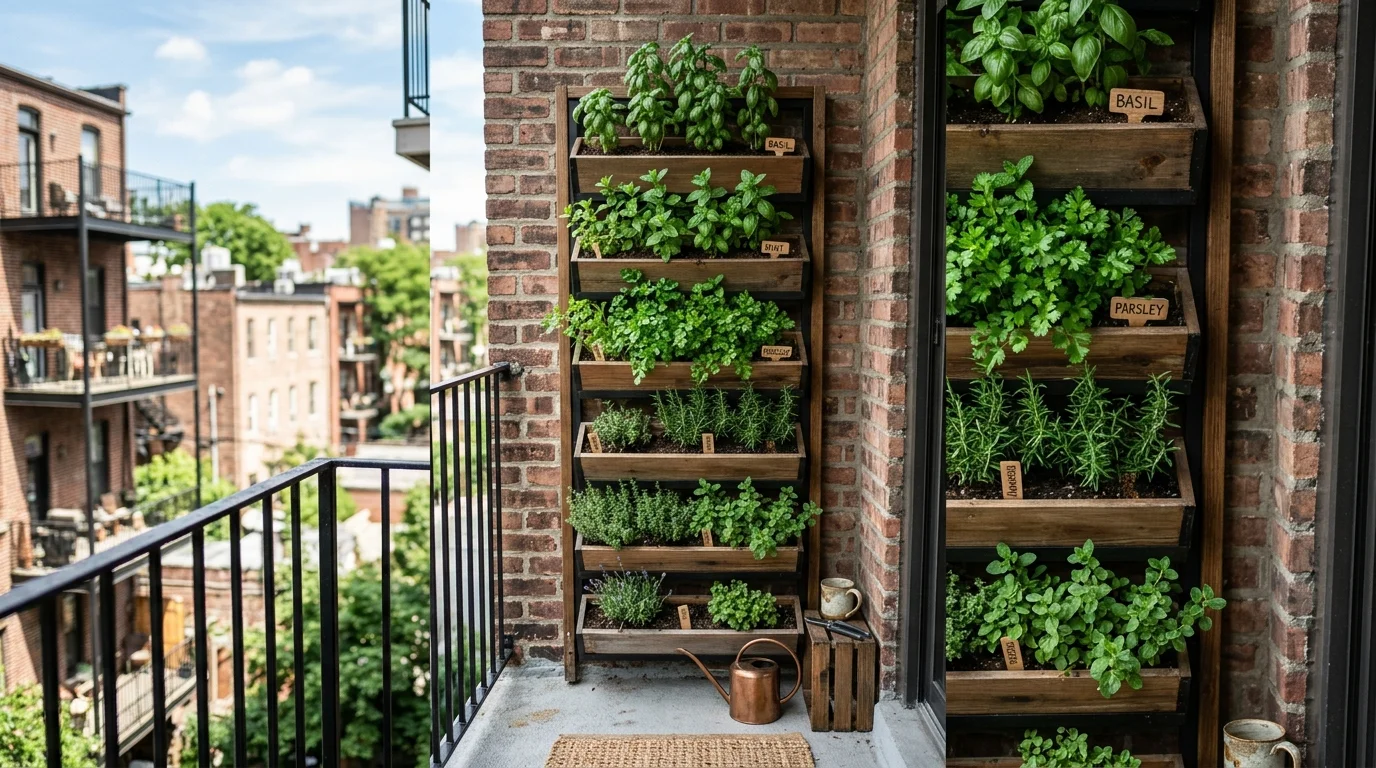
A vertical herb wall is one of the smartest ways to grow food when floor space is almost nonexistent. Stacked planters filled with basil, mint, and parsley create a dense green backdrop while leaving the rest of the balcony clear for a stool, watering can, or one extra pot.
This blueprint works best when the wall gets dependable morning or midday sun and stays easy to reach. Harvest a little and often to keep the herbs bushy, fragrant, and ready for cooking.
2. Compact Raised Bed Balcony
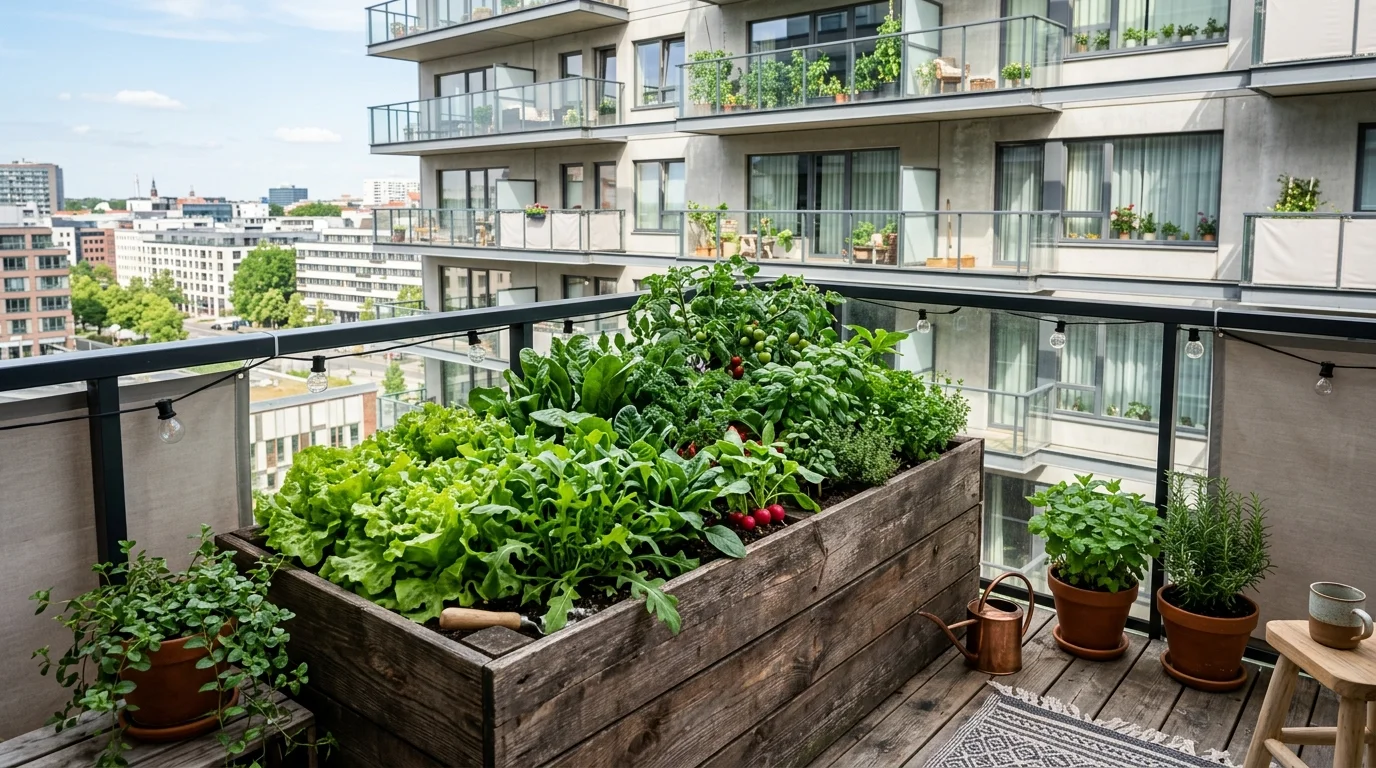
A compact raised bed gives a small balcony a cleaner, more grounded feel than lots of scattered pots. In one contained box, you can tuck in leafy greens, baby lettuce, and quick-growing vegetables that are simple to water and easy to replant through the season.
This setup is ideal if you want a tidy look with a strong harvest. Keep the tallest crops toward the back and use the front edge for cut-and-come-again greens so the bed stays full and accessible.
3. Hanging Basket Vegetable Setup
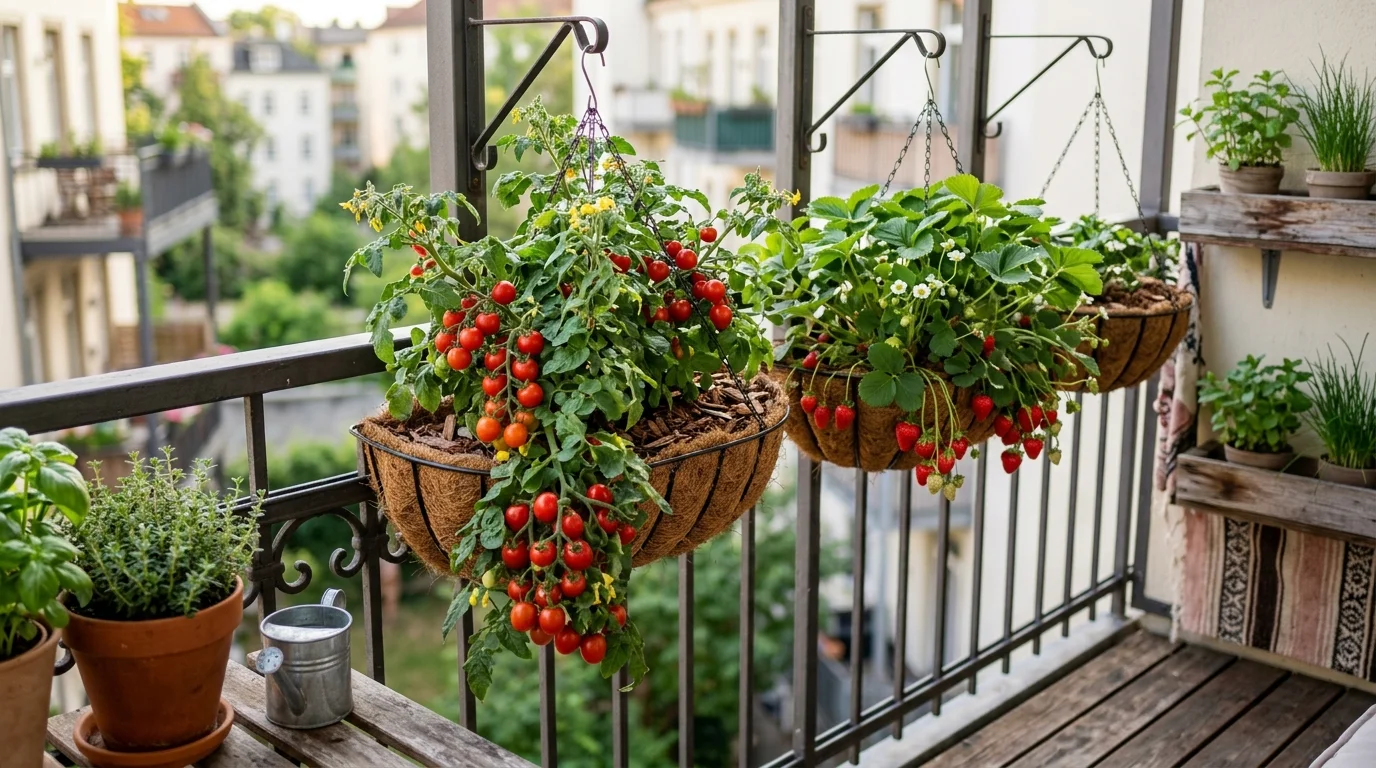
Hanging baskets let you grow upward without adding bulk to the floor. Cherry tomatoes and strawberries are especially effective here because they spill beautifully, catch the light, and make a simple balcony feel far more abundant.
Choose sturdy hooks and keep the baskets within comfortable reach for watering. A pair of well-planted baskets can add a generous edible layer while still keeping the balcony airy.
4. Tiered Plant Stand Garden
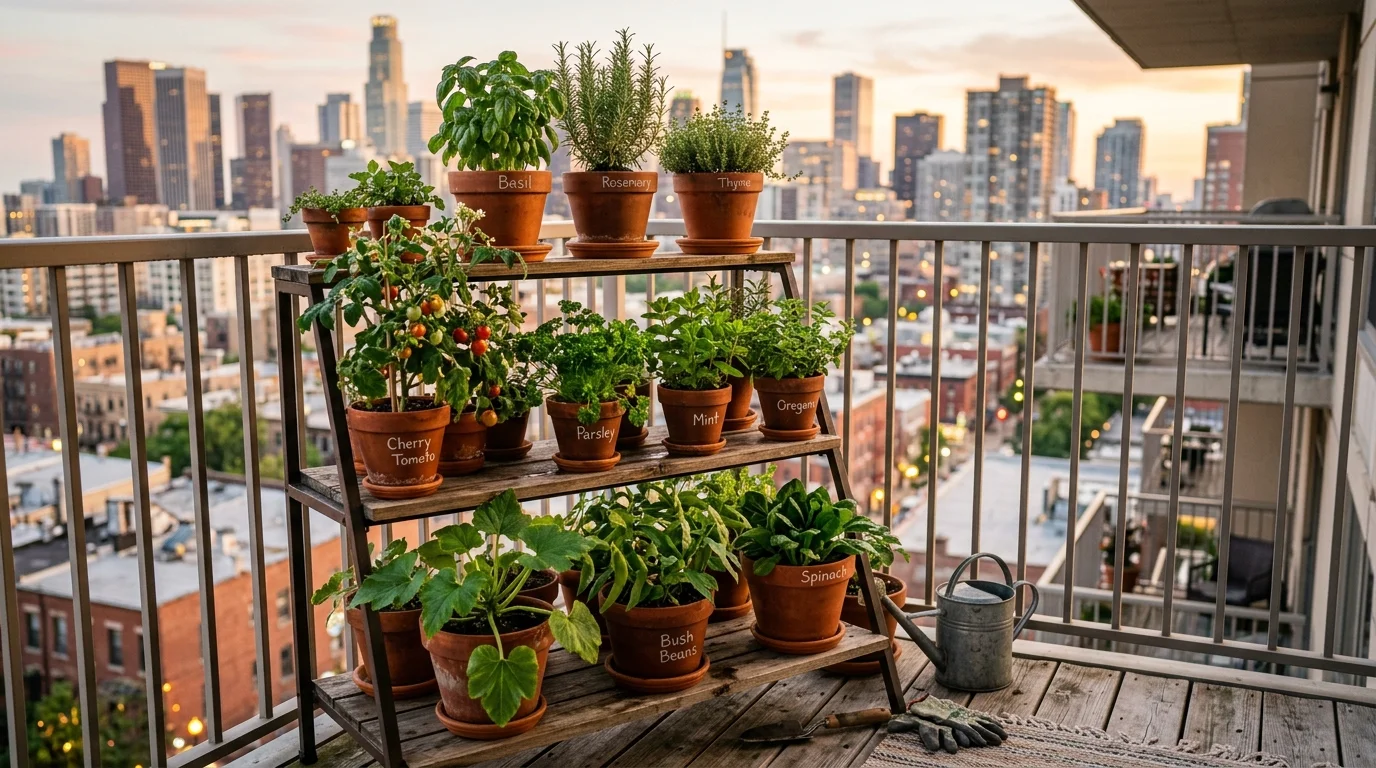
A three-tier stand turns one corner into a productive mini garden with almost no wasted space. Herbs on the top shelf, compact greens in the middle, and heavier pots below create a balanced arrangement that is practical and visually layered.
Clay pots suit this look especially well because they bring warmth and texture to modern apartment settings. Repeating a few crop types across the shelves keeps the display calm rather than busy.
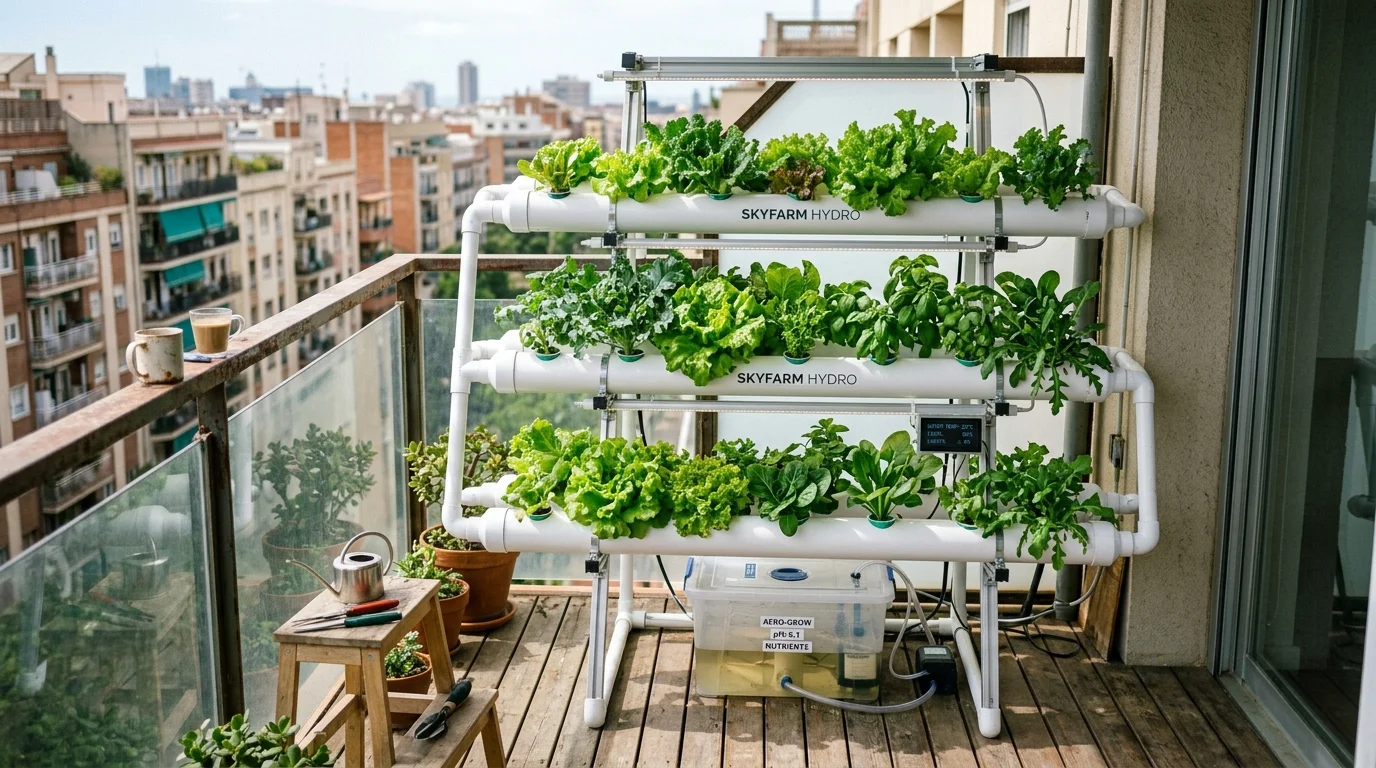
5. Hydroponic Balcony System
If you want a cleaner, more modern edible setup, a compact hydroponic system can make a tiny balcony feel almost architectural. Leafy greens grow quickly in water tubes, and the vertical rhythm of the system makes excellent use of a narrow footprint.
This blueprint is especially useful for salad lovers who want steady harvests and minimal mess. Keep the design simple, let the foliage be the statement, and the whole balcony will feel sleek and intentional.
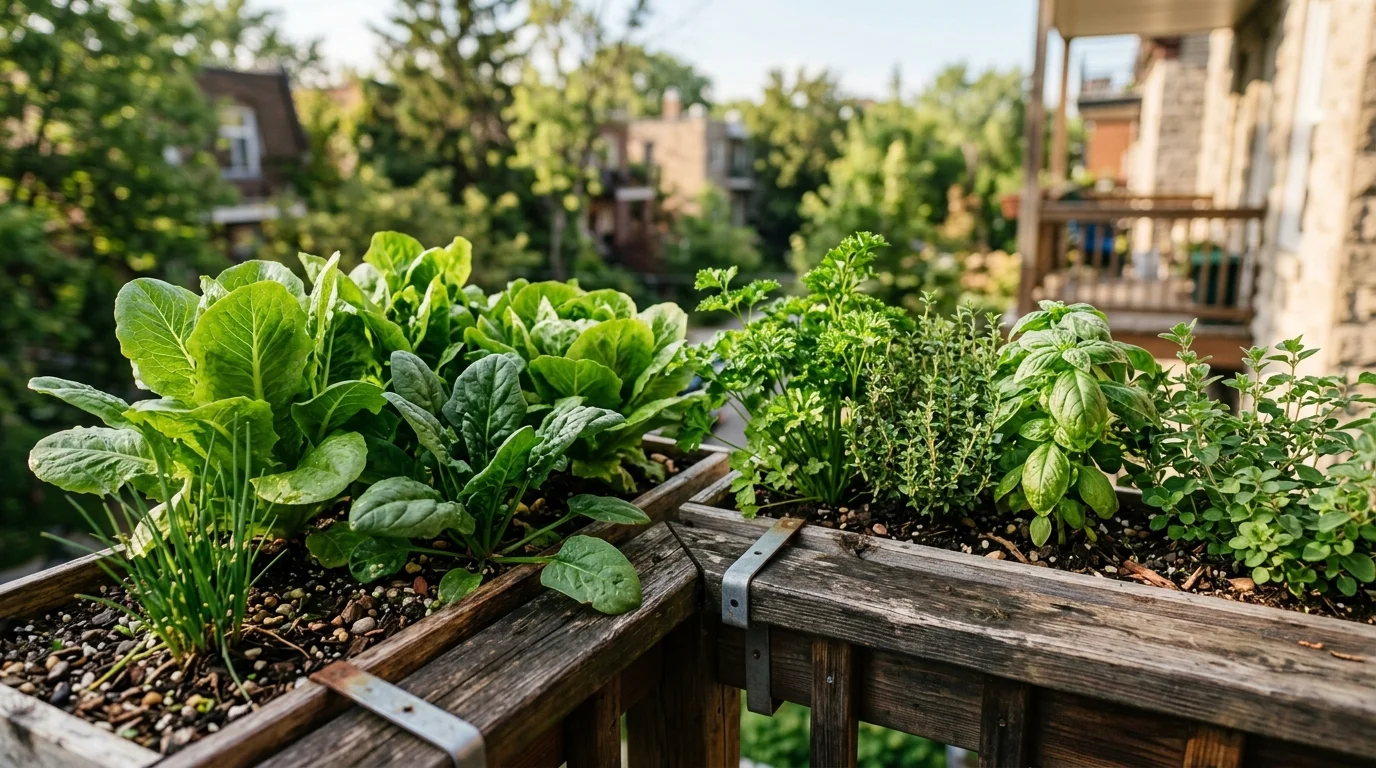
6. Window Box Edible Garden
Window boxes clipped to a balcony railing are perfect for shallow-rooted crops like lettuce, spinach, and kitchen herbs. They add a soft planted edge, free up floor area, and make the whole balcony look greener from every angle.
This is one of the easiest edible layouts to maintain because everything sits in one visible line. Frequent harvesting keeps leaves tender and stops the boxes from looking overgrown.
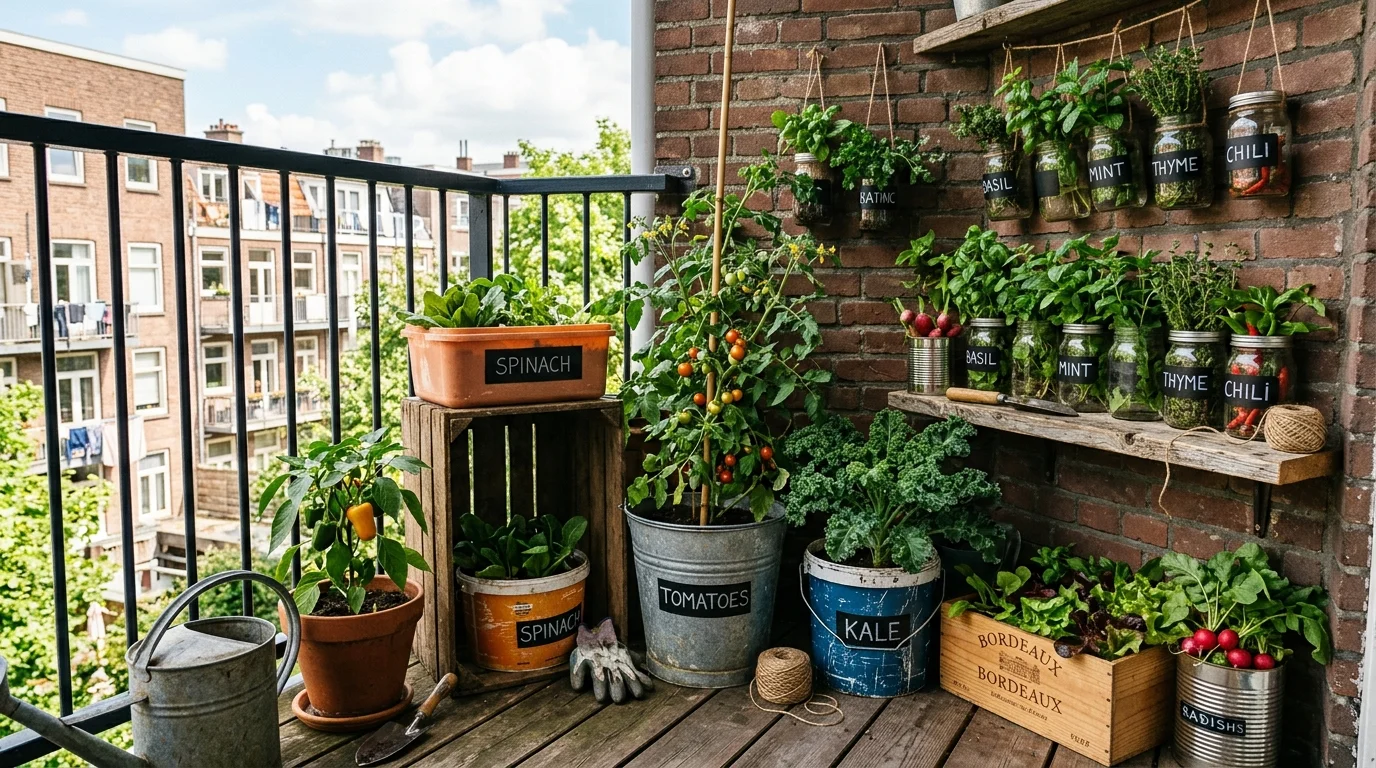
7. DIY Container Garden Corner
Repurposed containers can turn a forgotten balcony corner into a charming edible zone with character. Buckets, jars, and rustic planters feel relaxed and personal, especially when filled with a mix of leafy greens, peppers, and compact herbs.
The key is to unify the arrangement with color or material so it feels curated rather than improvised. This kind of corner is ideal for gardeners who like a practical setup with a little handmade warmth.
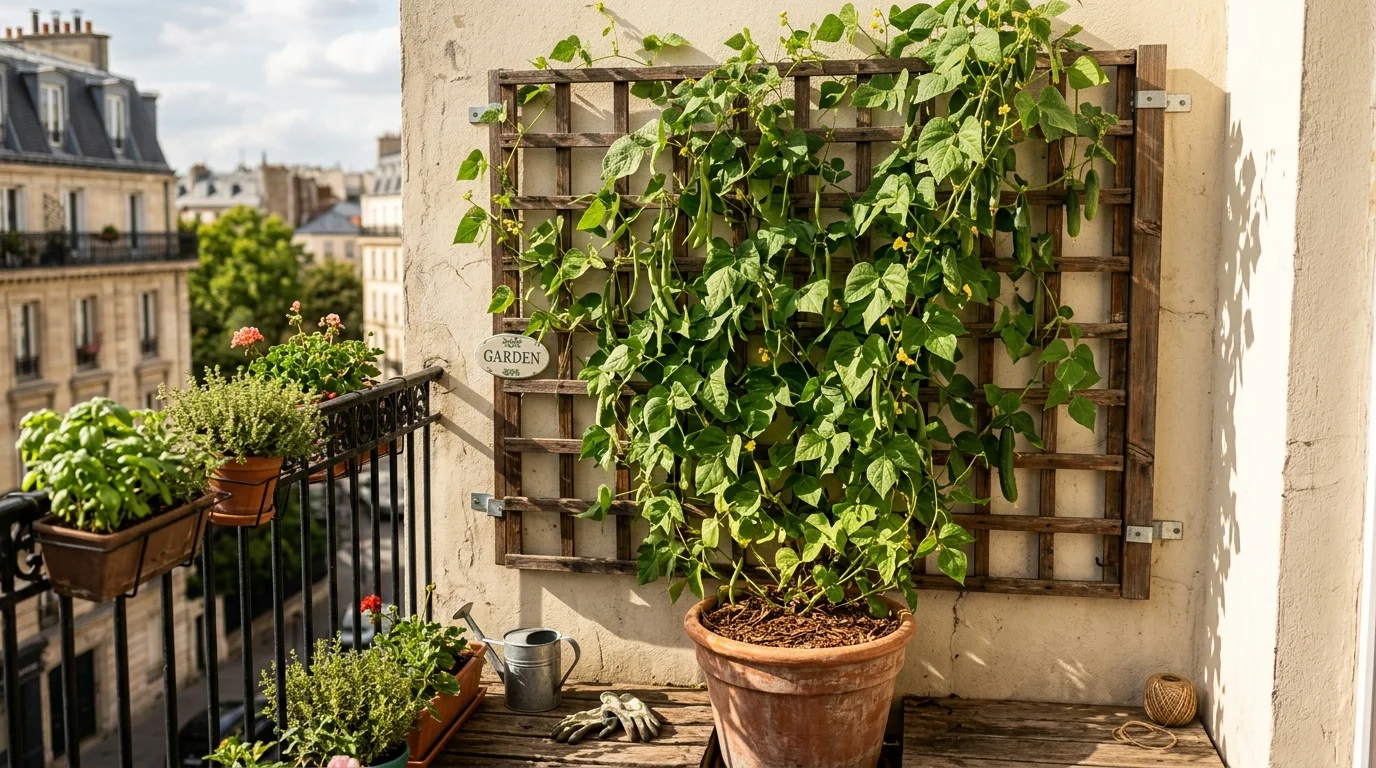
8. Climbing Plants Trellis Setup
Climbing crops are a strong choice for tiny balconies because they stretch upward instead of outward. A slim trellis can support beans or cucumbers while turning a plain railing wall into a leafy screen that feels lush and private.
Give vines consistent watering and a clear support line from the start so they train neatly. In a small space, vertical growth adds both harvest and atmosphere at the same time.
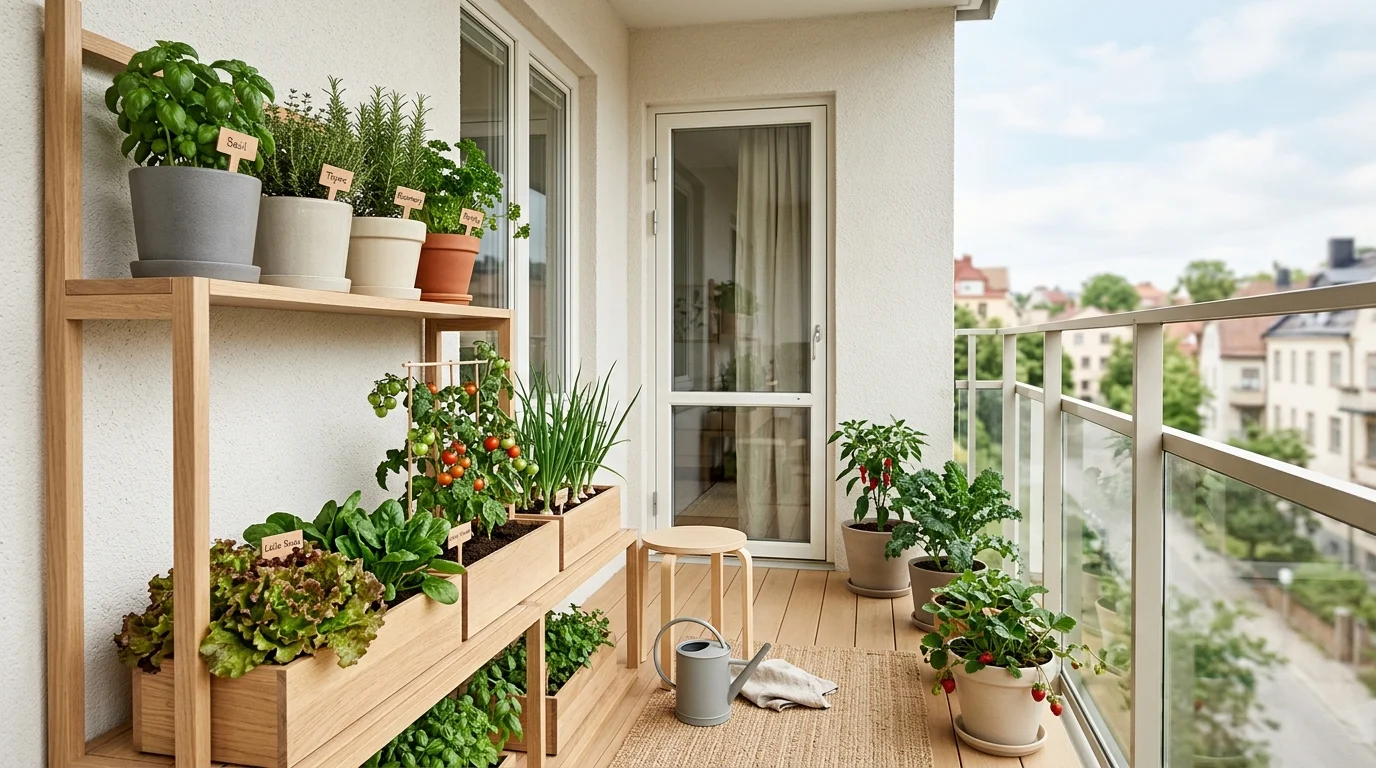
9. Minimalist Edible Balcony Design
A minimalist edible balcony proves that productive gardening does not need to feel crowded. A few neatly arranged pots in neutral tones can hold herbs and vegetables while still preserving the calm, Scandinavian feeling many apartment dwellers want.
This layout is best when you choose fewer crops and let every planter earn its place. Repetition, spacing, and restraint make the setup feel polished while still giving you something fresh to snip for dinner.
10. Mixed Edible Garden Layout
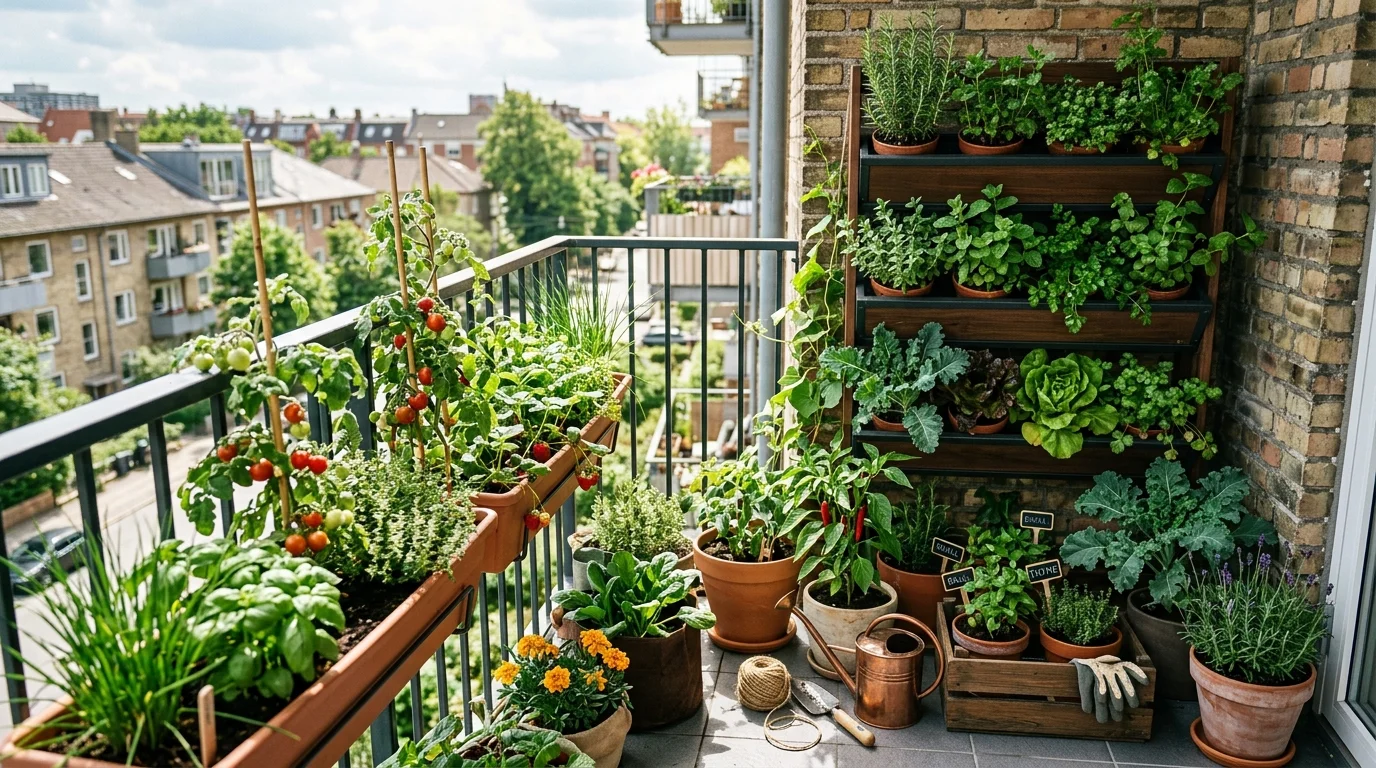
A mixed layout combines vertical planters, floor pots, and railing boxes so every surface contributes to the harvest. This is a smart approach if you want variety in just one square meter, with herbs, greens, and fruiting plants all working together.
To keep it manageable, repeat container colors and group crops into simple zones. The final result feels full and generous without losing the sense of order that makes a tiny balcony enjoyable to use.
Final blueprint notes for small-space harvests
The best edible balconies feel balanced before they feel packed. When you layer growing surfaces thoughtfully, repeat a few useful crops, and keep the layout easy to water, even a very small footprint can produce a steady harvest.
Start with one system that matches your habits, whether that is a herb wall, raised bed, railing boxes, or a trellis. Once that piece works well, you can add more layers and build a balcony garden that feels both beautiful and genuinely useful.